June 8, 2026
Salk Institute scientists discover a specialized “extra layer of defense” that helps plants protect their stem cells and more accurately repair dangerous DNA damage
Salk Institute scientists discover a specialized “extra layer of defense” that helps plants protect their stem cells and more accurately repair dangerous DNA damage
LA JOLLA—Similar to the way DNA damage can contribute to human diseases like cancer, it can also disrupt growth, development, and survival in plants. Every day, plants endure environmental stresses like sunlight, radiation, drought, and soil stress—all of which can damage their DNA. However, they cannot move away from danger. How do plants handle all that damage?
Plants rely on powerful repair systems that constantly monitor and fix their genomes. But how plants coordinate these repairs—especially in the stem-cell-like tissues responsible for future growth—has remained poorly understood.
Now, Salk Institute scientists have discovered a specialized DNA repair protein that appears to act as an “extra layer of defense” in plants.
The findings, published June 8, 2026, in Actas de la Academia Nacional de Ciencias, reveal that plants evolved a unique protein, called YAF9B, that is activated only after DNA damage to help protect critical stem cell populations from genomic instability.
“Plants are unique because the same thing that gives them the ability to grow—sunlight—is constantly damaging their DNA,” says senior author Julie Law, doctora, a professor at Salk. “The question is, how do they cope with that level of DNA damage?”
Inside plant cells, DNA is tightly wrapped around proteins called histones. DNA-covered histones then pack together to form a dense structure called chromatin. While this organization helps keep the genome orderly, it also makes detecting and repairing damaged DNA much more difficult, since broken regions can become hard to reach.
“In order to repair damaged DNA,” explains Law, “you first need to detect the damage and then recruit the proteins required to unwind the chromatin and repair the DNA.”
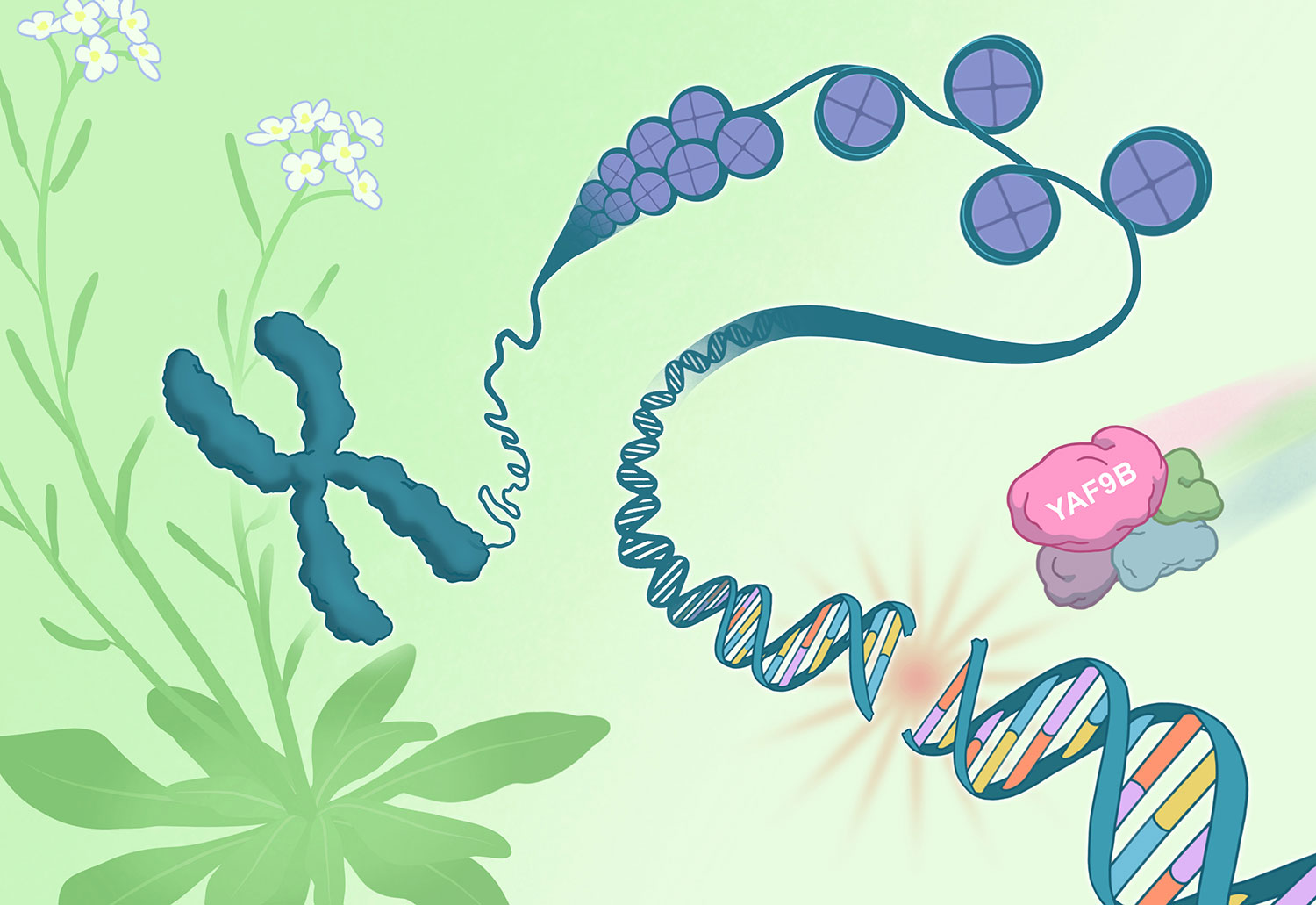
To solve this problem, plants rely on specialized proteins that act like emergency responders for damaged DNA. These proteins help open tightly packed chromatin, direct repair machinery to broken DNA, and coordinate the repair process.
“The YAF9 family of proteins is found in yeast, animals, and plants,” says first author Neeraja Vegesna, a former graduate student researcher in Law’s lab. “But plants evolved a second version, YAF9B, that is specifically activated after DNA damage occurs.”
YAF9A acts like a broad repair-response protein active throughout the plant, while YAF9B is a specialized one concentrated in stem-cell-rich tissues that generate new roots, shoots, and leaves.
“These stem cells are what generate the rest of the plant,” adds Law. “The hypothesis is that the plant produces this factor to help protect those cells and give them a better chance of carrying out highly accurate DNA repair.”
Plants can repair broken DNA in multiple ways. One method, called non homologous end joining, is favored for its speed. Like a quick patch job in a pinch, it rapidly seals broken DNA ends back together. This method works fine most of the time, but it runs the risk of introducing mistakes or mutations into the code.
Another method, called homology-directed repair, is slower but far more accurate. Instead of simply reconnecting broken DNA, the cell carefully rebuilds the damaged sequence using an intact DNA copy as a template, preserving the original genetic information.
“Accurate DNA repair is essential for maintaining genome stability, but it depends on many proteins working together within chromatin,” says Law. “What’s exciting about this study is that we identified YAF9B as a DNA damage-responsive chromatin reader that helps cells carry out high-fidelity DNA repair, revealing a novel innovation used by plants to protect their genomes.”
“Our next goal is to understand how these chromatin effectors coordinate different stages of DNA repair and how exactly YAF9B promotes accurate and effective DNA repair,” says Law.
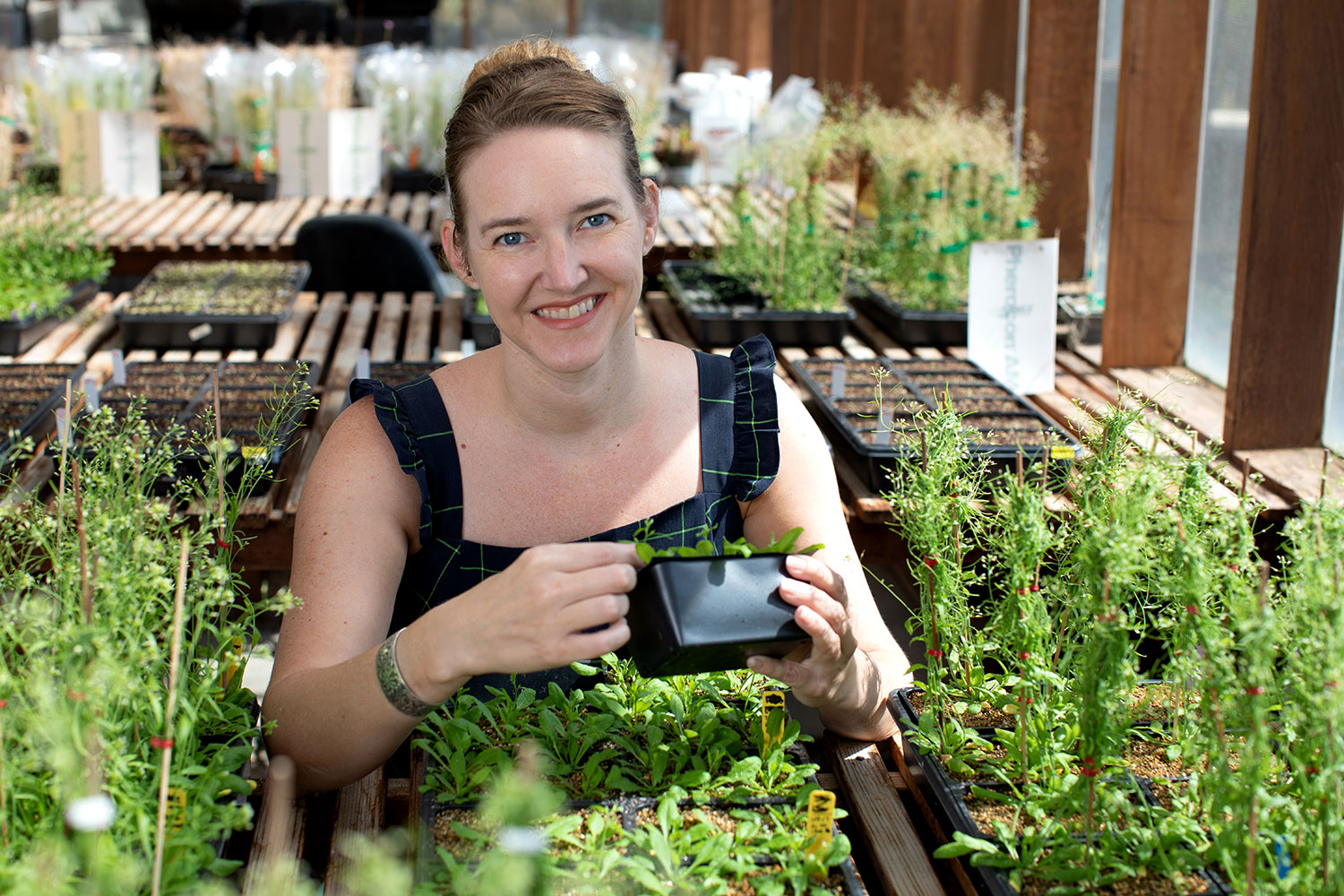
Current CRISPR-based gene editing approaches in plants often trigger fast but error-prone DNA repair pathways, limiting scientists’ ability to accurately replace or insert genes. By understanding how plants naturally promote high-fidelity DNA repair, researchers hope future work could help guide more precise genome editing while also improving genome stability in critical growth tissues.
The team now hopes to understand how the closely related proteins, YAF9A and YAF9B, play different roles during repair. The researchers want to uncover exactly what allows YAF9B to function as a specialized DNA damage response factor and how the two proteins coordinate different stages of the repair process.
“If we can understand how plants promote high-fidelity repair, we may eventually be able to improve genome editing technologies in plants,” says Law.
Other authors include Laura Bouza-Morcillo, Clara Bourbousse, En Li, Maherun Nisa, and Ana Marie Palanca of Salk; and Yasaman Jami-Alahmadi and James Wohlschlegel of UC Los Angeles.
This work is supported by the Rita Allen Foundation, Hess Corporation, National Institutes of Health (NCI CCSG: P30 CA01495, NIA P30 AG068635), Chapman Foundation, and Helmsley Charitable Trust.
DOI: 10.1073/pnas.2612171123
DIARIO
Actas de la Academia Nacional de Ciencias
AUTORES
Neeraja Vegesna, Laura Bouza-Morcillo, Clara Bourbousse, Yasaman Jami-Alahmadi, En Li, Maherun Nisa, Ana Marie S. Palanca, James A. Wohlschlegel, Julie A. Law
Oficina de Comunicaciones
Tel.: (858) 453-4100
press@salk.edu
El Instituto Salk es un centro de investigación independiente y sin fines de lucro fundado en 1960 por Jonas Salk, creador de la primera vacuna segura y eficaz contra la poliomielitis. La misión del Instituto es impulsar una investigación fundamental, colaborativa y audaz que aborde los retos más acuciantes de la sociedad, entre ellos el cáncer, la enfermedad de Alzheimer y la vulnerabilidad agrícola. Esta ciencia fundamental sustenta todos los esfuerzos traslacionales, generando conocimientos que permiten el desarrollo de nuevos medicamentos e innovaciones en todo el mundo.