LA JOLLA, CA—Dr. Wylie Vale, a Salk Institute professor and world-renowned expert on brain hormones, died January 3 while on vacation in Hana, Hawaii. He was 70 years old.
LA JOLLA, CA—There’s a 3-D world in our brains. It’s a landscape that mimics the outside world, where the objects we see exist as collections of neural circuits and electrical impulses.
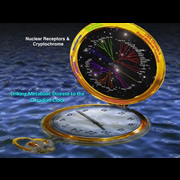
LA JOLLA, CA—Scientists have discovered a missing link between the body's biological clock and sugar metabolism system, a finding that may help avoid the serious side effects of drugs used for treating asthma, allergies and arthritis.
LA JOLLA, CA—A new drug candidate may be the first capable of halting the devastating mental decline of Alzheimer's disease, based on the findings of a study published in PLoS ONE.
LA JOLLA, CA—Researchers at the Salk Institute for Biological Studies have developed a way to use patients’ own cells to potentially cure sickle cell disease and many other disorders caused by mutations in a gene that helps produce blood hemoglobin.
LA JOLLA, CA—An international team of scientists has created super-strong, high-endurance mice and worms by suppressing a natural muscle-growth inhibitor, suggesting treatments for age-related or genetics-related muscle degeneration are within reach.
LA JOLLA, CA—The Salk Institute is pleased to announce the appointment of five faculty members to be recipients of endowed chairs established by philanthropic leaders in support of scientific research.
LA JOLLA, CA—One of the few reliable ways to extend an organism’s lifespan, be it a fruit fly or a mouse, is to restrict calorie intake. Now, a new study in fruit flies is helping to explain why such minimal diets are linked to longevity and offering clues to the effects of aging on stem cell behavior.
LA JOLLA, CA—A new class of anti-inflammatory drugs may one day serve as an alternative to steroid medications and possibly help avoid the serious side effects of steroids, based on research findings at the Salk Institute for Biological Studies.
WASHINGTON, DC—Die National Academy of Sciences (NAS) gibt die Ernennung von bekannt Inder M. Verma, Ph.D., als Chefredakteur des Proceedings of the National Academy of Sciences (PNAS), der offiziellen Zeitschrift der NAS. Er wird die Chefredaktion am 1. November formell übernehmen, und der Übergang in die neue Position wird sich über mehrere Wochen erstrecken.
LA JOLLA, CA – Eine Entdeckung von Wissenschaftlern am Salk Institute for Biological Studies könnte erklären, warum einige Frühgeborene auf bestehende Behandlungen für ein tödliches Atemnotsyndrom (RDS) nicht ansprechen, und liefert Hinweise auf neue Behandlungsmöglichkeiten für die Atemwegserkrankung.
LA JOLLA, CA—The SCImago Institutions Rankings (SIR) World Report has identified the Salk Institute as one of the top five research organizations in the world, based on excellence and high quality of its scientific findings.
LA JOLLA—The National Institutes of Health has announced that the Salk Institute will receive $4.5 million to establish a Neuroscience Core Center, a new research center intended to accelerate brain research that lays the foundation for developing new ways to treat congenital brain defects and neurological diseases.
LA JOLLA, CA‚Ever wondered why you wake up in the morning—even when the alarm clock isn’t making jarring noises? Wonder no more. Researchers at the Salk Institute for Biological Studies have identified a new component of the biological clock, a gene responsible for starting the clock from its restful state every morning.
LA JOLLA, CA—Dr. Fred Gage, ein Professor am Salk Institute Laboratory of Genetics und Inhaber des Vi and John Adler Chair for Research on Age-Related Neurodegenerative Diseases, wurde als Preisträger des renommierten Programms „National Institutes of Health (NIH) Director’s Transformative Research Projects (T-R01)“ für 2011 ausgezeichnet.
LA JOLLA, CA—Researchers at the Salk Institute have discovered how a hormone turns on a series of molecular switches inside the pancreas that increases production of insulin.
La Jolla—A strain of genetically enhanced bacteria developed by researchers at the Salk Institute for Biological Studies may pave the way for new synthetic drugs and new ways of manufacturing medicines and biofuels, according to a paper published September 18 in Nature Chemical Biology.
LA JOLLA, CA—Axel Nimmerjahn, Ph.D., assistant professor in the Waitt Advanced Biophotonics Center and holder of the Richard Allan Barry Developmental Chair in Biophotonics has been awarded a highly selective grant from the Whitehall Foundation. He will receive $223,000.00 over three years to study the contribution of astrocytes to normal brain function.
LA JOLLA, CA – Ein “versteckter” Code, der mit der DNA von Pflanzen verbunden ist, ermöglicht es ihnen, neue biologische Merkmale weitaus schneller zu entwickeln und weiterzugeben, als bisher angenommen, so die Ergebnisse einer bahnbrechenden Studie von Forschern des Salk Institute for Biological Studies.
LA JOLLA, CA—Oncologists have long sought a powerful “magic bullet” that can find tumors wherever they hide in the body so that they can be imaged and then destroyed. Until recently scientists accepted the notion that such an agent, an agonist, needed to enter and accumulate in the cancerous cells to act. An international research team has now shown in cancer patients that an investigational agent that sticks onto the surface of tumor cells without triggering internalization, an antagonist, may be safer and even more effective than agonists.