教授兼主任
植物分子与细胞生物学实验室
整合生物学实验室
赫斯植物科学讲席教授

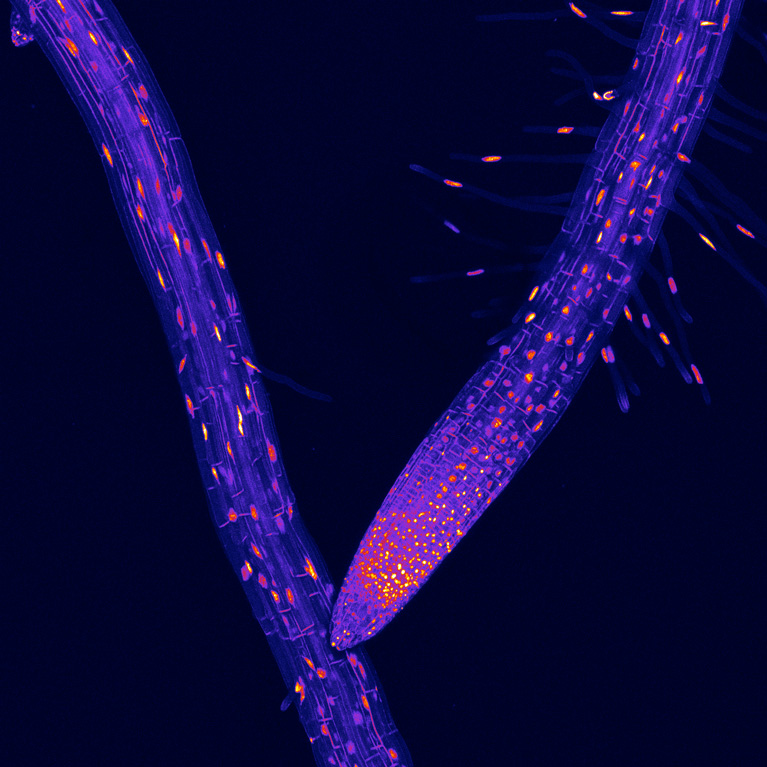
While flowers and shoots are the more visible features of plants, what lies beneath the surface is just as important: roots. Plants’ roots are critical for obtaining water and nutrients from the soil. They also play a major role in the global carbon cycle by transferring carbon that was fixed by plant photosynthesis from the atmosphere into the soil. Despite their high relevance for ecology, agriculture, food security, and carbon cycling, there are many open questions in regard to root systems. For example, why are some root systems shallow and some deep? How do plants process environmental information? How can roots work with beneficial microbes while fending off harmful microbes? A better understanding of plant roots could help grow more resilient food sources—an increasingly urgent problem in the face of the planet’s shifting climate and increasing population—and help develop root systems that can be utilized on a large scale to store carbon dioxide (CO2) 被植物地上组织从大气中捕获。.
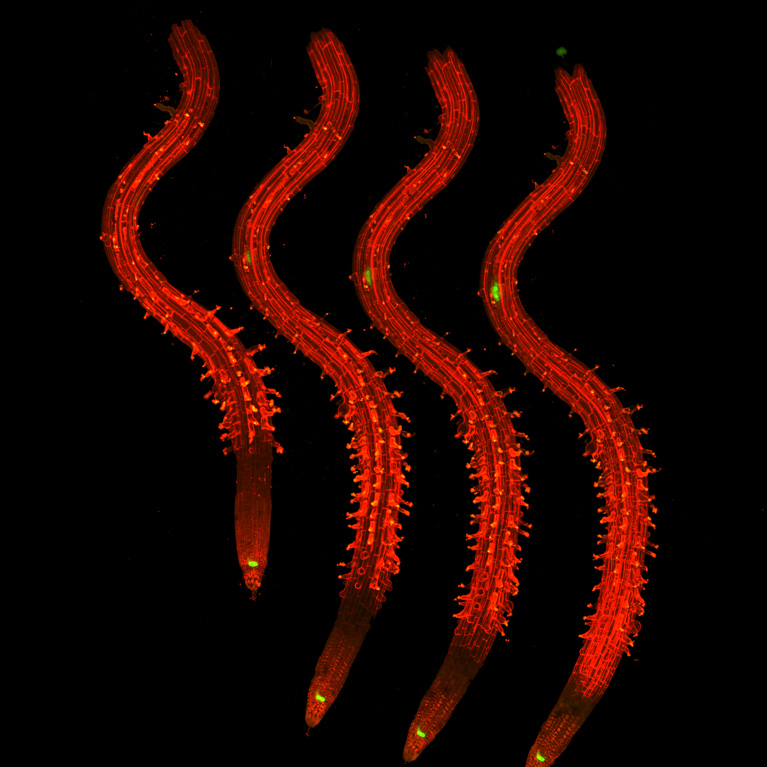
开花植物 拟南芥 is an easy-to-grow weed, popular for plant biology research. Different strains, all with very similar genomes, grow all over the world, making the plant especially useful for studying which genes and genetic variants make plants respond to different environments and help them survive. Wolfgang Busch uses a systems genetics approach, combining techniques from genetics, genomics, and other science fields to understand how root growth in given environments is determined by a plant’s genes. Genome-wide association studies correlate genetic variation with physical characteristics, such as having long or short roots. But to be meaningful, studies have to measure the physical characteristic of interest in significant quantities.
Because it is difficult to measure roots accurately and in large numbers, Busch has employed a number of cutting-edge technologies and computational methods for evaluating roots. Using these approaches, Busch was able to uncover several genes and their genetic variants that determine how roots grow and respond to the environment. Studies like these are continuing to inform how roots can be optimized for distinct environments or functions. The lab has also recently expanded its work to some of the most globally relevant crop species with the aim of identifying mechanisms conserved across species that can be engineered to create more resilient crop varieties.
作为索尔克研究所的执行主任 植物利用计划, 布希旨在帮助植物生长出更大、更健壮的根系,这些根系可以通过将天然存在的富碳物质栓质(suberin)埋入地下,吸收更多的碳。该团队将利用尖端的遗传学和基因组学技术来开发这些能够去除过多大气碳并更能抵御环境胁迫的索尔克理想植物™️。.
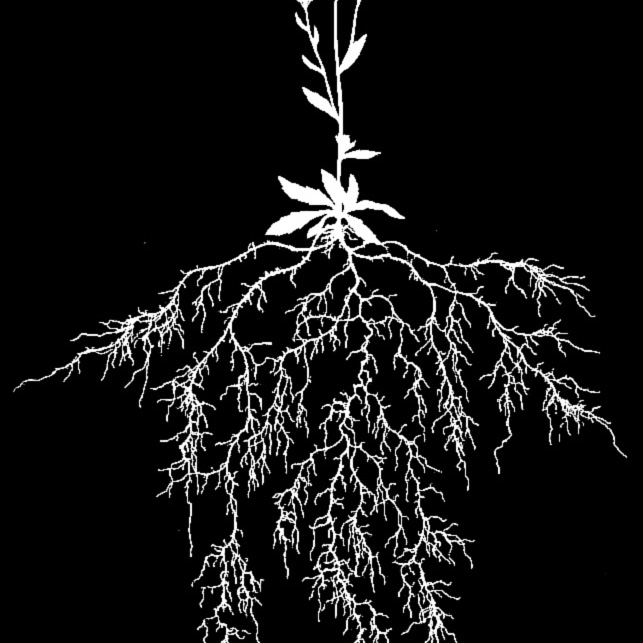
布施开发了新颖的方法,利用成像和机器视觉算法评估数十万条根系,以自动提取根长和根型数据。.
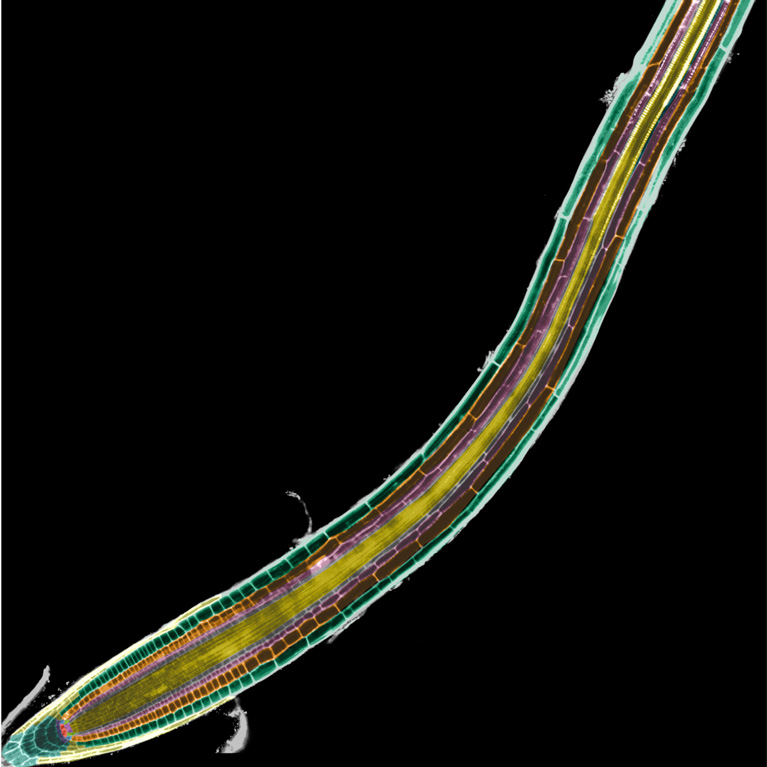
他发现了植物在细菌入侵根组织时如何重新编程其细胞活动以保留铁,并阐明了连接缺铁信号通路与植物免疫系统的分子机制。这为工程化植物的韧性和抗病性揭示了新途径。.
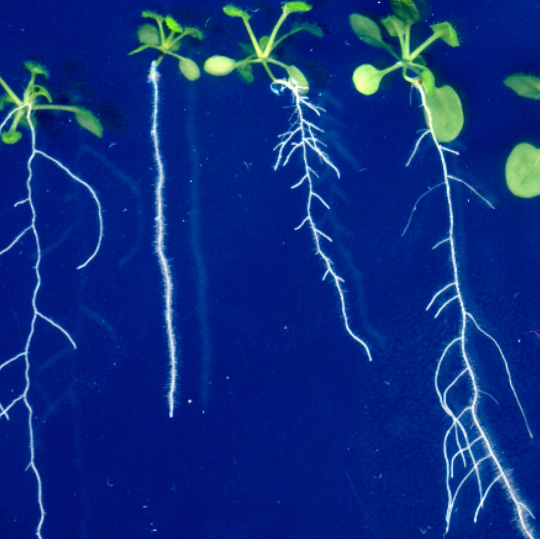
他鉴定了一个基因及其变异,该基因和变异能够将浅根系转变为深根系,揭示了分子水平上如何实现这一点,并发现了该基因的某些变异与适应稀疏降雨条件之间的关联。.
生物学硕士,德国图宾根大学
博士,生物学,德国马克斯·普朗克发育生物学研究所及图宾根大学




