
February 10, 2016
Salk Institute scientists 乔安·乔里, 约瑟夫·埃克尔 和 鲁斯蒂·盖奇 have been named to the 2015 list of “The World’s Most Influential Scientific Minds” by Thomson Reuters.
Reuters, a multinational mass media and information firm, compiles an annual list of scientists who published the greatest number of articles ranking among the top one percent by citations received in their respective fields. There are 3,126 named on the 2015 “Highly Cited Researchers” list.
“Citations serve as strong and reliable indicators of the work scientists judge to be most critical to ongoing global research,” says Vin Caraher, president of Thomson Reuters IP & Science. “Thus making the highly-cited researchers and hottest researchers a true reflection of the individuals, institutions and nations that are driving the pace of scientific discovery.”
Salk Institute President 伊丽莎白·布莱克本 said the inclusion of the three Salk faculty was a recognition of the value and influence of the Institute’s research. “This recognition is an honor for our faculty and a testament to the extraordinary level of science taking place at Salk,” says Blackburn.
More about the research of the Salk researchers included on the Reuters’ list:
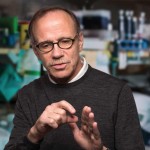
鲁斯蒂·盖奇
Rusty Gage is a professor in the Laboratory of Genetics and holds the Vi and John Adler Chair for Research on Age-Related Neurodegenerative Disease. His work concentrates on the adult central nervous system and unexpected plasticity and adaptability to environmental stimulation that remains throughout the life of all mammals. In addition, he models human neurological and psychiatric disease in vitro using human stem cells. His lab studies the genomic mosaicism that exists in the brain as a result of mobile elements that are active during neurogenesis.
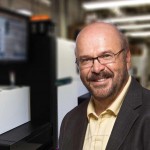
约瑟夫·埃克尔
Joseph Ecker, a professor in Salk’s Plant Biology Laboratory and director of the Genomic Analysis Laboratory, is a Howard Hughes Medical Institute and Gordon and Betty Moore Foundation Investigator. He also holds the Salk International Council Chair in Genetics. He is one of the nation’s leading authorities on the molecular biology and genetics of plants. Ecker was a principal investigator in the multinational project that sequenced the first plant genome. The plant, 拟南芥, has now become the reference organism for the studies of all plants. Ecker’s current research aims to understand epigenetic processes, the pattern of chemical markers on DNA that regulate genes, utilizing plants, mice and human subjects.
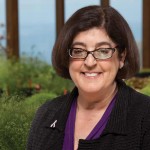
乔安·乔里
Joanne Chory is professor and director of Salk’s Plant Molecular and Cellular Biology lab. She is a Howard Hughes Medical Institute Investigator and holder of the Howard H. and Maryam R. Newman Chair in Plant Biology. Chory has spent more than 25 years using 拟南芥, a small flowering mustard plant, as a model for plant growth. She has pioneered the use of molecular genetics to study how plants respond to their environment and has made major discoveries surrounding how plants sense light and make growth hormones. The basis of Chory’s approach involves mutating 拟南芥 genes and observing the effects on a plant—does it grow faster or taller? Does it stop sending new shoots out in the direction of the sun? In this way, her team has been able to describe the function of multiple pathways that control plant growth.
宣传办公室
电话:(858) 453-4100
press@salk.edu
萨尔克研究所是一个独立的非营利性研究机构,由首个安全有效的脊髓灰质炎疫苗的研发者乔纳斯·索尔克于1960年创立。该研究所的使命是推动以合作、敢于冒险为特点的基础性研究,以应对癌症、阿尔茨海默病和农业脆弱性等社会最紧迫的挑战。这项基础科学支撑着所有的转化研究,产生有助于全球新药和创新的见解。.




