June 26, 2025
Award will enable exploration of plant roots’ ability to sense and adapt to the environment
Award will enable exploration of plant roots’ ability to sense and adapt to the environment
LA JOLLA—Salk Institute Professor 沃尔夫冈·布施, director of the Harnessing Plants Initiative and Hess Chair in Plant Science at Salk, has received a 2025 NOMIS Distinguished Scientist and Scholar Award. The NOMIS Foundation bestows this honor to “exceptional scientists and scholars whose innovative ideas and approaches involve interdisciplinary collaboration and apply a broad range of methods, building bridges across the boundaries of the sciences and humanities.”
A leading plant biologist, Busch pioneered imaging and machine vision tools to analyze hundreds of thousands of roots, revealing how plants adapt root growth and respond to stress. He discovered how plants limit iron during bacterial invasions by linking iron deficiency signaling to immune responses. He also identified a gene that controls root depth. Busch’s discoveries offer new strategies to enhance plant resilience, nutrient uptake, and disease resistance.
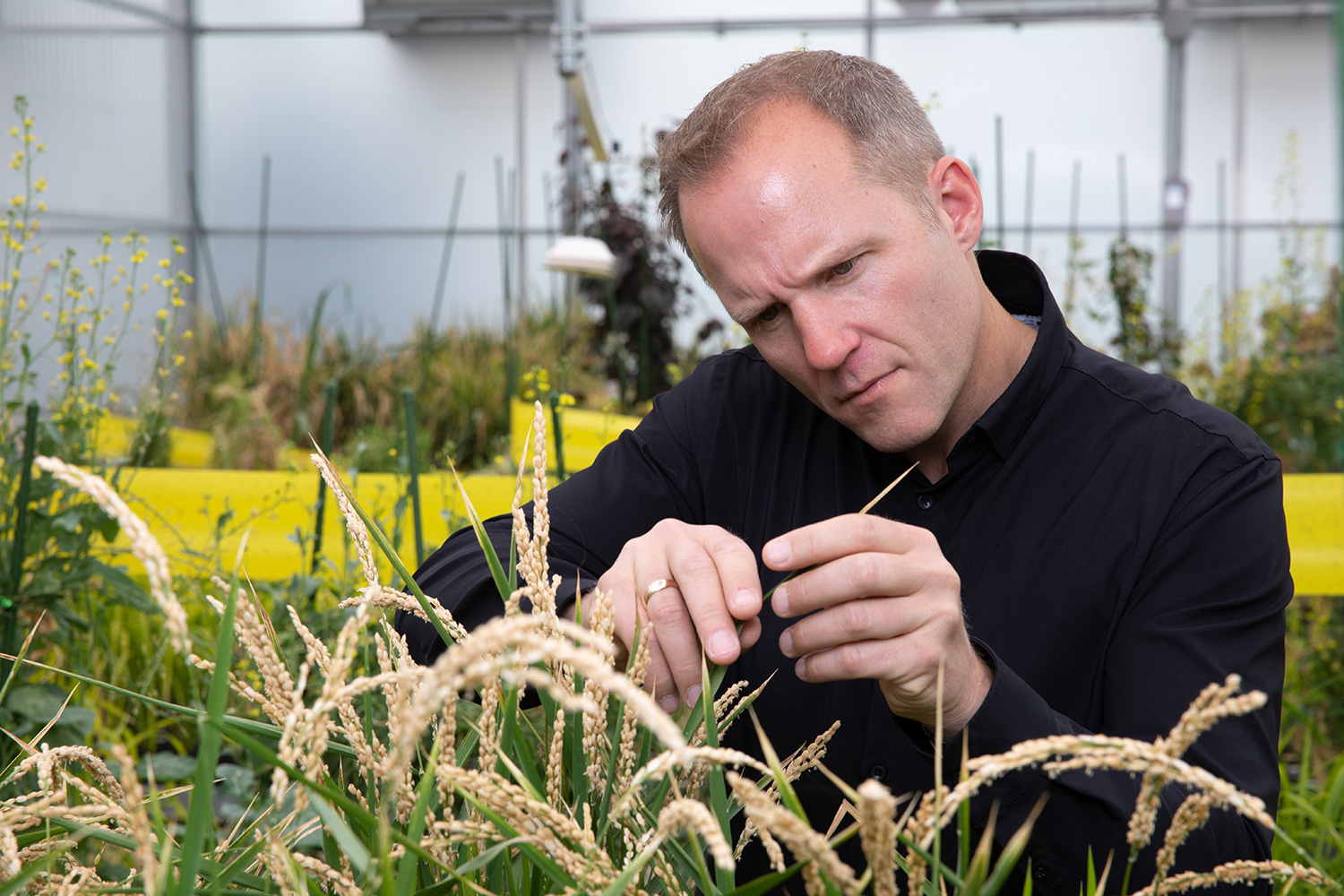
With support from the NOMIS Award, Busch will now lead a five-year research project called Mapping the Root Perceptome. This project aims to map all the chemical surroundings that roots can perceive—their “perceptome”—and investigate whether roots function as sensory organs like tongues and noses. By testing how thousands of chemicals influence root growth and identifying the root structures and receptors involved in perception, Busch and team hope to uncover the molecular mechanisms by which roots sense and respond to external cues. Ultimately, this work could help scientists develop plants with enhanced resilience to changing conditions, improved nutrient uptake, increased carbon storage in the soil, and perhaps even engineered root systems tailored for specific environments.
“This research could transform how we think about plant life, opening new paths for sustainable agriculture, improving ecosystem resilience, and advancing climate change solutions,” Busch says. “By comprehensively decoding how plants sense their environment, we will better understand their enormous success on our planet and can better harness their potential to support life on Earth.”
The NOMIS Foundation has been a valued partner of the Salk Institute for many years. The foundation’s previous gifts led to the creation of Salk’s NOMIS Center in 2008 and subsequently funded several research projects, supported postdoctoral trainees, and enabled faculty recruitment. In 2024, a gift from the NOMIS Foundation launched a new Neuroimmunology Initiative within Salk’s NOMIS Center. These resources have greatly enhanced the impact of the Institute’s research on human immunity and inflammation, and this latest award will now expand this reach to include plant science and crop resilience.
About the NOMIS Foundation:
NOMIS’ vision is to “create a spark” in the world of science by enabling and supporting pioneering research in the natural sciences, social sciences, and the humanities that benefits humankind and our planet. Our mission is to support and enable insight-driven science across all disciplines, focusing on researchers who put forth bold new ideas, exhibit a pioneering spirit, and seek to inspire the world around them. The NOMIS Foundation serves as a catalyst for scientific and human progress by supporting interdisciplinary research, establishing collaborative research networks, and developing strategic partnerships. NOMIS endeavors to develop and strengthen the conditions conducive to the pursuit of high-risk basic research and to accelerate discovery and impact.
宣传办公室
电话:(858) 453-4100
press@salk.edu
萨尔克研究所是一个独立的非营利性研究机构,由首个安全有效的脊髓灰质炎疫苗的研发者乔纳斯·索尔克于1960年创立。该研究所的使命是推动以合作、敢于冒险为特点的基础性研究,以应对癌症、阿尔茨海默病和农业脆弱性等社会最紧迫的挑战。这项基础科学支撑着所有的转化研究,产生有助于全球新药和创新的见解。.