
October 17, 2016
拉霍亚—索尔克教授 胡安·卡洛斯·伊兹皮苏亚·贝尔蒙特 has been awarded a 2016 National Institutes of Health Pioneer Award, a highly coveted grant that supports the most innovative biomedical research, for his work in stem cell biology and regeneration.
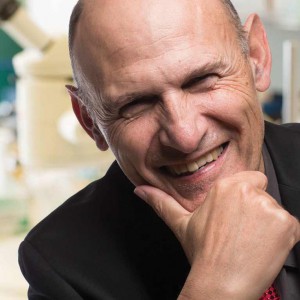
Click here for a high-resolution image
版权:萨克研究所
This grant, which will award at least $2.5 million in direct costs over 5 years, supports “individual scientists of exceptional creativity who propose pioneering and highly innovative approaches with the potential to produce an unusually high impact on biomedical or behavioral research.” The grant will fund Izpisua Belmonte’s lab in attempting to generate functional primate organs and tissues in vivo in a large animal host, the pig, using novel stem cell technologies his team has developed and recently discovered gene-editing technologies.
“This research promises to shed important light on early development and could one day lead to new methods for growing transplantable human tissues,” says Salk President 伊丽莎白·布莱克本.
Izpisua Belmonte and colleagues published work in the journal 自然 last year reporting that they had been able to integrate human stem cells into early-stage mouse embryos so that the human stem cells began the first stages of differentiation—they appeared to begin the process of generating precursors of the body’s various tissues and organs. If their technique pans out, it could help overcome a major hurdle to organ transplants: the risk that the recipient’s body will reject the new organ. He believes they may be able to get around this obstacle with advances in generating stem cells from patient cells that have already developed into a specific type of tissue, such as skin. Researchers can now take a person’s skin cells, use chemicals to revert them back into what’s called induced pluripotent stem cells (iPSCs), and then coax those reprogrammed stem cells to turn into desired tissue-specific cells, such as those of the brain, muscle or pancreas. If a person’s iPSCs were used to grow an organ in an animal, the organ might pose less risk for rejection because the cells have the same DNA as the original patient skin cell.
“If we can tell the human iPSCs in an animal host to develop into a kidney or other organ, for example, it could provide an entirely new source for transplant tissues,” says Izpisua Belmonte. “We’re still in the early stage of determining if this is possible and whether human cells can participate in the early formation of tissues in the host animal and become part of their development. Additionally, this technology could provide a novel research model by which we transplant cells in vivo to study a disease and its progression from the onset, as well as directly test how effective new therapies are.”
Izpisua Belmonte graduated from the University of Valencia, Spain, with a bachelor’s degree in pharmacy and science, and he earned a master’s degree in pharmacology from the same university before completing his PhD in biochemistry and pharmacology at the University of Bologna, Italy, and the University of Valencia. He then was a postdoctoral fellow at the European Molecular Biology Laboratory (EMBL) in Heidelberg, Germany, and the 加州大学洛杉矶分校, prior to moving to the Salk Institute in 1993 where he has been since. From 2005-14 he was also director of the Center of Regenerative Medicine in Barcelona.
宣传办公室
电话:(858) 453-4100
press@salk.edu
萨尔克研究所是一个独立的非营利性研究机构,由首个安全有效的脊髓灰质炎疫苗的研发者乔纳斯·索尔克于1960年创立。该研究所的使命是推动以合作、敢于冒险为特点的基础性研究,以应对癌症、阿尔茨海默病和农业脆弱性等社会最紧迫的挑战。这项基础科学支撑着所有的转化研究,产生有助于全球新药和创新的见解。.




