
April 30, 2025
LA JOLLA— The National Academy of Sciences recently announced that Salk Institute Professor Emeritus Greg Lemke is one of 120 new members and 30 foreign associates to be elected to the academy in recognition of their distinguished and continuing achievements in original research. This election is considered one of the highest honors accorded to a scientist in the United States. Lemke, a neuroscientist, is known for discovering the TAM family of cell receptors and their role in brain inflammation. His recognition brings the number of Salk faculty elected to the National Academy of Sciences to 14.
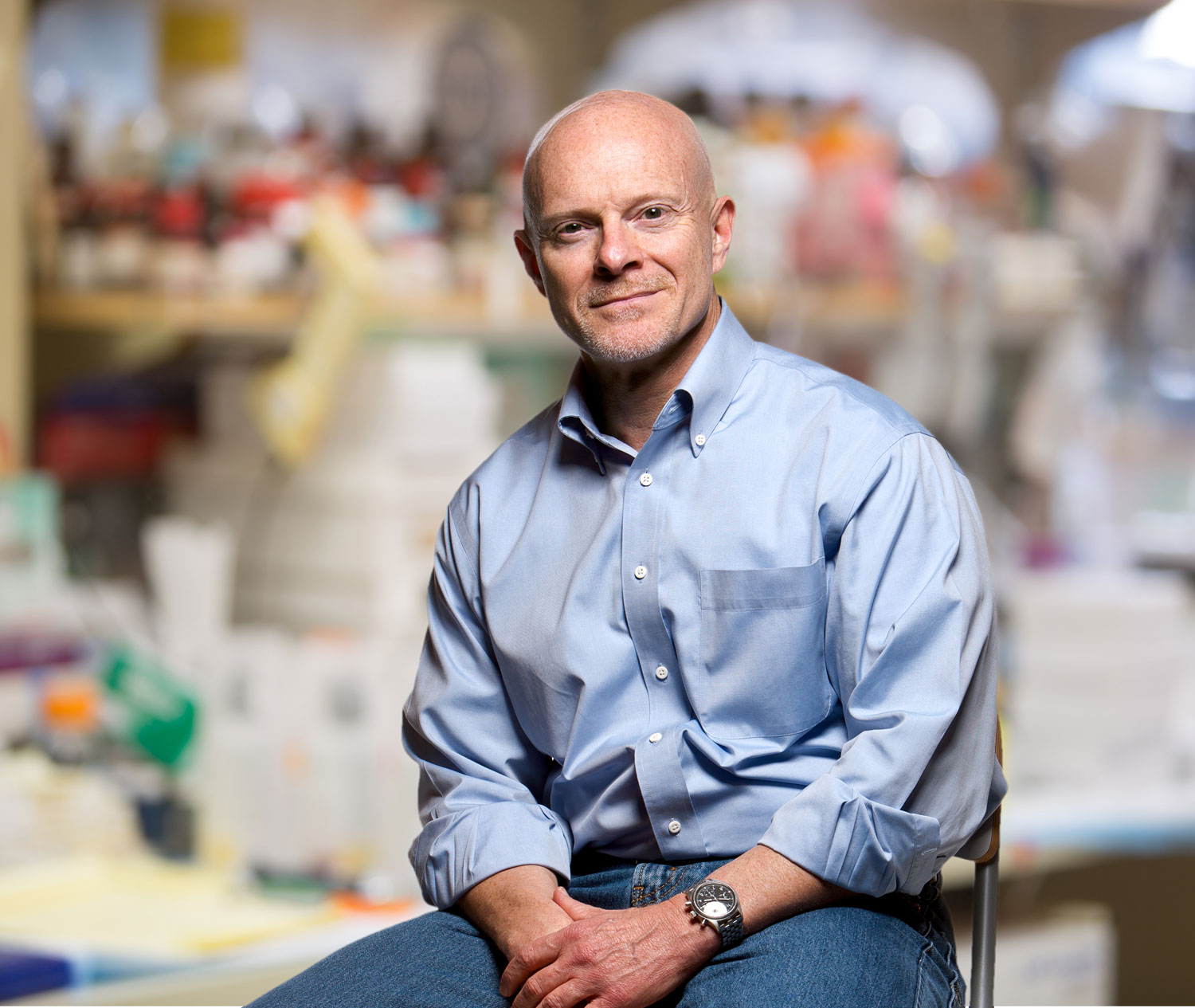
“Greg’s pioneering research has transformed our understanding of the immune system’s role in the brain in both health and disease,” says Salk President 杰拉尔德·乔伊斯. “His election to the National Academy of Sciences is a testament to the profound impact of his discoveries, and it’s a proud moment for the Salk community.”
TAM receptors play a crucial role in telling immune cells how to handle normal cellular debris and infections of bacteria, viruses, and other pathogens. Lemke’s work showed how problems with TAM receptors or their pathways are associated with drug-resistant cancer, inflammation, and autoimmune diseases such as lupus, multiple sclerosis, and rheumatoid arthritis.
He also revealed that microglia, the brain’s immune sentinels, require TAM receptors to detect and respond to growing amyloid plaques during Alzheimer’s disease. This discovery may lead to new therapeutic approaches for neurodegeneration.
In addition, Lemke discovered a mechanism by which viruses such as influenza, West Nile, and dengue fever evade the body’s immune response and infect humans. A molecule called phosphatidylserine, located on the surfaces of these viruses, directly activates TAM receptors to prevent the immune system from launching a response. The finding could lead to new antiviral drugs that block the interaction.
“It’s an incredible honor to be elected to the National Academy of Sciences,” Lemke says. “This recognition reflects decades of collaborative effort with brilliant colleagues and trainees, and I’m deeply grateful to have had the opportunity to explore the fundamental mechanisms that govern some of our greatest health challenges.”
Lemke is also a fellow of the American Association for the Advancement of Science. Over his career, he has been recognized with a Javits Neuroscience Investigator Award, Rita Allen Scholars Award, Basil O’Connor Starter Scholar Award from the March of Dimes, and Pew Scholar Award. He earned his Bachelor of Science degree at the Massachusetts Institute of Technology and his PhD at the California Institute of Technology. He conducted his postdoctoral training at Columbia University.
The National Academy of Sciences is a private, nonprofit institution that was established under a congressional charter signed by President Abraham Lincoln in 1863. It recognizes achievement in science by election to membership, and—with the National Academy of Engineering and the National Academy of Medicine—provides science, engineering, and health policy advice to the federal government and other organizations.
宣传办公室
电话:(858) 453-4100
press@salk.edu
萨尔克研究所是一个独立的非营利性研究机构,由首个安全有效的脊髓灰质炎疫苗的研发者乔纳斯·索尔克于1960年创立。该研究所的使命是推动以合作、敢于冒险为特点的基础性研究,以应对癌症、阿尔茨海默病和农业脆弱性等社会最紧迫的挑战。这项基础科学支撑着所有的转化研究,产生有助于全球新药和创新的见解。.




