
January 15, 2025
LA JOLLA—The Salk Institute has named plant geneticist Detlef Weigel a Nonresident Fellow, making him a member of the group of eminent scientific advisors who guide the Institute’s leadership. Weigel is a director and scientific member at the Max Planck Institute for Biology Tübingen in Germany, as well as an adjunct professor at the Salk Institute and University of Tübingen.
“We look forward to welcoming Detlef Weigel back to Salk as a Nonresident Fellow,” says Salk Institute President 杰拉尔德·乔伊斯. “His expertise in plant biology, particularly in understanding genetic variation and climate adaptation, will provide valuable support to our Harnessing Plants Initiative, in which we are optimizing plants to sequester carbon dioxide to mitigate climate change.”
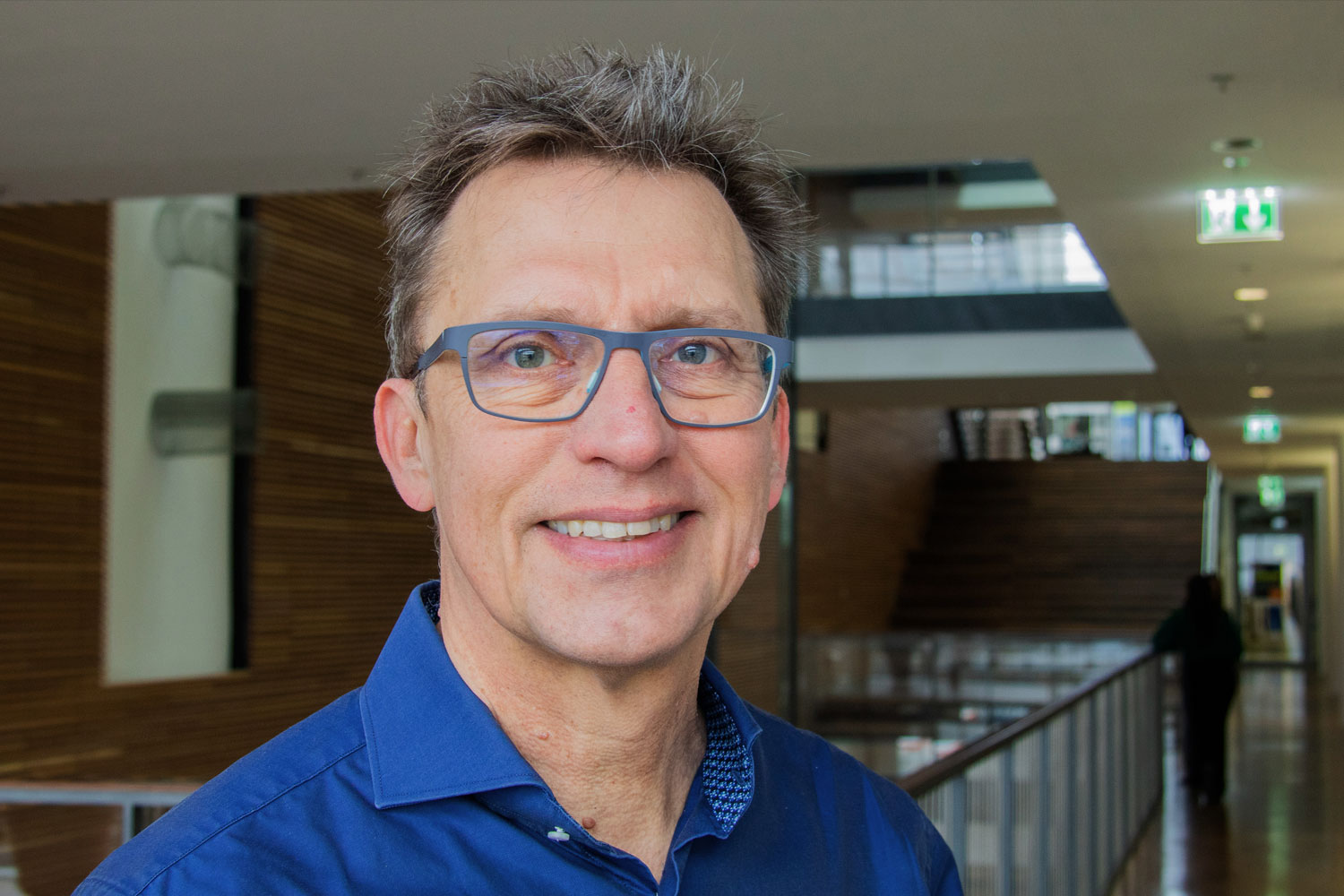
Weigel uses genomic techniques to study developmental and evolutionary plant biology, often using the common mustard weed 拟南芥 as a model. His lab discovered that an 拟南芥 gene could dramatically accelerate the flowering of trees, establishing this plant’s genetics as a platform for biotechnological discoveries. The team later discovered the first plant microRNA mutant and identified a mobile flower-inducing signal. Together with late Salk Professor 乔安·乔里, Weigel was one of the first to exploit natural genetic variation to understand how the environment affects plant development. Today, Weigel is most interested in how wild plants can adapt to climate change and defend themselves against pathogens.
Weigel has received numerous honors, including the Leibniz Award of the DFG (2007), the Otto Bayer Award (2010), the GSA Medal of the Genetics Society of America (2016), and the Novozymes Prize (2020). He is an elected member of the European Molecular Biology Organisation (EMBO), the German National Academy of Sciences Leopoldina, the US National Academy of Sciences, the Royal Society of London, and the American Academy of Arts and Sciences. He serves on many advisory and editorial boards and has cofounded three biotech start-up companies.
He earned his undergraduate degree at the Universities of Bielefeld and Cologne and his PhD in biology from the University of Tübingen. He received his postdoctoral training at the California Institute of Technology and was a faculty member at the Salk Institute for almost 10 years before moving to the Max Planck Institute, where he founded the Department for Molecular Biology.
“I am delighted to return to the Salk Institute as a Nonresident Fellow,” says Detlef Weigel. “The opportunity to broaden my collaboration with such exceptional scientists and help to ensure the legacy of my long-term collaborator and close personal friend, Joanne Chory, is both exciting and deeply meaningful to me.”
Salk Nonresident Fellows serve as members of the faculty for renewable six-year terms. These individuals come from world-renowned academic organizations where they have achieved high levels of success in research areas that are represented at the Salk Institute. They visit Salk each year to help benchmark the Institute by advising on the scientific progress of its faculty and on the effectiveness of its existing and proposed scientific programs. The Nonresident Fellows also play a key decision-making role in the appointment and promotion of Salk faculty members.
宣传办公室
电话:(858) 453-4100
press@salk.edu
萨尔克研究所是一个独立的非营利性研究机构,由首个安全有效的脊髓灰质炎疫苗的研发者乔纳斯·索尔克于1960年创立。该研究所的使命是推动以合作、敢于冒险为特点的基础性研究,以应对癌症、阿尔茨海默病和农业脆弱性等社会最紧迫的挑战。这项基础科学支撑着所有的转化研究,产生有助于全球新药和创新的见解。.




