
August 20, 2025
LA JOLLA—The Salk Institute will welcome plant biologist Lucia Strader as a new professor and holder of the Howard H. and Maryam R. Newman Chair in Plant Biology in October 2025. Strader is an internationally recognized leader in plant hormone biology who was previously based at Duke University.
Strader’s lab at Salk will explore how plants sense and integrate environmental cues to shape their growth and development. Her work will advance our fundamental understanding of plant biology and help Salk’s 植物利用计划 design more resilient crop varieties that can thrive in changing environments.
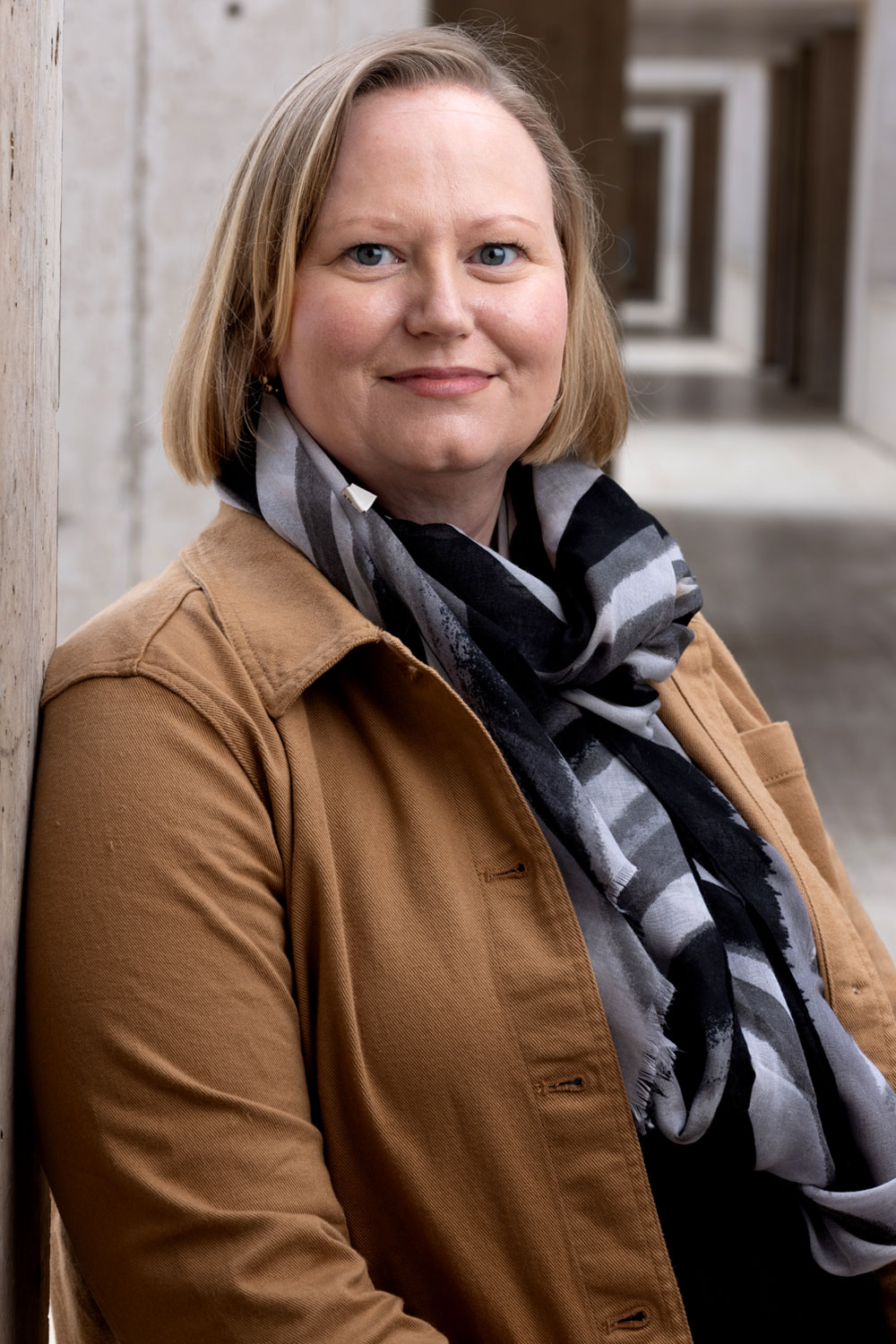
“Lucia is a world expert in decoding the molecular language plants use to interpret and interact with their environment,” says Salk President 杰拉尔德·乔伊斯. “Her innovative, multidisciplinary approach will strengthen Salk’s ongoing efforts to address some of the most pressing agricultural and environmental challenges of our time.”
Humans, like most animals, have very standardized developmental timelines—each transition from infant to child to adult is largely predetermined by our genetic code. But plants are much more flexible. A seed can stay a seed until the conditions are right to sprout; a flower won’t bloom without enough sunlight; a seasonal crop can stay in suspended youth or enter old age with a slight shift in temperature.
At the center of this adaptability is auxin, a hormone that regulates nearly every aspect of plant development—from the timing of leaf growth to the number of petals on a flower. Strader studies how auxin and its molecular partners respond to environmental changes, such as rising temperatures or shifting soil nutrients. Her multidisciplinary approach combines techniques from plant physiology, genetics, molecular biology, biochemistry, structural biology, biophysics, systems biology, and synthetic biology to understand the mechanisms of auxin regulation.
In addition to her ongoing breakthroughs in basic science, Strader is committed to translating this research into field-ready solutions. Her team will use their insights on auxin signaling to engineer plants that can withstand extreme weather, use nutrients more efficiently, and produce reliable yields despite environmental stress. Her findings are already supporting the creation of crops that can pollinate under higher nighttime temperatures and survive with less artificial nitrogen fertilization. The move to Salk will help expand her work in both fundamental and applied research areas.
“Salk has something that can’t be found in other places,” says Strader. “The Institute has a uniquely focused mission that allows its faculty to move science forward with fewer distractions. I’m excited to work with colleagues who share a genuine interest and dedication to pushing the boundaries of knowledge and making a real-world impact.”
Strader studied agronomy at Louisiana State University before earning her PhD in molecular plant sciences at Washington State University and completing her postdoctoral training in biochemistry and cell biology at Rice University. She has received numerous honors, including a fellowship with the American Association for the Advancement of Science and the National Science Foundation’s Early Faculty Career Development Award. She has also been named one of 25 Inspiring Women in Plant Biology by the American Society of Plant Biologists.
宣传办公室
电话:(858) 453-4100
press@salk.edu
萨尔克研究所是一个独立的非营利性研究机构,由首个安全有效的脊髓灰质炎疫苗的研发者乔纳斯·索尔克于1960年创立。该研究所的使命是推动以合作、敢于冒险为特点的基础性研究,以应对癌症、阿尔茨海默病和农业脆弱性等社会最紧迫的挑战。这项基础科学支撑着所有的转化研究,产生有助于全球新药和创新的见解。.




