2025 年 7 月 31 日
Salk Institute researchers launch ShortStop, a machine learning framework that explores overlooked DNA regions in search of microproteins that may play roles in disease
Salk Institute researchers launch ShortStop, a machine learning framework that explores overlooked DNA regions in search of microproteins that may play roles in disease
LA JOLLA—Proteins sustain life as we know it, serving many important structural and functional roles throughout the body. But these large molecules have cast a long shadow over a smaller subclass of proteins called microproteins. Microproteins have been lost in the 99% of DNA disregarded as “noncoding”—hiding in vast, dark stretches of unexplored genetic code. But despite being small and elusive, their impact may be just as big as larger proteins.
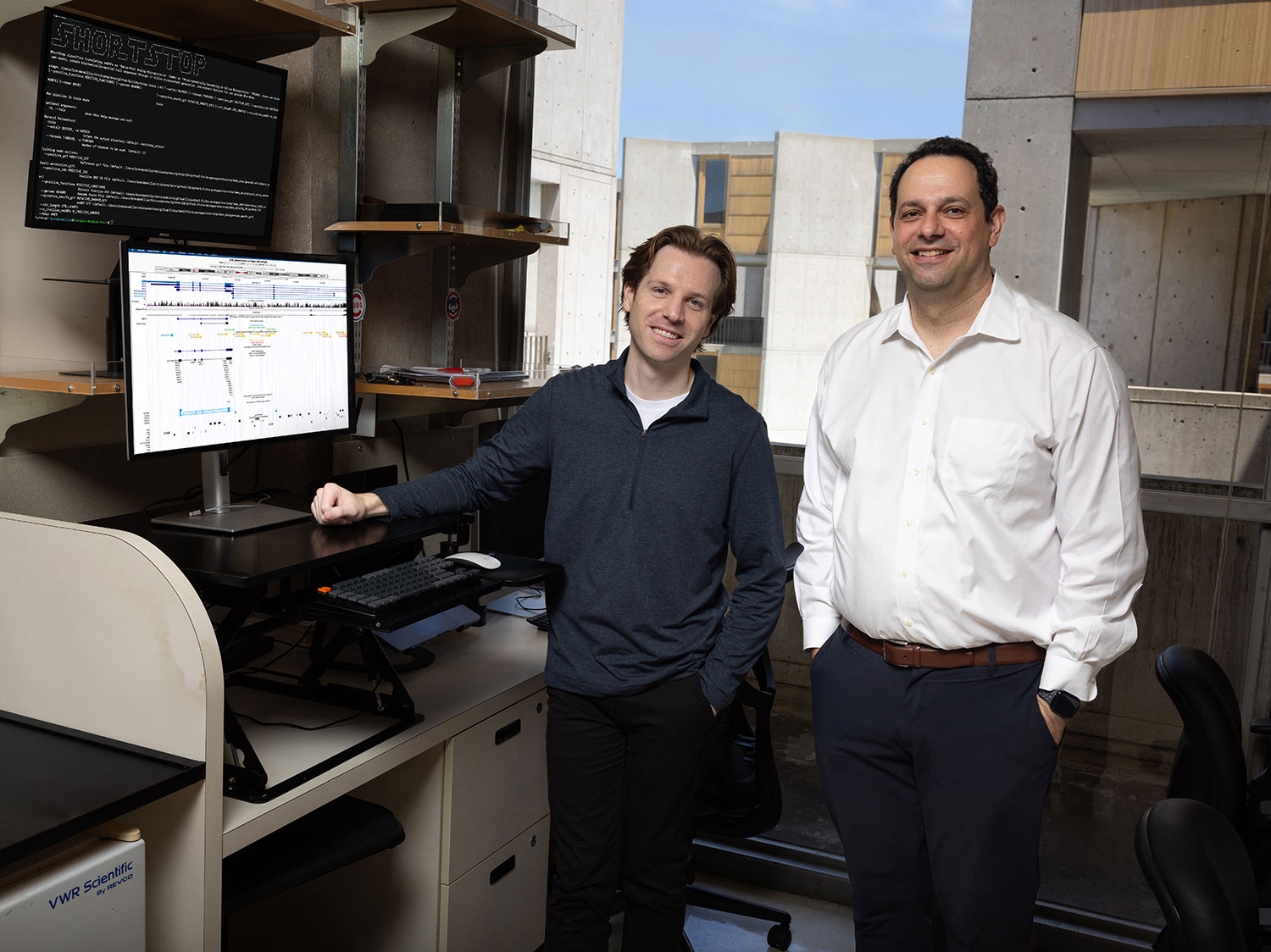
Salk Institute scientists are now exploring the mysterious dark side of the genome in search of microproteins. With their new tool ShortStop, researchers can probe genetic databases and identify DNA stretches in the genome that likely code for microproteins. Importantly, ShortStop also predicts which microproteins are most likely to be biologically relevant, saving time and money in the search for microproteins involved in health and disease.
ShortStop shines a new light on existing datasets, spotlighting microproteins formerly impossible to find. In fact, the Salk team has already used the tool to analyze a lung cancer dataset to find 210 entirely new microprotein candidates—with one standout validated microprotein—that may make good therapeutic targets in the future.
研究结果发表在 BMC Methods on July 31, 2025.
“Most of the proteins in our body are well known, but recent discoveries suggest we’ve been missing thousands of small, hidden proteins—called microproteins—coded by overlooked regions of our genome,” says senior author 艾伦·萨加特利安, professor and holder of the Dr. Frederik Paulsen Chair at Salk. “For a long time, scientists only really studied the regions of DNA that coded for large proteins and dismissed the rest as ‘junk DNA,’ but we’re now learning that these other regions are actually very important, and the microproteins they produce could play critical roles in regulating health and disease.”
More about microproteins
It is difficult to detect and catalog microproteins, owing mostly to their size. Compared to standard proteins that can range from hundreds to thousands of amino acids long, microproteins typically contain fewer than 150 amino acids, making them harder to detect using standard protein analysis methods. Therefore, instead of searching for the microproteins themselves, scientists search large, publicly available datasets for the DNA sequences that make them.
Scientists have now learned that certain stretches of DNA called small open reading frames (smORFs) can contain the instructions for making microproteins. Current experimental methods have already cataloged thousands of smORFs, but these tools remain time-consuming and expensive. Furthermore, their inability to separate potentially functional microproteins from nonfunctional microproteins has stalled their discovery and characterization.
How ShortStop works
Not all smORFs translate to biologically meaningful microproteins. Existing methods can’t discriminate between functional and nonfunctional microprotein-generating smORFs. This means that scientists must independently test each microprotein to determine whether it is functional or not.
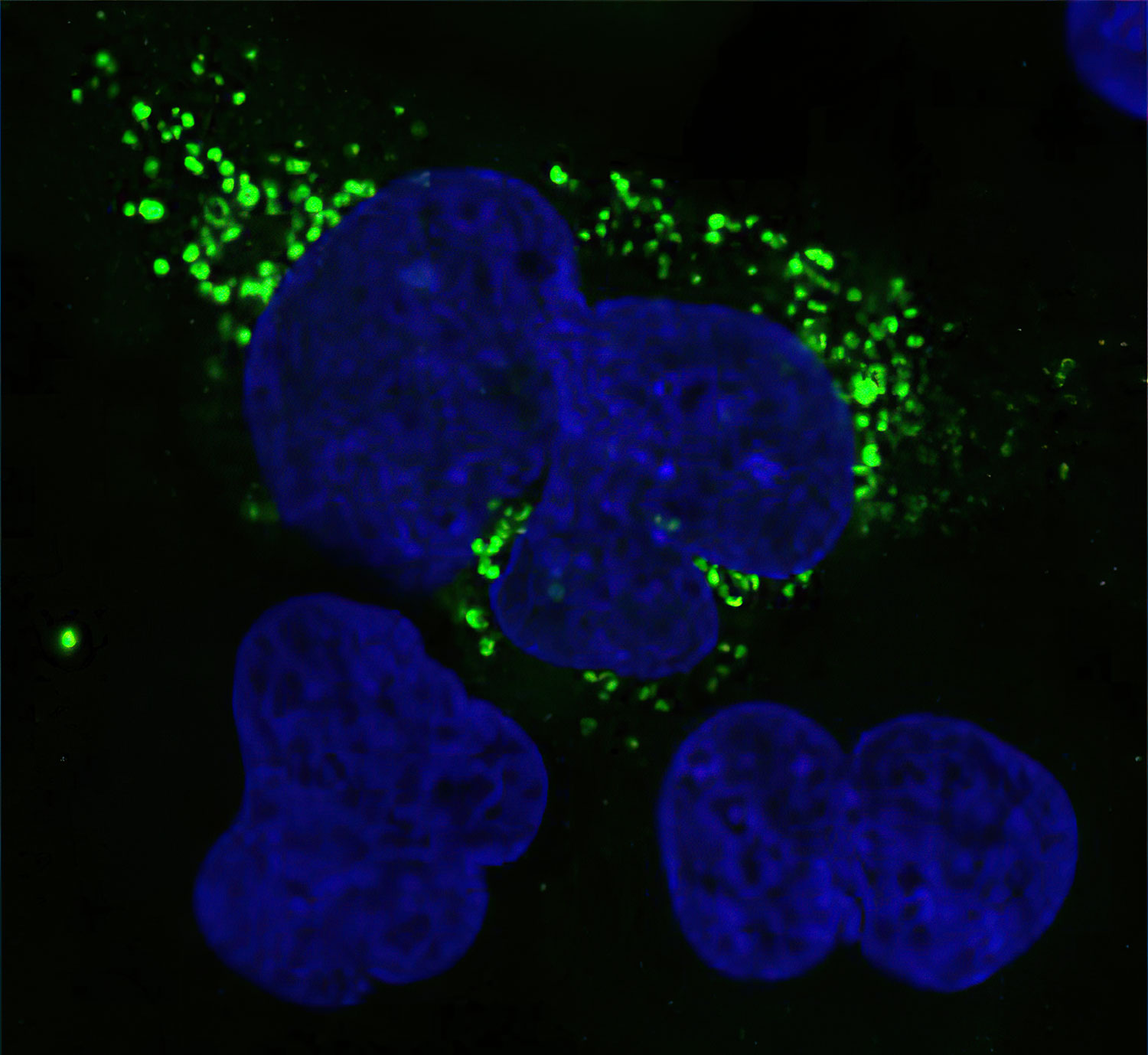
ShortStop radically alters this workflow, optimizing smORF discovery by sorting microproteins into functional and nonfunctional categories. The key to ShortStop’s two-class sorting is how it’s trained as a machine learning system. Its training relies on a negative control dataset of computer-generated random smORFs. ShortStop compares found smORFs against these decoys to quickly decide whether a new smORF is likely to be functional or nonfunctional.
ShortStop cannot definitively say whether a smORF will code for a biologically relevant microprotein, but this two-class system narrows down the experimental pool immensely. Now researchers can spend less time manually sorting through datasets and failing at the bench.
When the researchers applied ShortStop to a previously published smORF dataset, they identified 8% as likely functional microproteins, prioritizing them for targeted follow-up. This accelerates microprotein characterization by filtering out sequences unlikely to have biological relevance. ShortStop could also identify microproteins that were overlooked by other methods, including one that was validated by being detected in human cells and tissues.
“What makes ShortStop especially powerful is that it works with common data types, like RNA sequencing datasets, which many labs already use,” says first author Brendan Miller, a postdoctoral researcher in Saghatelian’s lab. “This means we can now search for microproteins across healthy and diseased tissues at scale, which will reveal new insights into human biology and unlock new paths for diagnosing and treating diseases, such as cancer and Alzheimer’s disease.”
ShortStop spots microprotein associated with lung cancer
The researchers have already used ShortStop to identify a microprotein that was upregulated in lung cancer tumors. They analyzed genetic data from human lung tumors and adjacent normal tissue to create a list of potential functional smORFs. Among the smORFs ShortStop found, one stood out—it was expressed more in tumor tissue than normal tissue, suggesting it may serve as a biomarker or functional microprotein for lung cancer.
The identification of this lung cancer-related microprotein demonstrates the value of ShortStop and machine learning to prioritize candidates for future research and therapeutic development.
“There’s so much data that already exists that we can now process with ShortStop to find novel microproteins associated with health and disease, stretching from Alzheimer’s to obesity and beyond,” says Saghatelian. “My team is really good at making methods, and with data from other Salk faculty, we can integrate these methods and accelerate the science.”
Other authors include Eduardo Vieira de Souza, Victor Pai, Joan Vaughan, Calvin Lau, and Jolene Diedrich of Salk, as well as Hosung Kim of UC Los Angeles.
The work was supported by the National Institutes of Health (P30CA014195, R01GM102491) and Clayton Medical Research Foundation.
DOI: 10.1186/s44330-025-00037-4
日记
BMC Methods
作者
Brendan Miller, Eduardo Vieira de Souza, Victor J. Pai, Hosung Kim, Joan M. Vaughan, Calvin J. Lau, Jolene K. Diedrich, Alan Saghatelian
宣传办公室
电话:(858) 453-4100
press@salk.edu
萨尔克研究所是一个独立的非营利性研究机构,由首个安全有效的脊髓灰质炎疫苗的研发者乔纳斯·索尔克于1960年创立。该研究所的使命是推动以合作、敢于冒险为特点的基础性研究,以应对癌症、阿尔茨海默病和农业脆弱性等社会最紧迫的挑战。这项基础科学支撑着所有的转化研究,产生有助于全球新药和创新的见解。.