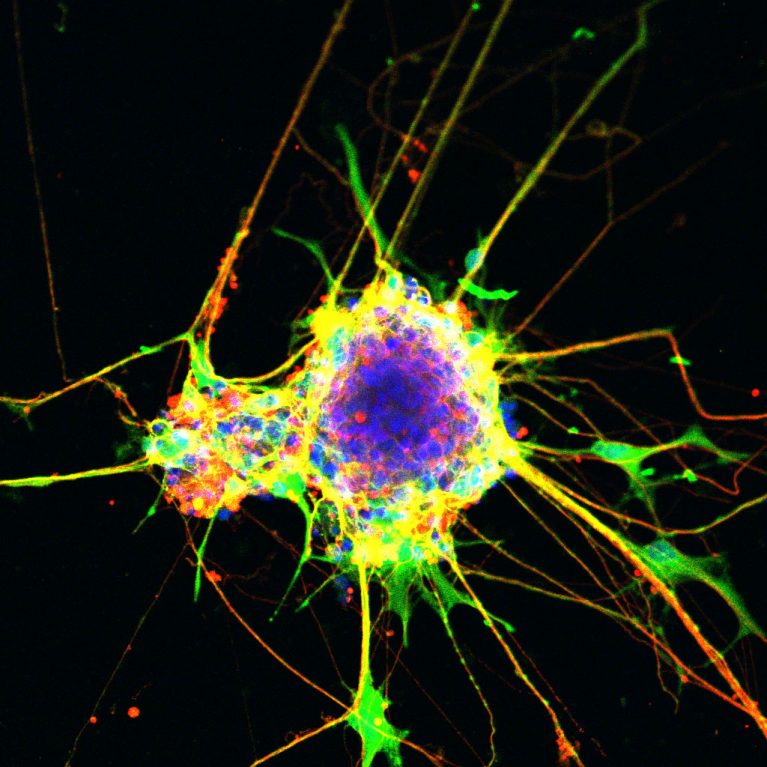
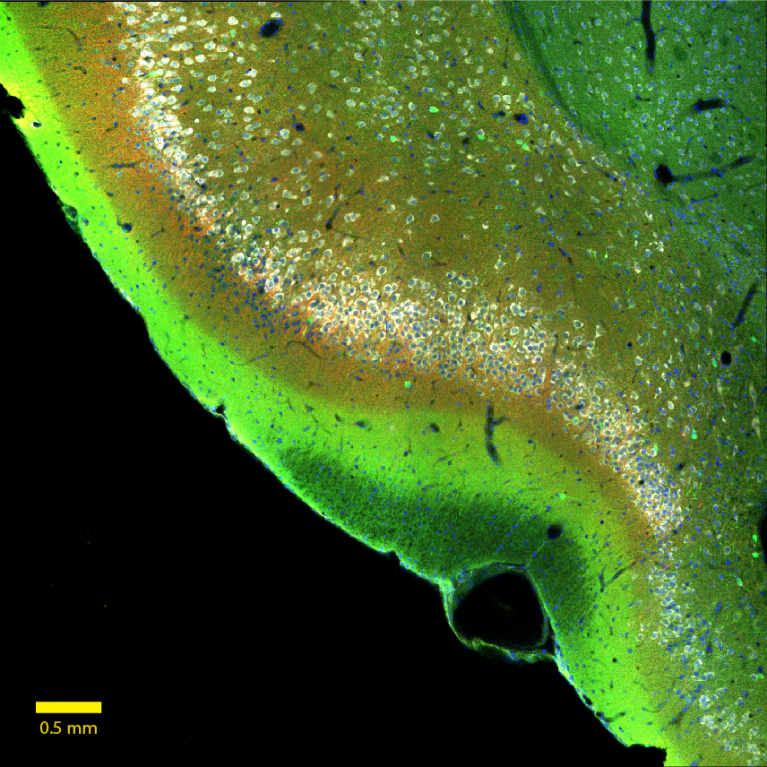
LA JOLLA—Light touch plays a critical role in everyday tasks, such as picking up a glass or playing a musical instrument. The sensation is also an essential part of the body’s protective defense system, alerting us to objects in our environment that could cause us to fall or injure ourselves. In addition, it is part of the detection system that has evolved to protect us from biting insects, such as those that cause malaria and Lyme disease, by eliciting a feeling of an itch when an insect lands on your skin.
LA JOLLA–Joseph Ecker, professor and director of Salk’s Genomic Analysis Laboratory and Margarita Behrens, a research professor in Salk’s Computational Neurobiology Laboratory, will receive over $1.6 million over three years as part of a Seed Network Grant from the Chan Zuckerberg Initiative (CZI).
LA JOLLA—Los trastornos del neurodesarrollo que surgen de mutaciones genéticas raras pueden causar una función cognitiva atípica, discapacidad intelectual y retrasos en el desarrollo, pero no está claro por qué y cómo sucede esto. Los científicos sospecharon que una mutación en un complejo de proteínas podría ser la causa de un grupo de trastornos genéticos raros y, ahora, investigadores del Salk Institute han identificado el mecanismo molecular que vincula esta mutación con el desarrollo anormal del sistema nervioso. Los hallazgos del equipo, publicados en Molecular Cell el 30 de julio de 2019, acercaron a los investigadores un paso más a la comprensión de los trastornos del neurodesarrollo, como el síndrome de Nicolaides-Baraitser y otros.
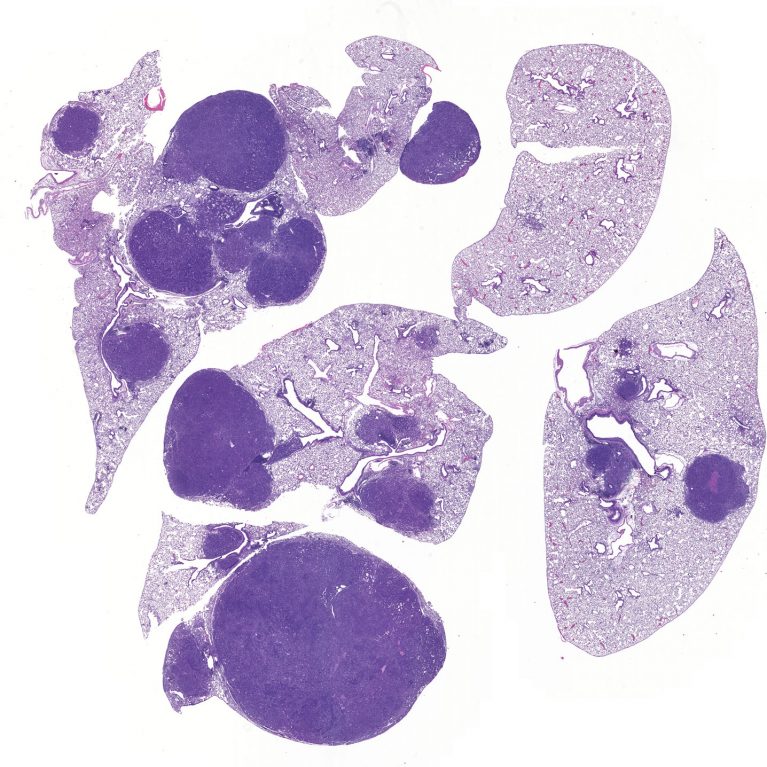
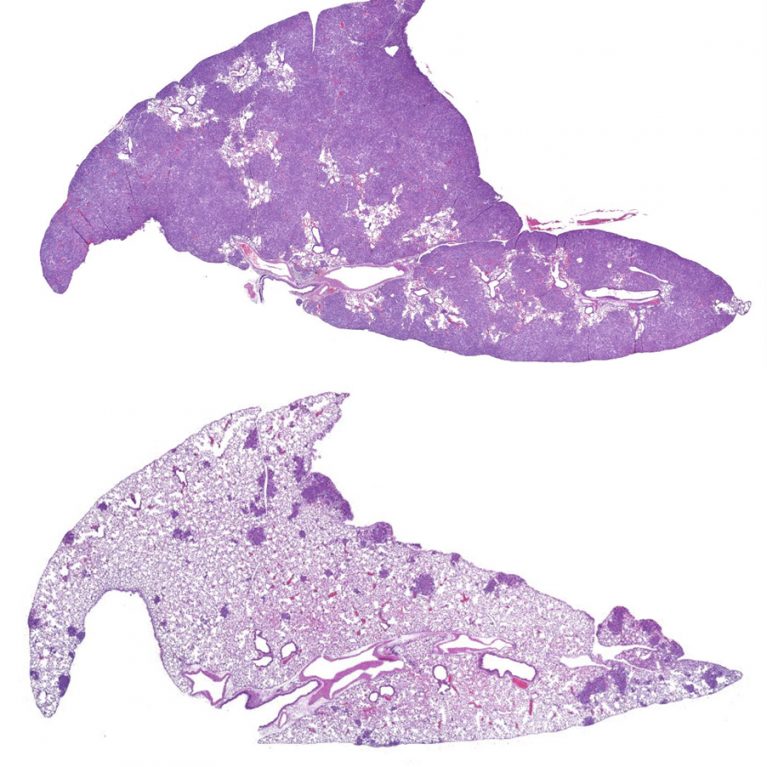
LA JOLLA—The vast majority of deadly lung cancer cases (85 percent) are termed non-small-cell lung carcinomas (NSCLCs), which often contain a mutated gene called LKB1. Salk Institute researchers have now discovered precisely why inactive LKB1 results in cancer development. The surprising results, published in the online version of Cancer Discovery on July 26, 2019, highlight how LBK1 communicates with two enzymes that suppress inflammation in addition to cell growth, to block tumor growth. The findings could lead to new therapies for NSCLC, and you can see news coverage of the story here.
LA JOLLA—Around 85 percent of lung cancers are classified as non-small-cell lung cancers, or NSCLCs. Some patients with these cancers can be treated with targeted genetic therapies, and some benefit from immunotherapies—but the vast majority of NSCLC patients have no treatment options except for chemotherapy.
LA JOLLA—The world is filled with millions upon millions of distinct smells, but how mammals’ brains evolved to tell them apart is something of a mystery.
LA JOLLA—Hidden underground networks of plant roots snake through the earth foraging for nutrients and water, similar to a worm searching for food. Yet, the genetic and molecular mechanisms that govern which parts of the soil roots explore remain largely unknown. Now, Salk Institute researchers have discovered a gene that determines whether roots grow deep or shallow in the soil.
La Jolla — The Salk Institute will celebrate 24 years of Symphony at Salk, its annual concert under the stars, with the sounds of Tony Award-winner Laura Benanti and the acclaimed San Diego Symphony on Saturday, August 24.
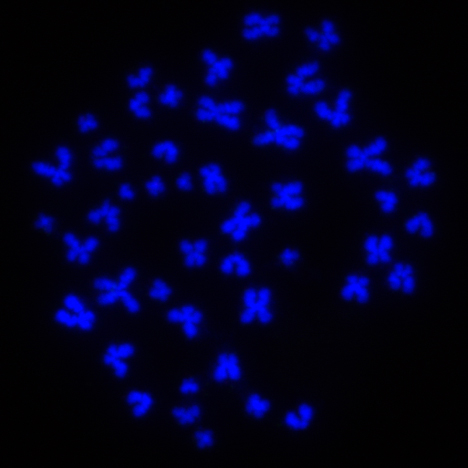
LA JOLLA—In the nucleus of every living cell, long strands of DNA are tightly folded into compact chromosomes. Now, thanks to a new computational approach developed at the Salk Institute, researchers can use the architecture of these chromosome folds to differentiate between types of cells. The information about each cell’s chromosome structure will give scientists a better understanding of how interactions between different regions of DNA play a role in health and disease. The study was published in the Actas de la Academia Nacional de Ciencias the week of July 8, 2019.
LA JOLLA—There are hundreds of thousands of distinct colors and shapes that a person can distinguish visually, but how does the brain process all of this information? Scientists previously believed that the visual system initially encodes shape and color with different sets of neurons and then combines them much later. But a new study from Salk researchers, published in Ciencia on June 27, 2019, shows that there are neurons that respond selectively to particular combinations of color and shape.
LA JOLLA—The Salk Institute announced that Helmsley-Salk Fellow Patrick Hsu has been named to MIT Technology Review’s prestigious annual list of Innovators Under 35. Every year, the media company recognizes a list of exceptionally talented technologists whose work has great potential to transform the world.
LA JOLLA—Profesor del Salk Gerald Joyce, a pioneer in the field of in vitro evolution, has been elected to the prestigious Royal Swedish Academy of Sciences as a foreign member. The Royal Swedish Academy’s approximately 460 Swedish and 175 foreign members together represent some of the world’s foremost experts in the sciences.
LA JOLLA—Pancreatitis is an inflammation of the pancreas that accounts for 275,000 hospitalizations in the United States annually. Patients who suffer from hereditary pancreatitis have a 40 to 50 percent lifetime risk of developing pancreatic cancer.
LA JOLLA – (June 14, 2019) Diana Hargreaves, an assistant professor in Salk’s Molecular and Cell Biology Laboratory, has been named a 2019 Becario Pew-Stewart para la Investigación del Cáncer as part of a partnership between the Pew Charitable Trusts and the Alexander and Margaret Stewart Trust. The scholars each receive $300,000 over four years to support their work focused on a better understanding of the causes, diagnosis and treatment of cancer.
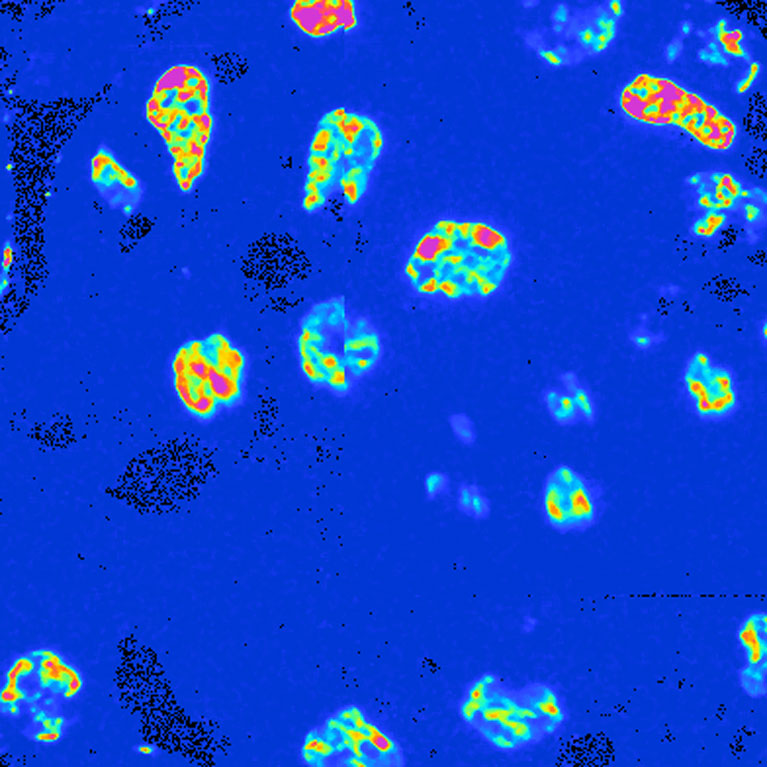
LA JOLLA: Los científicos alguna vez pensaron que las neuronas, o posiblemente las células cardíacas, eran las células más antiguas del cuerpo. Ahora, investigadores del Instituto Salk han descubierto que el cerebro, el hígado y el páncreas de los ratones contienen poblaciones de células y proteínas con vidas extremadamente largas, algunas tan antiguas como las neuronas. Los hallazgos, que demuestran “mosaicismo de edad”, se publicaron en Metabolismo celular el 6 de junio de 2019. Los métodos del equipo podrían aplicarse a casi cualquier tejido del cuerpo para proporcionar información valiosa sobre la función vitalicia de las células no divisoras y cómo las células pierden el control sobre la calidad e integridad de las proteínas y las estructuras celulares importantes durante el envejecimiento.
LA JOLLA—The Academia Nacional de Ciencias (NAS) recently announced that Salk Institute Professor Edward Callaway is one of 100 new members and 25 foreign associates to be elected to the NAS in recognition of their distinguished and continuing achievements in original research. The election is considered one of the highest honors accorded to a U.S. scientist. Callaway’s recognition brings the number of Salk faculty elected to the NAS to 16.
LA JOLLA—What will a three-degree-warmer world look like? How will plants fare in more extreme weather conditions? When experiencing stress or damage from various sources, plants use chloroplast-to-nucleus communication to regulate gene expression and help them cope.
As you may have seen, this week the Salk Institute featured prominently in the international spotlight, with Professor Joanne Chory and a talented team of Salk scientists receiving a $35 million award from TED Audacious, a collaborative platform founded to identify “jaw-dropping ideas” and “encourage the world’s greatest change-agents to dream bigger.” In this case, the “jaw-dropping” idea is Salk’s Harnessing Plants Initiative, an innovative approach to combatting climate change.
LA JOLLA—Advanced pancreatic cancer is often symptomless, leading to late diagnosis only after metastases have spread throughout the body. Additionally, tumor cells are encased in a “protective shield,” a microenvironment conferring resistance to many cancer treatment drugs. Now, Salk Institute researchers, along with an international team of collaborators, have uncovered the role of a signaling protein that may be the Achilles’ heel of pancreatic cancer.
LA JOLLA—Three Salk Institute faculty members have been promoted after the latest round of faculty reviews determined they are scientific leaders who have made original, innovative and notable contributions to biological research.