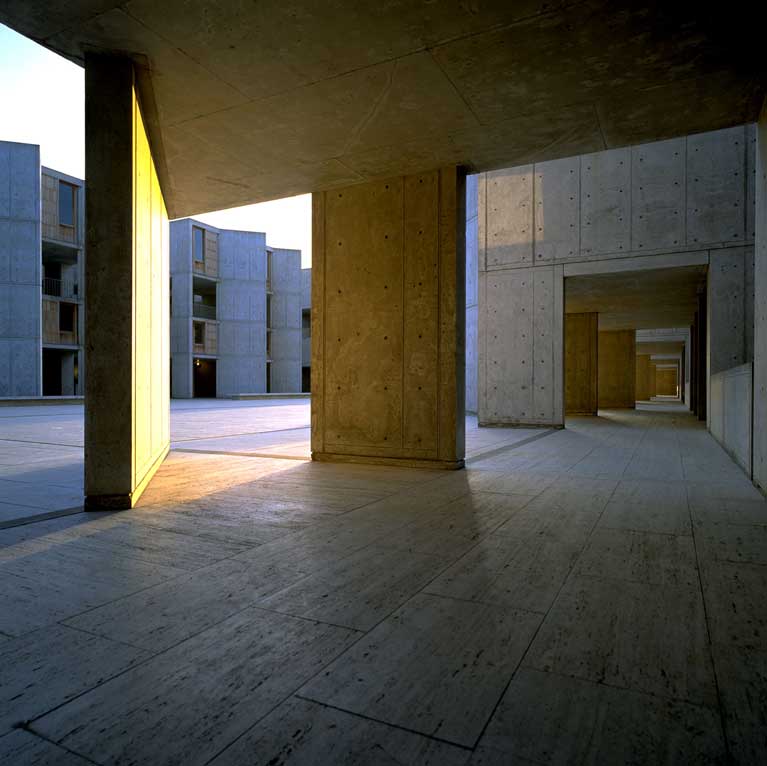
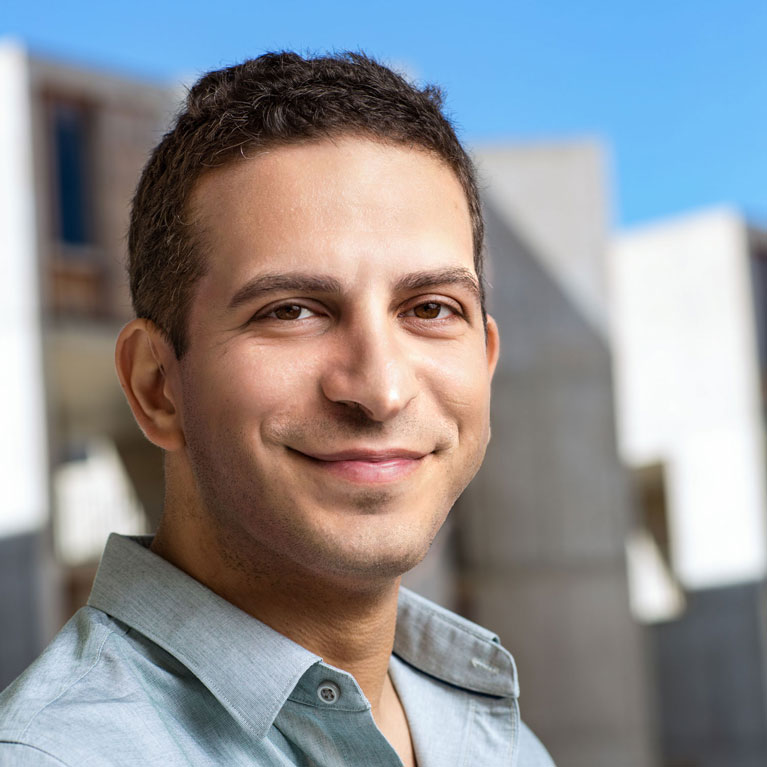
LA JOLLA—Professors Satchin Panda y Tatyana Sharpee have both been recognized for their contributions and dedication to advancing science through research by being named to endowed chairs at the Salk Institute.
LA JOLLA—The Salk Institute received a matching $1 million gift from the BioMed Realty Management Team, which was used to fund the recruitment of award-winning cancer researcher Christina Towers and to support her research and that of the Salk Cancer Center. The challenge match—where BioMed Realty matches, dollar for dollar, up to $1 million—will also support Salk’s bold Iniciativa «Vencer al cáncer», which is harnessing cutting-edge approaches to fight some of the deadliest cancers, including pancreatic, ovarian, lung, colon, brain (glioblastoma) and triple-negative breast cancer.
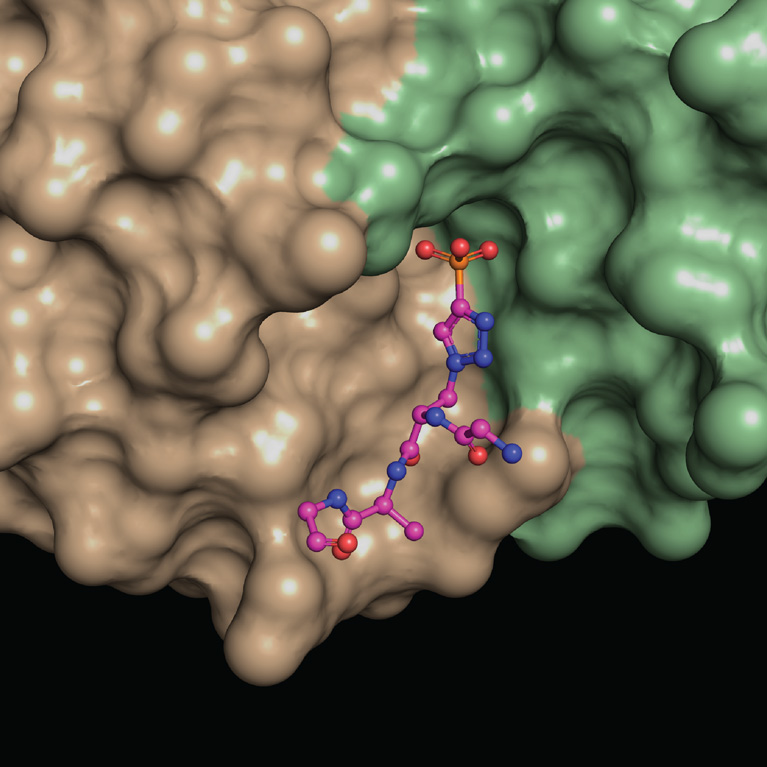
LA JOLLA—In structural biology, some molecules are so unusual they can only be captured with a unique set of tools. That’s precisely how a multi-institutional research team led by Salk scientists defined how antibodies can recognize a compound called phosphohistidine—a highly unstable molecule that has been found to play a central role in some forms of cancer, such as liver and breast cancer and neuroblastoma.
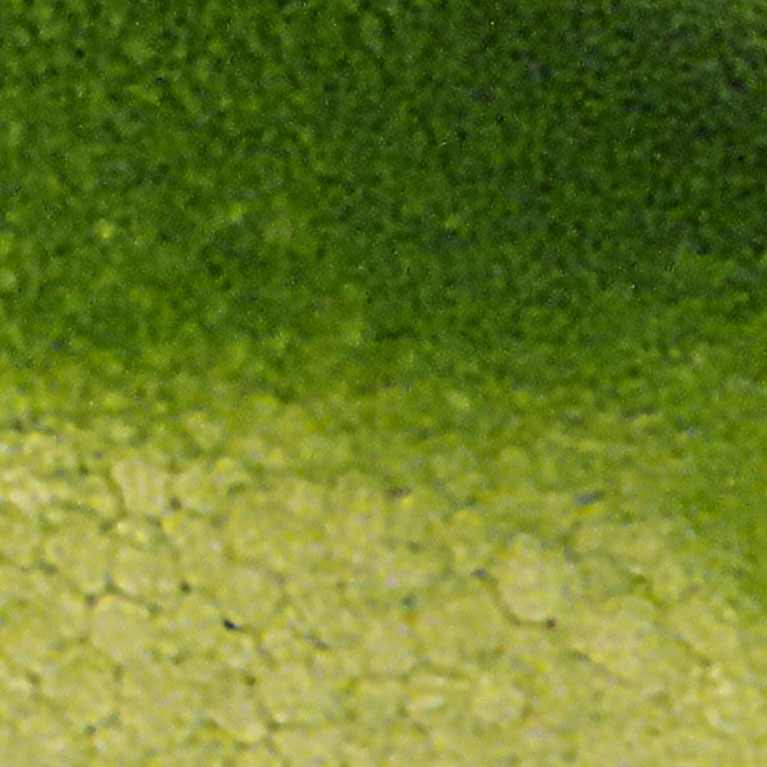
LA JOLLA—Wolffia, also known as duckweed, is the fastest-growing plant known, but the genetics underlying this strange little plant’s success have long been a mystery to scientists. Now, thanks to advances in genome sequencing, researchers are learning what makes this plant unique—and, in the process, discovering some fundamental principles of plant biology and growth.
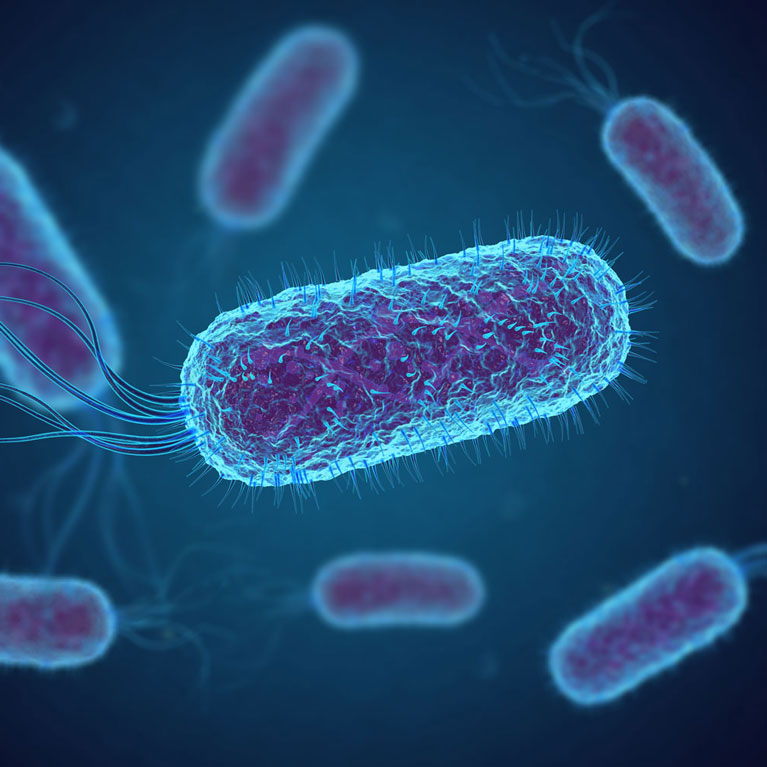
LA JOLLA—As scientists learn more about the microorganisms that colonize the body—collectively called the microbiota—one area of intense interest is the effect that these microbes can have on the brain. A new study led by Salk Institute scientists has identified a strain of E. coli bacteria that, when living in the guts of female mice, causes them to neglect their offspring.
LA JOLLA—As we endure a global viral pandemic, our appreciation for health and immunity has never been greater. Now, thanks to a generous gift from the NOMIS Foundation, Salk’s Centro NOMIS de Inmunobiología y Patogénesis Microbiana will receive $9.5 million to grow and expand, while continuing to be a leader in health and immunity research.
LA JOLLA—A collaborative team of Salk scientists led by Professor Juan Reynolds will receive $1.2 million over four years as part of a Network Grant from the Larry L. Hillblom Foundation to examine aging across the life span, including age-related neurodegenerative diseases such as Alzheimer’s disease. The research will advance our understanding of aging mechanisms at the cognitive, genomic and cellular levels with potentially direct translatability to humans. Other members of the team include Salk President and Professor Rusty Gage, Staff Scientist Uri Manor, Senior Staff Researcher Courtney Glavis-Bloom, and Carol Marchetto, an assistant professor at the University of California San Diego.
Yesterday will be remembered as one of the darkest moments in our nation’s history, as one of the most important institutions central to our freedom and democracy was attacked by a mob with malice and force in a failed attempt to prevent the constitutional certification of the November elections.
LA JOLLA—Lithium is considered the gold standard for treating bipolar disorder (BD), but nearly 70 percent of people with BD don’t respond to it. This leaves them at risk for debilitating, potentially life-threatening mood swings. Researchers at the Salk Institute have found that the culprit may lie in gene activity—or lack of it.
LA JOLLA—Profesor Asistente Dmitry Lyumkis has received a Faculty Early Career Development Program (CAREER) award from the National Science Foundation (NSF). The CAREER award supports early career scientists who serve as academic role models and lead scientific advances in their organization. Lyumkis will receive almost $1.8 million over four years to examine how some viruses such as HIV hijack and interact with host protein machinery to permanently alter the host genome to sustain infection.
LA JOLLA—El Consejo de Administración del Instituto Salk da la bienvenida a su nuevo miembro, Dennis Driver. Presidido por Daniel C. Lewis, el Consejo del Salk contribuye a marcar el rumbo de este centro de investigación biológica de renombre mundial, fundado en 1960 por Jonas Salk, pionero en la vacuna contra la poliomielitis.
LA JOLLA—If you’ve ever forgotten something mere seconds after it was at the forefront of your mind—the name of a dish you were about to order at a restaurant, for instance—then you know how important working memory is. This type of short-term recall is how people retain information for a matter of seconds or minutes to solve a problem or carry out a task, like the next step in a series of instructions. But, although it’s critical in our day-to-day lives, exactly how the brain manages working memory has been a mystery.
LA JOLLA—Getting computers to “think” like humans is the holy grail of artificial intelligence, but human brains turn out to be tough acts to follow. The human brain is a master of applying previously learned knowledge to new situations and constantly refining what’s been learned. This ability to be adaptive has been hard to replicate in machines.
LA JOLLA—When you touch a hot stove, your hand reflexively pulls away; if you miss a rung on a ladder, you instinctively catch yourself. Both motions take a fraction of a second and require no forethought. Now, researchers at the Salk Institute have mapped the physical organization of cells in the spinal cord that help mediate these and similar critical “sensorimotor reflexes.”
LA JOLLA—The Salk Institute is excited to welcome Assistant Professor Christina Towers, a top researcher in the field of cancer biology. Towers will join Salk’s renowned NCI-designated Centro Oncológico to examine how cancer cells recycle both their own nutrients and the power-generating structures called mitochondria in order to survive. Her long-term goal is to improve the treatment options for cancer patients.
LA JOLLA—Salk Institute neuroscientists Edward Callaway, Sreekanth Chalasani, and Nancy Padilla Coreano have been named recipients in the 2020 round of grants from the National Institutes of Health (NIH) to gain new insights into brain function.
LA JOLLA—Científico del personal del Salk Uri Manor, director de la Waitt Advanced Biophotonics Core Facility, recibirá $690.116 durante tres años de la Chan Zuckerberg Initiative (CZI) como uno de los 22 científicos de imagen de CZI, para desarrollar nuevas herramientas y conjuntos de datos de imagen de código abierto al tiempo que amplía su alcance educativo.
LA JOLLA—Salk Professors Susan Kaech y Alan Saghatelian have been named 2020 Fellows of the American Association for the Advancement of Science (AAAS), the world’s largest general scientific society and publisher of the journal Ciencia. Kaech and Saghatelian are among 489 new AAAS Fellows who were nominated by their peers for their distinguished efforts to advance science.
LA JOLLA—Salk Professors Joanne Chory, Joseph Ecker, Rusty Gage, Reuben Shaw y Kay Tye have been named to the Highly Cited Researchers list by Clarivate. The list identifies researchers who demonstrate “significant influence in their chosen field or fields through the publication of multiple highly cited papers.” Professors Chory, Ecker and Gage have been named to this list every year since 2014, when the regular annual rankings began. This is Professor Tye’s fourth consecutive time and Professor Shaw’s second consecutive time receiving the designation. Joseph Nery, a research assistant II in the Ecker lab, was also included on the list.
LA JOLLA—Salk’s Harnessing Plants Initiative (HPI) will receive $30 million from the Bezos Earth Fund to advance efforts to increase the ability of crop plants, such as corn and soybeans, to capture and store atmospheric carbon via their roots in the soil. This work will explore carbon-sequestration mechanisms in six of the world’s most prevalent crop species with the goal of increasing the plants’ carbon-storage capacity. It complements an ongoing HPI project focused on identifying genes for increased carbon sequestration in model plants and then utilizing those genes to enhance carbon sequestration in crops.