April 30, 2020
Plant root researcher makes groundbreaking contributions to plant biology
Plant root researcher makes groundbreaking contributions to plant biology
LA JOLLA—The Salk Institute has promoted Wolfgang Busch to the rank of professor for his groundbreaking contributions to plant biology. The promotion was based on recommendations by Salk faculty and nonresident fellows, and approved by President Rusty Gage and the Institute’s Board of Trustees.
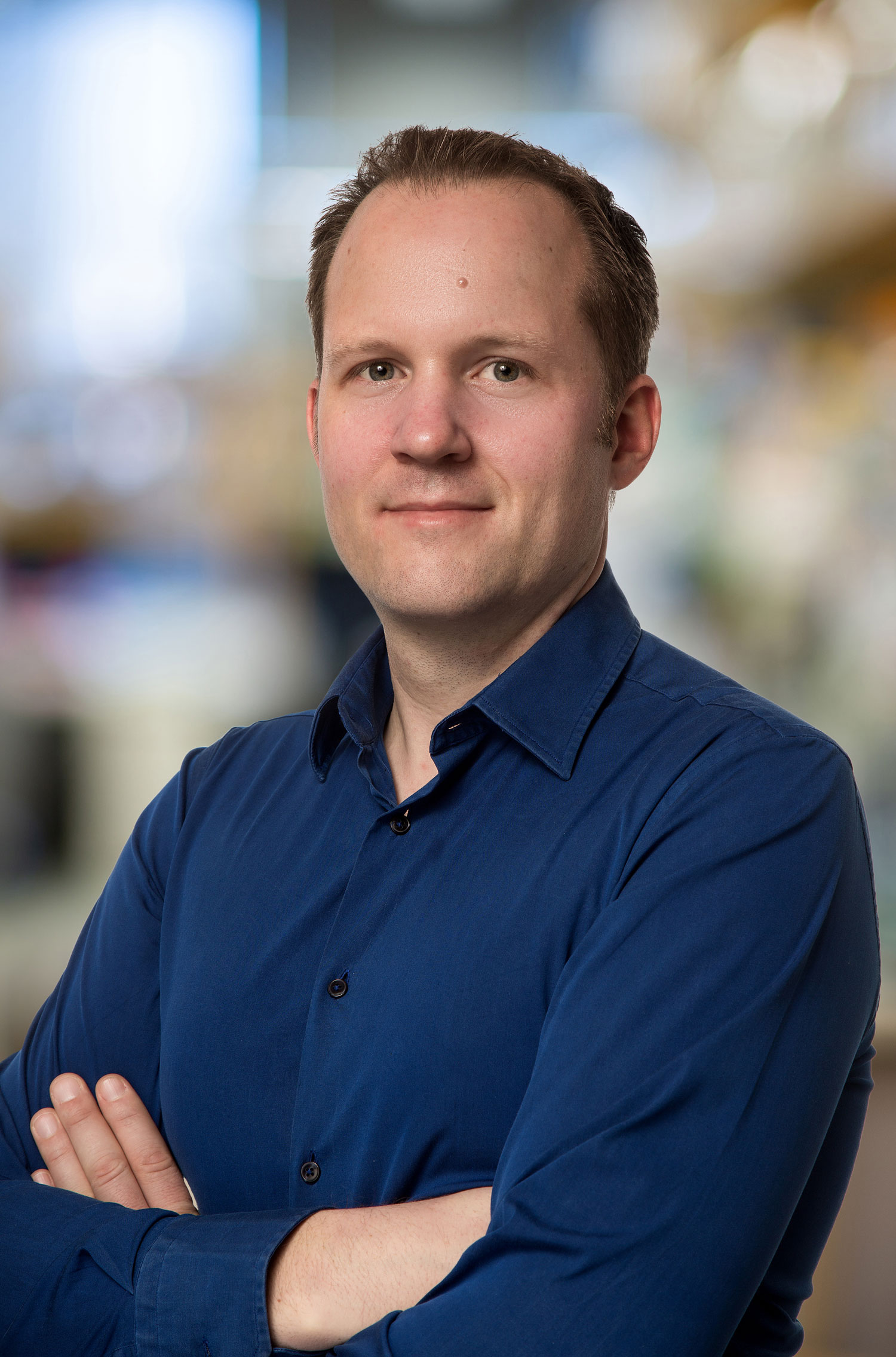
Haga clic aquí para obtener una imagen en alta resolución.
Crédito: Instituto Salk
Busch, a member of both the Plant Molecular and Cellular Biology Laboratory and the Integrative Biology Laboratory, studies plants’ roots, which are critical for obtaining water and nutrients from the soil. His research seeks to understand the molecular mechanisms that determine how a plant’s genetics interact with the environment to shape plant root growth. His research could help grow more resilient food sources—an increasingly urgent problem in the face of the planet’s shifting climate and growing population—and develop root systems that can be utilized on a large scale to store carbon in the soil to help mitigate climate change.
“Wolfgang’s keen insights into the functions and genetics of plant roots are an invaluable asset to the Institute’s effort to address climate change using plants,” says Salk President Rusty Gage. “In addition to his contributions to plant biology research, his general leadership and computational skills are having a broad and positive impact at Salk.”
Busch is one of six Salk plant biologists driving an ambitious effort to tackle climate change through the Iniciativa de Aprovechamiento de Plantas (HPI), which aims to optimize plants to address some of the effects of climate change while providing more food, fuel and fiber for a growing population. Specifically, Busch is uncovering genes that shape plant root growth in order to help plants grow bigger, more robust root systems that contain larger amounts of carbon in the form of suberin (cork) and other polymers and bury it for longer in the ground.
Busch combines cutting-edge techniques from genetics, genomics, bioinformatics and other fields to make innovative discoveries. He has identified several new genetic and molecular mechanisms that regulate root growth. Recently, he uncovered a gene responsible for helping plants thrive in stressful environments. Prior to that, he discovered a gene that determines whether a root grows deep or shallow in the soil, a critical step for HPI.
Oficina de Comunicaciones
Tel.: (858) 453-4100
press@salk.edu
El Instituto Salk es un centro de investigación independiente y sin fines de lucro fundado en 1960 por Jonas Salk, creador de la primera vacuna segura y eficaz contra la poliomielitis. La misión del Instituto es impulsar una investigación fundamental, colaborativa y audaz que aborde los retos más acuciantes de la sociedad, entre ellos el cáncer, la enfermedad de Alzheimer y la vulnerabilidad agrícola. Esta ciencia fundamental sustenta todos los esfuerzos traslacionales, generando conocimientos que permiten el desarrollo de nuevos medicamentos e innovaciones en todo el mundo.