




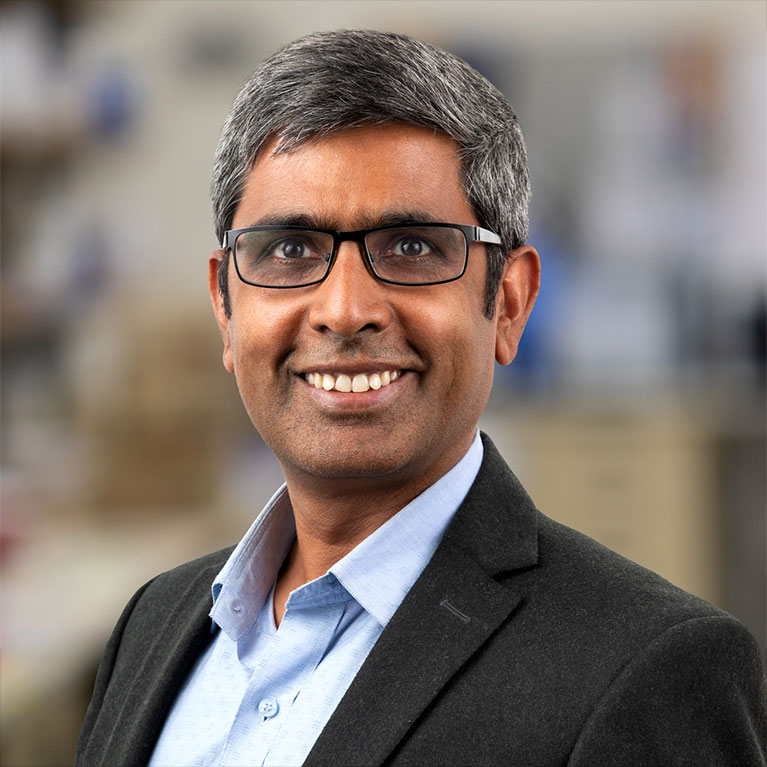
Satchidananda Panda, PhD

Professor

Labor für Regulierungsbiologie

Rita und Richard Atkinson Lehrstuhl

Salk Institute for Biological Studies - Videos

Videos


Zeitlich begrenztes Essen verbessert die Gesundheit von Feuerwehrleuten

LA JOLLA—Firefighters are the heroes of our society, protecting us around the clock. But those 24-hour shifts are hard on the body and increase the risk of cardiometabolic diseases, such as heart disease and diabetes, as well as cancer. In collaboration with the San Diego Fire-Rescue Department, scientists from the Salk Institute and UC San Diego Health conducted a clinical trial and found that time-restricted eating improved measures of health and wellbeing in firefighters. The lifestyle intervention only required the firefighters to eat during a 10-hour window and did not involve skipping meals. Read more »


Benefits of time-restricted eating depend on age and sex

LA JOLLA—Time-restricted eating (TRE), a dietary regimen that restricts eating to specific hours, has garnered increased attention in weight-loss circles. A new study by Salk scientists further shows that TRE confers multiple health benefits besides weight loss. The study also shows that these benefits may depend on sex and age. Read more »


Salk-Wissenschaftler bremsen das Wachstum von Krebszellen, indem sie den Zugang zu wichtigen Nährstoffen blockieren

LA JOLLA—Salk researchers have discovered how to curb the growth of cancer cells by blocking the cells’ access to certain nutrients. The approach, detailed in a new paper published today in Natur, took advantage of knowledge on how healthy cells use a 24-hour cycle to regulate the production of nutrients and was tested on glioblastoma brain tumors in mice. Read more »


App Fights “Metabolic Jet Lag” to Improve Health

Salk scientists show how timed feeding could help fight “metabolic jetlag”

Breakfast, lunch and dinner? For too many of us, the three meals of the day go more like: morning meeting pastry, mid-afternoon energy drink and midnight pizza. In <em>Cell Metabolism</em> on September 24, Salk Institute scientists present daily food and beverage intake data collected from over 150 participants of a mobile research app over three weeks. They show that a majority of people eat for 15 hours or longer, with less than a quarter of the day’s calories being consumed before noon and over a third consumed after 6 p.m. Read more »


Time-Restricted Eating May Reverse Diabetes & Obesity

Salk researchers tinker with a time-restricted diet in mice and find that it is remarkably forgiving.

These days, with the abundance of artificial light, TV, tablets and smartphones, adults and children alike are burning the midnight oil. What they are not burning is calories: with later bedtimes comes the tendency to eat. Read more »


How Genes Link our Eating & Sleeping Schedules

Mutations in the circadian genes could drive night eating syndrome.

For most people, the urge to eat a meal or snack comes at a few, predictable times during the waking part of the day. But for those with a rare syndrome, hunger comes at unwanted hours, interrupts sleep and causes overeating. Read more »


Possible Drug-Free Intervention for Obesity

It turns out that when we eat may be as important as what we eat. Scientists at the Salk Institute for Biological Studies have found that regular eating times and extending the daily fasting period may override the adverse health effects of a high-fat diet and prevent obesity, diabetes and liver disease in mice. Read more »


Satchin Panda – Health & Your Internal Clock

American Health Journal


Bildung

PhD, The Scripps Research Institute, La Jolla, California
Postdoctoral Researcher, Genomics Institute of the Novartis Research Foundation, San Diego, California


Zugehörigkeiten


Auszeichnungen & Ehrungen

  • XPRIZE Healthspan semifinalist, 2025
  • American Association for the Advancement of Science (AAAS), 2023
  • The Julie Martin Mid-Career Award in Aging Research, 2014
  • Dana Foundation Award in Brain and Immune System Imaging, 2006
  • Pew Scholar in the Biomedical Sciences, 2006