April 20, 2023
Salk scientists find protein FNIP1 links cellular powerhouse damage to repair during metabolic stress, with broad disease implications spanning from diabetes to cancer to neurodegeneration
Salk scientists find protein FNIP1 links cellular powerhouse damage to repair during metabolic stress, with broad disease implications spanning from diabetes to cancer to neurodegeneration
LA JOLLA—Scientists often act as detectives, piecing together clues that alone may seem meaningless but together crack the case. Professor Reuben Shaw has spent nearly two decades piecing together such clues to understand the cellular response to metabolic stress, which occurs when cellular energy levels dip. Whether energy levels fall because the cell’s powerhouses (mitochondria) are failing or due to a lack of necessary energy-making supplies, the response is the same: get rid of the damaged mitochondria and create new ones.

Now, in a study published in Wissenschaft on April 20, 2023, Shaw and team cracked the case on this process of removal and replacement. It turns out that a protein called FNIP1 is the critical link between a cell sensing low energy levels and eliminating and replacing damaged mitochondria.
“This is a final puzzle piece that connects decades of studies from labs all over the world. It solves one of the final mysteries about how the signal to make new mitochondria is tied to the original signal that energy levels are low,” says Shaw, senior author and director of Salk’s Cancer Center. “This discovery that FNIP1 is at the heart of the metabolic stress response will help us understand healthy aging, cancerous tumors, neurodegenerative diseases, and so much more. This is a fundamental cellular process that ties into many diseases and will be in textbooks for years to come.”
Nearly 15 years ago, Shaw’s lab discovered that an enzyme called AMPK was responsible for starting the removal process of damaged mitochondria. Later, the team showed that a part of this removal process is the cell breaking damaged mitochondria into hundreds of fragments, then sorting through those fragments to remove the damaged parts and repurpose the functional parts. But the question remained—how is the repair of damaged powerhouses connected to the signal to start making new powerhouses from scratch?
When mitochondria are damaged, or when sugar (glucose) or oxygen levels fall in the cell, energy levels quickly fall. After an energy decrease as small as 10 percent, AMPK is triggered. AMPK communicates with another protein, called TFEB, to instruct genes to make 1) lysosomes (cellular recycling centers) to remove damaged mitochondria, and 2) replacement mitochondria. But how AMPK and TFEB communicated was unclear.
When a new suspect, FNIP1, joined in on the metabolic stress mystery, the answer was finally within reach. FNIP1 is the most recently discovered protein of the AMPK, TFEB, FNIP1 trio. For years, researchers were only able to connect FNIP1 to AMPK, and thus thought it may be a throwaway clue or a red herring—instead, it was the clue that cracked the case.
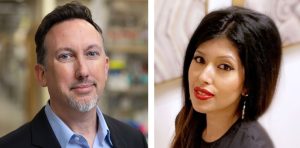
“Many years ago, we suspected the FNIP1 protein might be important for AMPK-TFEB communication that led to mitochondria synthesis and replacement in the cell during metabolic stress, but we didn’t know how FNIP1 was involved,” says first author Nazma Malik, a postdoctoral researcher in Shaw’s lab. “If correct, this finding would finally link AMPK and TFEB, which would both enrich our understanding of metabolism and cellular communication and provide a novel target for therapeutics.”
To determine whether FNIP1 was the missing link between AMPK and TFEB, the researchers compared unaltered human kidney cells with two altered types of human kidney cells: one that lacked AMPK entirely, and another that lacked only the specific parts of FNIP1 that AMPK talks to. The team discovered that AMPK signals FNIP1, which then opens the gate to let TFEB into the nucleus of the cell. Without FNIP1 receiving the signal from AMPK, TFEB remains trapped outside the nucleus, and the entire process of breaking down and replacing damaged mitochondria is not possible. And without this robust response to metabolic stress, our bodies—along with the many plants and animals whose cells also rely on mitochondria—would not be able to function effectively.
“Watching this project evolve over the last 15 years has been a rewarding experience,” says Shaw, holder of the William R. Brody Chair. “I am proud of my dedicated, talented team, and I cannot wait to see how this monumental finding will influence future research—at Salk and beyond.”
Other authors include Bibiana I. Ferreira, Pablo E. Hollstein, Stephanie D. Curtis, Elijah Trefts, Sammy Weiser Novak, Jingting Yu, Rebecca Gilson, Kristina Hellberg, Lingjing Fang, Arlo Sheridan, Nasun Hah, Gerald S. Shadel, and Uri Manor of the Salk Institute.
The work was supported by the National Institutes of Health (R35CA220538, P01CA120964, R01DK080425, NCI CCSG P30 CA014195, and R21 DC018237), the Leona M. and Harry B. Helmsley Charitable Trust (2012-PG-MED002), an American Heart Association and Paul G. Allen Frontiers Group award (19PABH134610000), the Salk Institute’s National Cancer Institute Cancer Center (CCSG P30 CA014195) and Nathan Shock Center for Aging Research (P30 AG068635), the Waitt Foundation, the National Science Foundation (NeuroNex award 2014862), and the Glenn Foundation.
DOI: 10.1126/science.abj5559
JOURNAL
Wissenschaft
AUTOREN
Nazma Malik, Bibiana I. Ferreira, Pablo E. Hollstein, Stephanie D. Curtis, Elijah Trefts, Sammy Weiser Novak, Jingting Yu, Rebecca Gilson, Kristina Hellberg, Lingjing Fang, Arlo Sheridan, Nasun Hah, Gerald S. Shadel, Uri Manor, Reuben J. Shaw
Büro für Kommunikation
Telefon: (858) 453-4100
press@salk.edu
Das Salk Institute ist ein unabhängiges, gemeinnütziges Forschungsinstitut, das 1960 von Jonas Salk, dem Entwickler des ersten sicheren und wirksamen Polio-Impfstoffs, gegründet wurde. Die Aufgabe des Instituts besteht darin, grundlegende, kooperative und risikofreudige Forschung voranzutreiben, die sich mit den dringendsten Herausforderungen der Gesellschaft befasst, darunter Krebs, Alzheimer und die Gefährdung der Landwirtschaft. Diese Grundlagenforschung bildet die Basis für alle translationalen Bemühungen und führt zu Erkenntnissen, die neue Medikamente und Innovationen weltweit ermöglichen.