Kay Tye, doctora

Profesor

Laboratorio de Neurobiología de Sistemas

Investigador del Instituto Médico Howard Hughes

Silla Wylie Vale
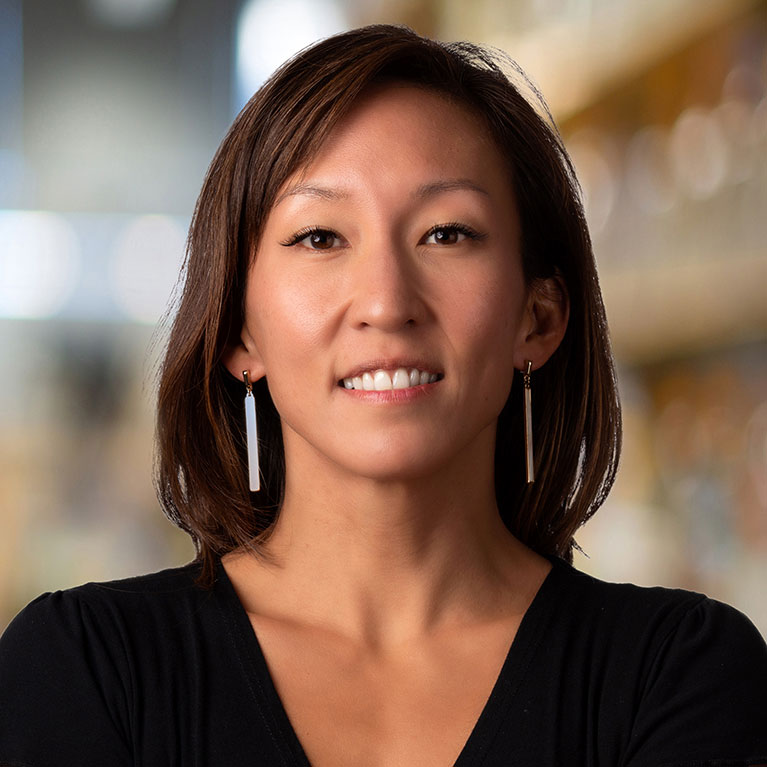
Kay Tye
Instituto Salk de Estudios Biológicos - Vídeos

Videos


From Then to When | Kay Tye

Kay Tye is a professor in the Systems Neurobiology Laboratory and the Wylie Vale Chair. She seeks to understand the neural-circuit basis of emotion that leads to motivated behaviors such as social interaction, reward-seeking, and avoidance.

Convertir un recuerdo en algo positivo o negativo

LA JOLLA—Researchers at the Salk Institute and colleagues have discovered the molecule in the brain responsible for associating good or bad feelings with a memory. Their discovery, published in Nature on July 20, 2022, paves the way for a better understanding of why some people are more likely to retain negative emotions than positive ones—as can occur with anxiety, depression or post-traumatic stress disorder (PTSD). Read More »


Cómo codifica el cerebro el estatus social y la “mentalidad ganadora”

LA JOLLA—If you’re reaching for the last piece of pizza at a party and see another hand going for it at the same time, your next move probably depends both on how you feel and whom the hand belongs to. Your little sister—you might go ahead and grab the pizza. Your boss—you’re probably more likely to step back and give up the slice. But if you’re hungry and feeling particularly confident, you might go for it. Read More »


Kay Tye


Educación

BS, Ciencias Cerebrales y Cognitivas, con especialización en Biología, Instituto Tecnológico de Massachusetts
Doctorado en Neurociencia, Universidad de California en San Francisco



Afiliaciones


Premios y distinciones

  • Investigador del Instituto Médico Howard Hughes, 2021
  • Premio Nacional Blavatnik para Jóvenes Científicos, 2021
  • Premio Tsuneko y Reiji Okazaki, 2019
  • New York Stem Cell Foundation, Premio de Neurociencia Robertson Investigator, 2015-2019
  • Beca McKnight Scholar, 2015-2018
  • Premio Pionero del Director de los Institutos Nacionales de Salud, 2017
  • Premio al Joven Investigador de la Society for Neuroscience, 2016
  • Premio Daniel X. Freedman, 2016
  • Premio Presidencial de Inicio de Carrera para Científicos e Ingenieros (PECASE), 2016
  • Mentor del Programa de Investigación para Estudiantes de Pregrado (UROP), 2015
  • Premio al Logro Docente Harold E. Edgerton, 2015
  • Premio BCS a la Excelencia en Asesoría de Pregrado, 2015
  • Beca Sloan de Investigación, 2014
  • Compromiso con el cuidado, Premio MIT de Mentoría para Graduados, 2014
  • American College of Neuropsychopharmacology, Miembro Asociado, 2014
  • Los "35 Innovadores Menores de 35" de Technology Review, 2014
  • Premio Joven Investigador NARSAD, 2013-2014
  • Premio Innovator Novato de la Dirección de los Institutos Nacionales de Salud, 2013-2018
  • Premio Klingenstein Foundation, 2013-2015
  • Profesorship de Desarrollo Profesional Whitehead, 2013-2015
  • Premio Whitehall Foundation, 2012-2014
  • Becario Kavli Foundation Frontiers, 2012
  • Premio del Fondo Jeptha H. and Emily V. Wade, 2012
  • Premio de Postdoctorado de la Universidad de Stanford (Mejor en Bioingeniería), 2010
  • Becario de investigación postdoctoral de la National Research Service Award, 2009-2012
  • Premio Postdoctoral de la European Brain and Behavior Society, 2009
  • Premio Donald B. Lindsley en Neurociencia Conductual, 2009
  • Premio Harold M. Weintraub por Logros Sobresalientes en Ciencias Biológicas, 2009
  • Becario de Investigación de la National Science Foundation, 2005-2008

Perfil

Características

