
14 de enero de 2016
Salk scientists uncover pathway in highly suspect disease gene also tied to schizophrenia and bipolar disease
Salk scientists uncover pathway in highly suspect disease gene also tied to schizophrenia and bipolar disease
LA JOLLA—A gene linked to mental disorders helps lays the foundation for a crucial brain structure during prenatal development, according to Salk Institute research published January 14, 2016 in Cell Reports.
The findings reveal new mechanistic insights into the gene, known as MDGA1, which may bring a better understanding of neurodevelopmental disorders in people, says Carlos Perez-Garcia, the study’s lead author and a staff researcher in the laboratory of Professor Dennis O’Leary, holder of the Vincent J. Coates Chair in Molecular Neurobiology.
Signs of autism, schizophrenia and bipolar disorder often take years to manifest. Studying suspect disease genes in the brain early in life could prove valuable in the development of new treatments or interventions.
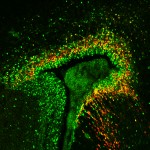
More than a decade ago, O’Leary’s group discovered MDGA1, which codes for a protein that influences neuron migration in the developing brain. Coating the outer surfaces of neurons, MDGA1 is particularly abundant in the cerebral cortex, a six-layered area of the brain needed to process information from the five senses and coordinate movement, as well as to be self-aware and plan ahead.
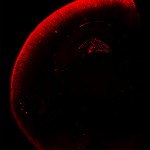
As the lab was investigating the role of MDGA1 in brain development, other research groups published large population-based studies implicating the gene in autism, schizophrenia and bipolar disorder. “The human data brought a whole new level of meaning to our work,” says Perez-Garcia. “It allowed us to consider our findings in the context of human disease.”
The team decided to look at the protein’s role in early brain development, when the foundation of a proper, six-layer cortex is being laid. When Perez-Garcia disabled the gene in mice a little more than halfway through pregnancy, to his surprise, the neuron precursors in the cerebral cortex migrated to the wrong places in the brain. These cells die off before they can become neurons and, overall, without MDGA1, the cerebral cortex loses about half its neurons.
These new results suggest that mutations in MDGA1 while the cortex is developing (during the first half of pregnancy in humans) could produce snowball effects leading to the development of brain disorders. The severe depletion of neurons in the cortex strongly compromises its ability to communicate with other brain areas, says Perez-Garcia.
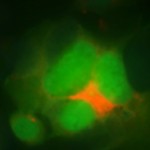
More experiments by the group revealed what happens when MDGA1 is mutated: It prevents neuron precursors from sticking to one another, which is critical for those cells to divide and generate neurons.
The lab plans to continue to examine the role of MDGA1 earlier in development and also during adulthood, as well as assess behaviors of mice lacking the gene.
The research was supported by the Institutos Nacionales de Salud.
DIARIO
Cell Reports
AUTORES
Carlos Perez-Garcia and Dennis O’Leary
Oficina de Comunicaciones
Tel.: (858) 453-4100
press@salk.edu
El Instituto Salk es un centro de investigación independiente y sin fines de lucro fundado en 1960 por Jonas Salk, creador de la primera vacuna segura y eficaz contra la poliomielitis. La misión del Instituto es impulsar una investigación fundamental, colaborativa y audaz que aborde los retos más acuciantes de la sociedad, entre ellos el cáncer, la enfermedad de Alzheimer y la vulnerabilidad agrícola. Esta ciencia fundamental sustenta todos los esfuerzos traslacionales, generando conocimientos que permiten el desarrollo de nuevos medicamentos e innovaciones en todo el mundo.