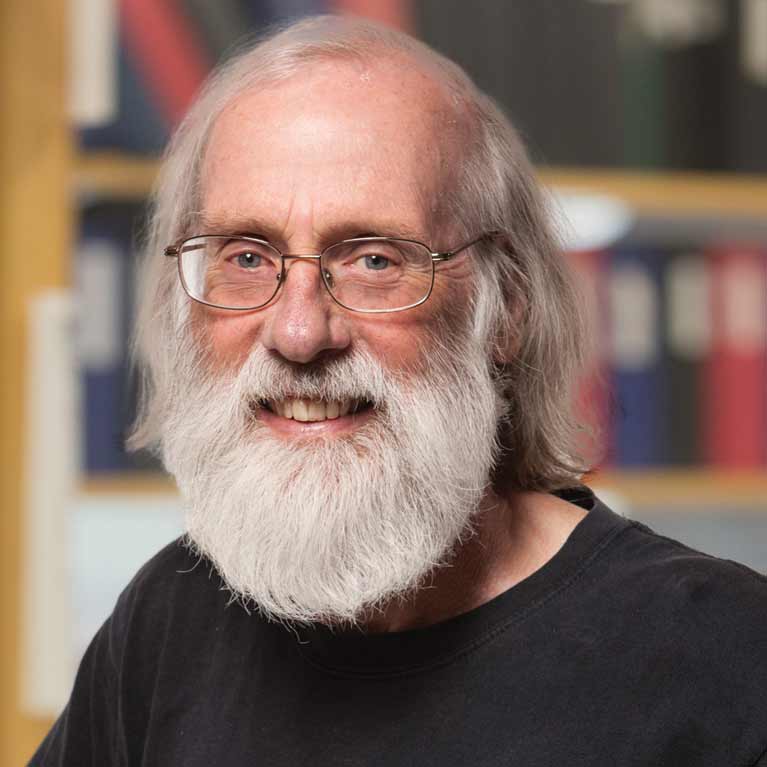
Yes. I grew up in Kent, near Canterbury, in a small town called Ashford. My father was an M. D. He was the general surgeon for the local hospital. And it was really there that I became interested in science. I got my start in cancer research. It wasn't a deliberate choice, it was just the way it worked out because I had to come to La Jolla. Quite a transition from Cambridge to California, a very much more relaxed lifestyle. Quickly adopted the local habits. I grew my hair long and started exploring the wilderness. The extracellular experiment that led to discovery of tyrosine phosphorylation was that you're looking to see whether this protein, the polyoma protein added phosphate to either serine or threonine, and did a routine experiment where you cut the protein up and after you use radioactive phosphate to label the protein, cut it up into single amino acids, boiling in strong acid and separating the resultant amino acids. In our case, by putting an electric charge across a plate covered in the thin layer of cellulars. When I did that experiment for the first time, I'd been too lazy to make up a fresh buffer for this separation of bioelectric phoresis. It turned out that the radioactive spot from this polyoma protein, it didn't migrate with either the phosphorylated serine or phosphorylated threonine. And so it was an accident if you like. I wasn't looking for it. But it has led to the discovery that the human proteome has 90 tyrosine kinases. It's a very important cellular regulatory system. It's a pretty atypical cancer center, I would say, but it's well respected. The main difference is that we don't really have a space that is the Cancer Center. The Cancer Center is distributed around the institute. It's the center without walls. We've been very eclectic about the sort of science that we think could be important in cancer research. We've always had people working in areas with organisms that most places wouldn't consider cancer research. We can point to a whole series of discoveries at the institute that have led to either new diagnostics or new treatment strategies. Not that we're developing any treatments, we're simply finding things that other people can then exploit to try and develop new therapeutic approaches. We've really got two focuses. One is pancreatic cancer, which we began around 12 years ago now, and show that if you neutralize the LIF with an antibody that administered to the tumor, tumor bearing mice, that you can slow the progression of the tumor. That led to a lot of interest from others in targeting LIF as a new treatment modality for pancreatic cancer, which is really sorely lacking in any effective treatment. An antibody against LIF is in clinical trials. It's good to see that what we did in the Salk was translated into essentially a new type of cancer therapy. Histidine, like tyrocine, has a ring structure and it was known already that it could be phosphorylated. That's what I got my R35 NCI Outstanding Investigator Award, was to pursue these studies on histidine phosphorylation and cancer. And we've had a couple of papers showing that it might play an important role in liver cancer and neuroblastoma.