July 7, 2020
A key gene modifies regulatory T cells to fine-tune the immune response
A key gene modifies regulatory T cells to fine-tune the immune response
LA JOLLA—The human immune system is a finely-tuned machine, balancing when to release a cellular army to deal with pathogens, with when to rein in that army, stopping an onslaught from attacking the body itself. Now, Salk researchers have discovered a way to control regulatory T cells, immune cells that act as a cease-fire signal, telling the immune system when to stand down.
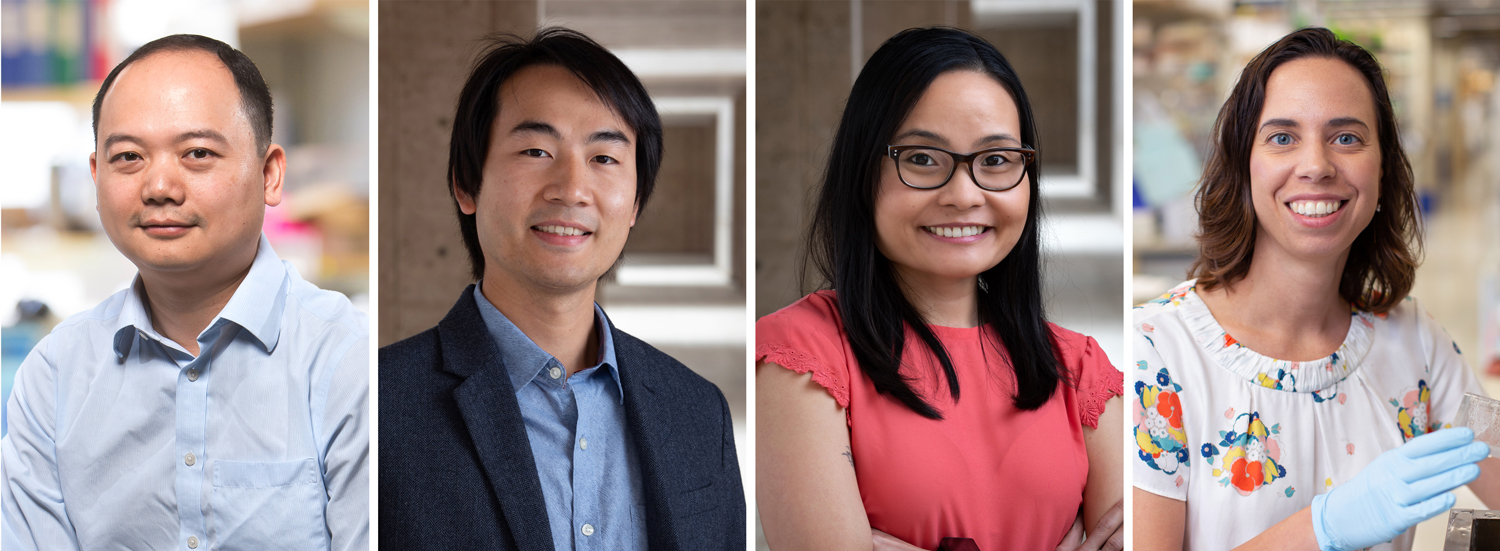
“Our ultimate goal is to be able to use these genes that modulate regulatory T cells to interfere with autoimmune diseases and cancers,” says Ye Zheng, an associate professor in Salk’s NOMIS Center for Immunobiology and Microbial Pathogenesis.
Klicken Sie hier für ein hochauflösendes Bild.
Kredit: Salk Institut
“The idea of manipulating this cell type for therapeutic purposes is very exciting,” says Assistant Professor Diana Hargreaves, holder of the Richard Heyman and Anne Daigle Endowed Developmental Chair and the co-corresponding author of the new paper with Zheng. Their study appeared in the journal Immunity on July 7, 2020.
Regulatory T cells are responsible for reining in the activity of other cells in the immune system. They prevent the immune system from attacking the body’s own tissues, and tell the immune response to fade when it is no longer needed, acting like an all-clear signal. Underactive regulatory T cells are associated with autoimmune diseases where the immune system attacks the body, including rheumatoid arthritis, multiple sclerosis, inflammatory bowel disease and lupus. Some cancers, on the other hand, have higher-than-usual regulatory T cell activity, preventing the immune system from attacking a tumor and allowing its growth.
Researchers already knew that the gene called Foxp3 is a key player in the development and function of regulatory T cells. If regulatory T cells are like the lead peacekeepers, Foxp3 is like the UN, encouraging the peacekeeping force to organize. Without Foxp3, the body doesn’t form regulatory T cells. So Zheng’s group set out to find other genes that impacted levels of Foxp3. They used CRISPR gene-editing technology to test which genes throughout the genome affected Foxp3. This screen turned up hundreds of genes, including a handful that encoded different subunits of the SWI/SNF complex, a group of proteins that plays a role in turning many other genes on and off by physically making DNA accessible to cellular machinery.
Hargreaves and her group were already studying a number of genes in the SWI/SNF complex, including a new variant that the lab identified in 2018 called the ncBAF complex, so the two labs teamed up to uncover the role of the complex in regulatory T cells.
“There was already data to show how the SWI/SNF complex is important for the development of cells, but not much data in regulatory T cells specifically,” says Salk postdoctoral researcher Jovylyn Gatchalian, co-first author of the new work.
Klicken Sie hier für ein hochauflösendes Bild.
Kredit: Salk Institut
The researchers used CRISPR to selectively remove the SWI/SNF complex genes from regulatory T cells. They found that the deletion of one gene in the ncBAF complex, called Brd9, had a particularly strong effect on the immune cells; regulatory T cells without Brd9 had lower levels of Foxp3 and weakened function.
“Until now, it’s been very hard to fine-tune regulatory T cell activity in the body,” says Eric Chin-San Loo, a graduate student and co-first author of the new paper. “This complex allows us to do just that—turn up or down the activity of the immune cells but not enough to cause other forms of disease.”
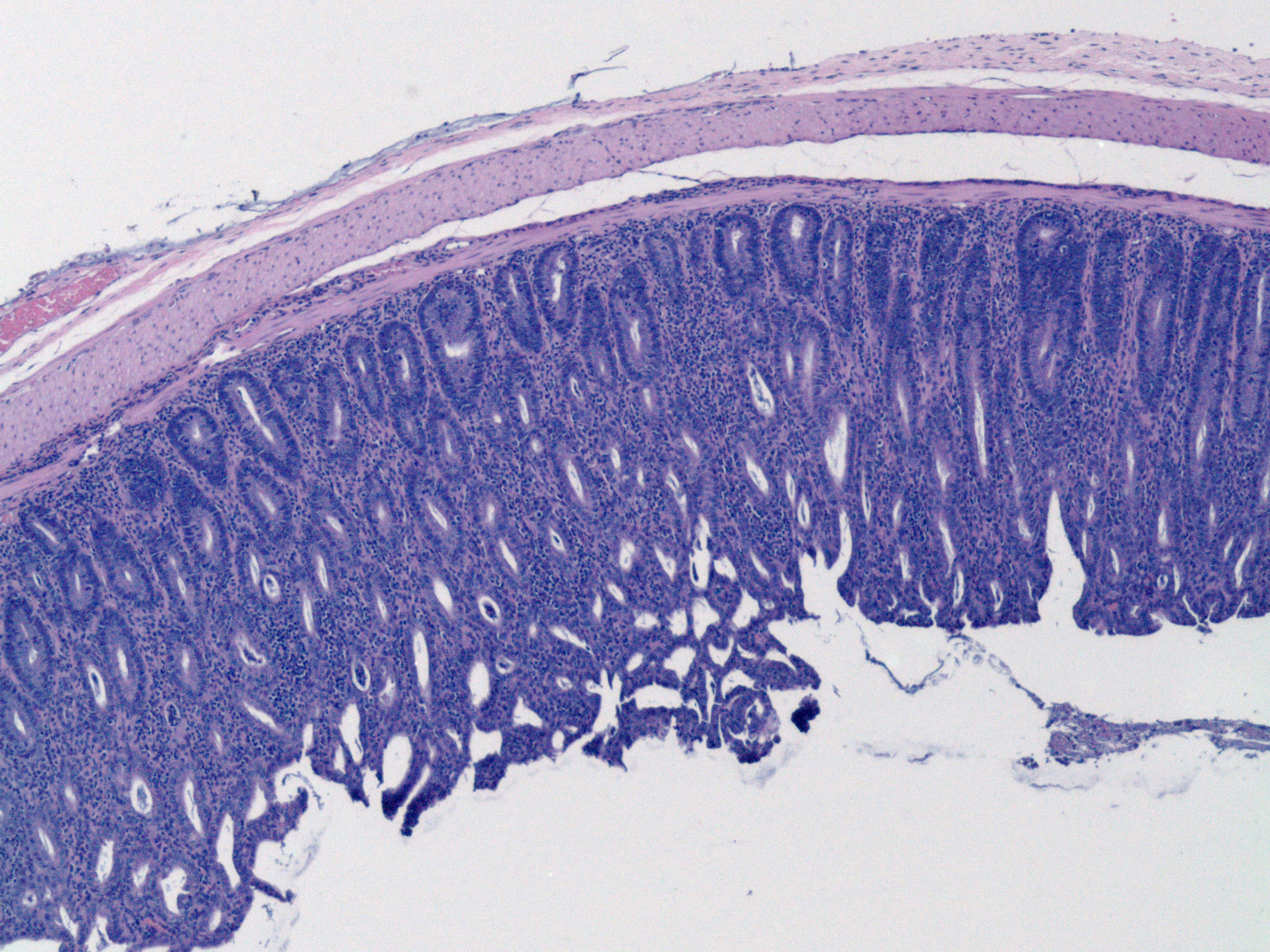
In mice with cancer, treatment with the weakened immune cells without Brd9 enabled other immune cells—the fighters and soldiers of the immune system—normally blocked by the regulatory T cells to infiltrate the tumors and shrink them. In mice with inflammatory bowel disease, however, the weakened regulatory T cells left the immune system attacking the digestive tract unchecked. These results suggest that controlling the strength of regulatory T cells has potential for treating both cancer and autoimmune diseases.
In the future, the researchers say they’d like to dive deeper into the molecular mechanisms by which Brd9 is controlling Foxp3 expression and how the ncBAF complex might change the tumor environment in other ways.
Hargreaves adds that future studies could look at whether small molecules can control the activity of the ncBAF complex; these would be more relevant for human therapeutics than genetic methods of altering the proteins. Such molecules might one day be able to turn down the activity of regulatory T cells to treat cancer, or turn up their activity to treat autoimmune disease.
Other authors were Yuqiong Liang, Mathias Leblanc, Mingjun Xie, Josephine Ho and Bhargav Venkatraghavan, all of the Salk Institute.
The work was supported by the NOMIS Foundation as well as grants from the Albert G. and Olive H. Schlink Foundation, National Institute of General Medical Sciences, National Institute of Allergy and Infectious Diseases, National Cancer Institute, the V Foundation for Cancer Research, the Leona M. and Harry B. Helmsley Charitable Trust, and the Crohn’s and Colitis Foundation of America.
JOURNAL
Immunity
AUTOREN
Chin-San Loo, Jovylyn Gatchalian, Yuqiong Liang, Mathias Leblanc, Mingjun Xie, Josephine Ho, Bhargav Venkatraghavan, Diana C. Hargreaves, and Ye Zheng
Büro für Kommunikation
Telefon: (858) 453-4100
press@salk.edu
Das Salk Institute ist ein unabhängiges, gemeinnütziges Forschungsinstitut, das 1960 von Jonas Salk, dem Entwickler des ersten sicheren und wirksamen Polio-Impfstoffs, gegründet wurde. Die Aufgabe des Instituts besteht darin, grundlegende, kooperative und risikofreudige Forschung voranzutreiben, die sich mit den dringendsten Herausforderungen der Gesellschaft befasst, darunter Krebs, Alzheimer und die Gefährdung der Landwirtschaft. Diese Grundlagenforschung bildet die Basis für alle translationalen Bemühungen und führt zu Erkenntnissen, die neue Medikamente und Innovationen weltweit ermöglichen.