March 20, 2014
LA JOLLA—Vicki Lundblad, professor of the Salk Institute’s Molecular and Cell Biology Laboratory, has been awarded the Becky and Ralph S. O’Connor Chair and elected a Fellow of the American Academy of Microbiology.
Lundblad has been named the recipient of the Becky and Ralph S. O’Connor Chair in honor of excellence in the field of molecular and cell biology. Ralph O’Connor, who serves on the Salk Board of Trustees, and his wife, Becky, generously created the chair as an “investment that has the potential for maximum impact on human health.”
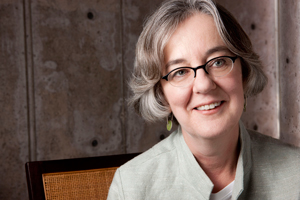
Vicki Lundblad, Salk Professor in the Molecular and Cell Biology Laboratory
Bild: Mit freundlicher Genehmigung des Salk Institute for Biological Studies
Lundblad has also been elected a 2014 Fellow of the American Academy of Microbiology for her pioneering work in telomere biology. Fellows are elected annually through a highly selective process based on significant contributions to the field of microbiology, a field which boasts the names of Louis Pasteur, Jonas Salk and many others who have made some of the greatest achievements in history.
Lundblad’s research has defined a key molecular mechanism that is critical in both Alterung und Krebs. Lundblad found that the ends of chromosomes, known as telomeres, shorten over time, acting as a “molecular clock” that counts down the number of times a cell can divide. She has also shown that a telomere-dedicated enzyme called telomerase can help reset the clock and increase cell division.
In cancer, rogue cells proliferate, no longer under the control of this countdown clock due to the abundant amounts of telomerase that constantly replenish telomeres. In normal tissues, however, telomeres shorten and eventually block cell division, having a dramatic effect on the aging process. Figuring out how to control this molecular clock suggests the tantalizing possibility of both halting cancerous cells and promoting healthy aging. Toward that end, Lundblad’s lab is currently teasing out the pathways that either promote or inhibit telomerase inside cells.
Über das Salk Institute for Biological Studies:
Das Salk Institute for Biological Studies ist eine der weltweit führenden Institutionen für Grundlagenforschung, an der international renommierte Fakultätsmitglieder grundlegende Fragen der Biowissenschaften in einem einzigartigen, kollaborativen und kreativen Umfeld untersuchen. Mit dem Fokus auf Entdeckungen und die Ausbildung zukünftiger Forschergenerationen leisten Salk-Wissenschaftler bahnbrechende Beiträge zu unserem Verständnis von Krebs, Alterung, Alzheimer, Diabetes und Infektionskrankheiten durch die Untersuchung von Neurowissenschaften, Genetik, Zell- und Pflanzenbiologie sowie verwandten Disziplinen.
Die Leistungen der Fakultät wurden mit zahlreichen Auszeichnungen gewürdigt, darunter Nobelpreise und Mitgliedschaften in der National Academy of Sciences. Das 1960 vom Polio-Impfstoff-Pionier Dr. Jonas Salk gegründete Institut ist eine unabhängige gemeinnützige Organisation und ein architektonisches Wahrzeichen.
Büro für Kommunikation
Telefon: (858) 453-4100
press@salk.edu