October 8, 2019
Salk scientists profile each cell in developing breast tissue and create a web database to aid research
Salk scientists profile each cell in developing breast tissue and create a web database to aid research
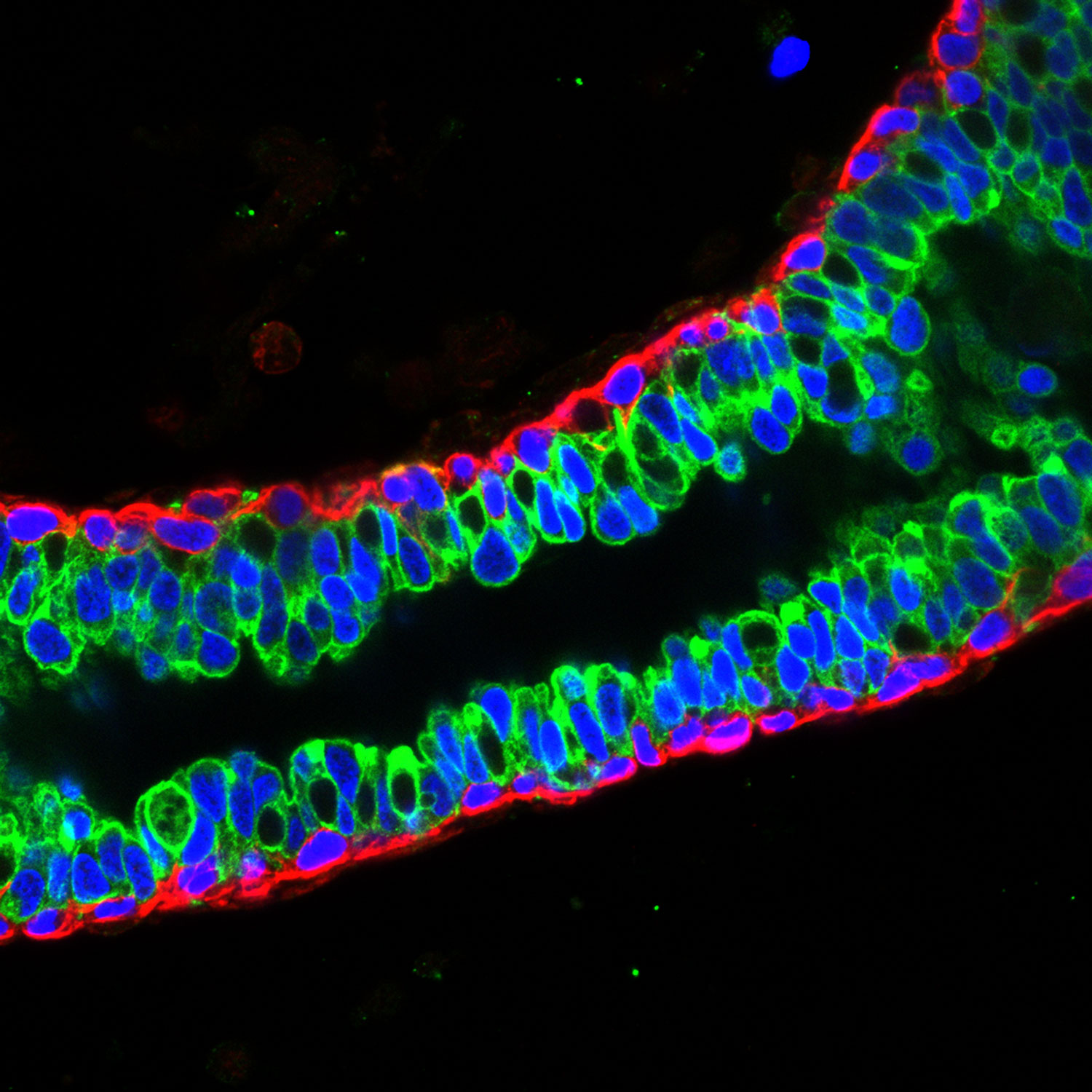
LA JOLLA—Breast cancer is one of the most prevalent cancers, and some forms rank among the most difficult to treat. Its various types and involvement of many different cells makes targeting such tumors difficult. Now, Salk Institute researchers have used a state-of-the-art technology to profile each cell during normal breast development in order to understand what goes wrong in cancer.
Klicken Sie hier für ein hochauflösendes Bild.
Kredit: Salk Institut
The team’s findings, published in Cell Reports on October 8, 2019, and shared in a free online resource, lay the groundwork for understanding normal breast development and may lead to new strategies for tackling tumors.
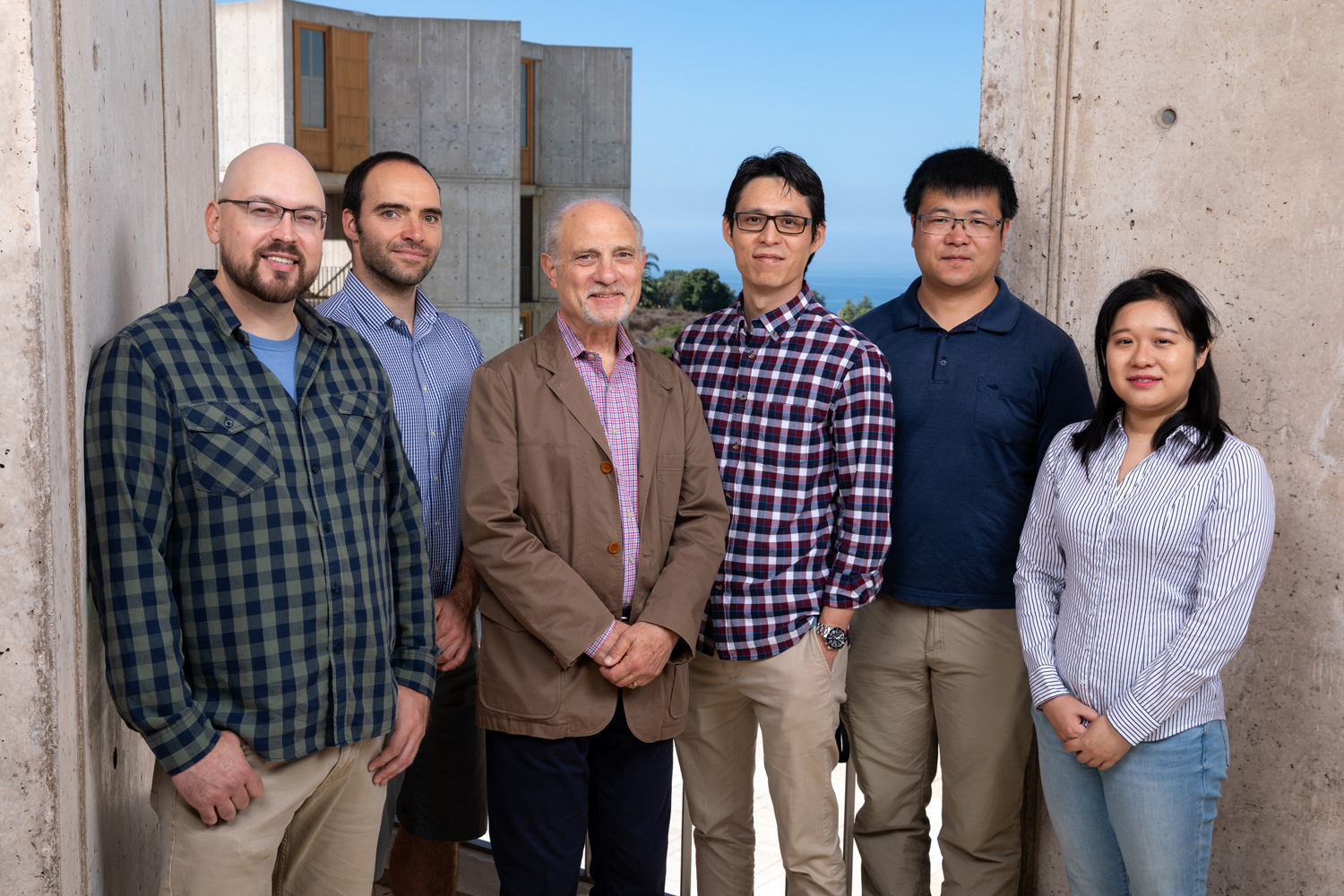
“In order to understand what goes wrong in breast cancer, we need to first understand how normal development works,” says Geoffrey Wahl, a professor in the Gene Expression Laboratory and senior author of the paper. “This study represents a major step in that direction, as we were able to profile each cell during breast development. We expect this information to be a valuable hypothesis-generating resource for the mammary gland community.”
Mature breast tissue contains two main cell types, which are often involved in breast cancers: luminal cells and basal cells. Luminal cells line the ducts and produce milk, while surrounding basal cells contract to push the milk out of the ducts. The scientists were interested in what drives the molecular changes that govern how, during development, stem cells become specialized into these types of cells. In particular, they studied how DNA packaging inside the cell—called chromatin—changes to allow certain genes to become accessible or inaccessible to affect gene expression and the development of these cells.
“We sought to obtain a molecular map of these developing breast cells to better understand how breast tissues are formed during development and maintained during adulthood,” says Christopher Dravis, a staff scientist and co-first author of the paper.
“By examining differences in chromatin accessibility, we aimed to understand which regions of the genome affected transcription, the process that involves making RNA from DNA, and how that affected cell development,” adds Zhibo Ma, a postdoctoral fellow and co-first author of the paper.
To do this, the researchers compared mouse breast tissue in adult and late prenatal development. They used a single-cell profiling technique to separate the young cells into groups with basal-like and luminal-like features, based on chromatin accessibility. Surprisingly, the team found that each cell was already poised to become either a basal cell or luminal cell right before birth. This suggests that the cells quickly gain the ability to convert into each cell type soon after birth with appropriate changes in chromatin accessibility and molecular cues providing the instructions. The abnormal alteration of these processes can lead to tumor development later on. The team continued to analyze a multitude of features of each developing cell using bioinformatics and advanced machine learning to reveal a complex picture of breast development and maturation.
Klicken Sie hier für ein hochauflösendes Bild.
Kredit: Salk Institut
The Salk scientists integrated their findings into a free online database—already widely accessed by other researchers—in the hopes of aiding studies of cell growth, gene regulation and other factors across multiple cell types and developmental states. The authors believe the database—which allows for comparison between chromatin accessibility and gene expression during normal breast development, among other components—could be used to develop new theories of how breast cells go astray and turn into cancer.
“My objective has always been to help people with cancer and, by disseminating research as widely and as quickly as possible, we hope to accelerate research advancement and therapy development,” says Wahl, who holds the Daniel and Martina Lewis Chair. “This study has provided us with a concrete way of understanding the steps involved in mammary development and reveals a complexity that was not evident by most other methods. We are excited to share this with the broader research community.”
In the future, the authors plan to add data from more developmental time points to further develop the database of how cancer develops to hopefully lead to more effective therapies.
Other authors included Chi-Yeh Chung, Gidsela Luna and Rajshekhar R. Giraddi of Salk along with Sebastian Preissl, Olivier Poirion, Xiaomeng Hou and Bing Ren of UC San Diego.
The work was funded by the Cancer Center Core Grant (5 P30CA014195), National Institutes of Health/National Cancer Institute (R35CA197687 and CA174430), the Susan G. Komen Foundation (SAC110036), the Leona M. and Harry B. Helmsley Charitable Trust (2012-PG-MED002), the Breast Cancer Research Foundation (BCRF), the Freeberg Foundation, the Copley Foundation, the William H. Isacoff MD Research Foundation for Gastrointestinal Cancer and the Ludwig Institute for Cancer Research.
DOI: 10.1016/j.celrep.2019.08
JOURNAL
Cell Reports
AUTOREN
Chi-Yeh Chung, Zhibo Ma, Christopher Dravis, Sebastian Preissl, Olivier Poirion, Gidsela Luna, Xiaomeng Hou, Rajshekhar R. Giraddi, Bing Ren, and Geoffrey M. Wahl
Büro für Kommunikation
Telefon: (858) 453-4100
press@salk.edu
Das Salk Institute ist ein unabhängiges, gemeinnütziges Forschungsinstitut, das 1960 von Jonas Salk, dem Entwickler des ersten sicheren und wirksamen Polio-Impfstoffs, gegründet wurde. Die Aufgabe des Instituts besteht darin, grundlegende, kooperative und risikofreudige Forschung voranzutreiben, die sich mit den dringendsten Herausforderungen der Gesellschaft befasst, darunter Krebs, Alzheimer und die Gefährdung der Landwirtschaft. Diese Grundlagenforschung bildet die Basis für alle translationalen Bemühungen und führt zu Erkenntnissen, die neue Medikamente und Innovationen weltweit ermöglichen.