May 28, 2026
LA JOLLA—Three Salk faculty members, Sung Han, PhD, Daniel Hollern, PhD, und Graham McVicker, PhD, have been chosen as Keck Scholars, alongside corresponding graduate students as Keck Fellows, in a special W. M. Keck Foundation Bridge Funding Initiative. The Initiative comes as the Keck Foundation seeks to support early-career scientists amid federal funding uncertainty.
The funding is specifically designated to support promising graduate student and faculty pairings in California, with the goal of ensuring early- to mid-career scientists get the training and resources they need to become the innovators of tomorrow. The three Salk Keck Scholar-Fellow duos will bring a total of $600,000 into the Institute to support their projects in cancer, genetics, and neuroscience.
“The Keck Bridge Funding Initiative is a critical stabilizing force amid change and uncertainty in federal and traditional research funding mechanisms,” says Salk President Gerald Joyce, MD, PhD. “Partnerships with forward-thinking foundations like Keck are essential to safeguarding the future of discovery and accelerating breakthroughs that benefit society. This recent support strengthens our long-standing partnership with the Keck Foundation as leaders in the pursuit of high-risk, high-reward research.”
Bridge funding from the Keck Foundation plays a vital role in sustaining scientific progress at a time when federal and traditional funding pathways are increasingly competitive, unpredictable, and constrained. These funding gaps hit early-career scientists especially hard—making philanthropic investment essential for empowering and propelling them. Programs like the Keck Foundation Bridge Funding Initiative give these scientists the funds they need to maintain momentum that builds preliminary data for future large-scale funding.
Salk encourages scientists to pursue high-risk, high-impact science. Keck funding allows us to protect and advance the kind of bold scientific inquiry exemplified by the three awarded projects, described below.
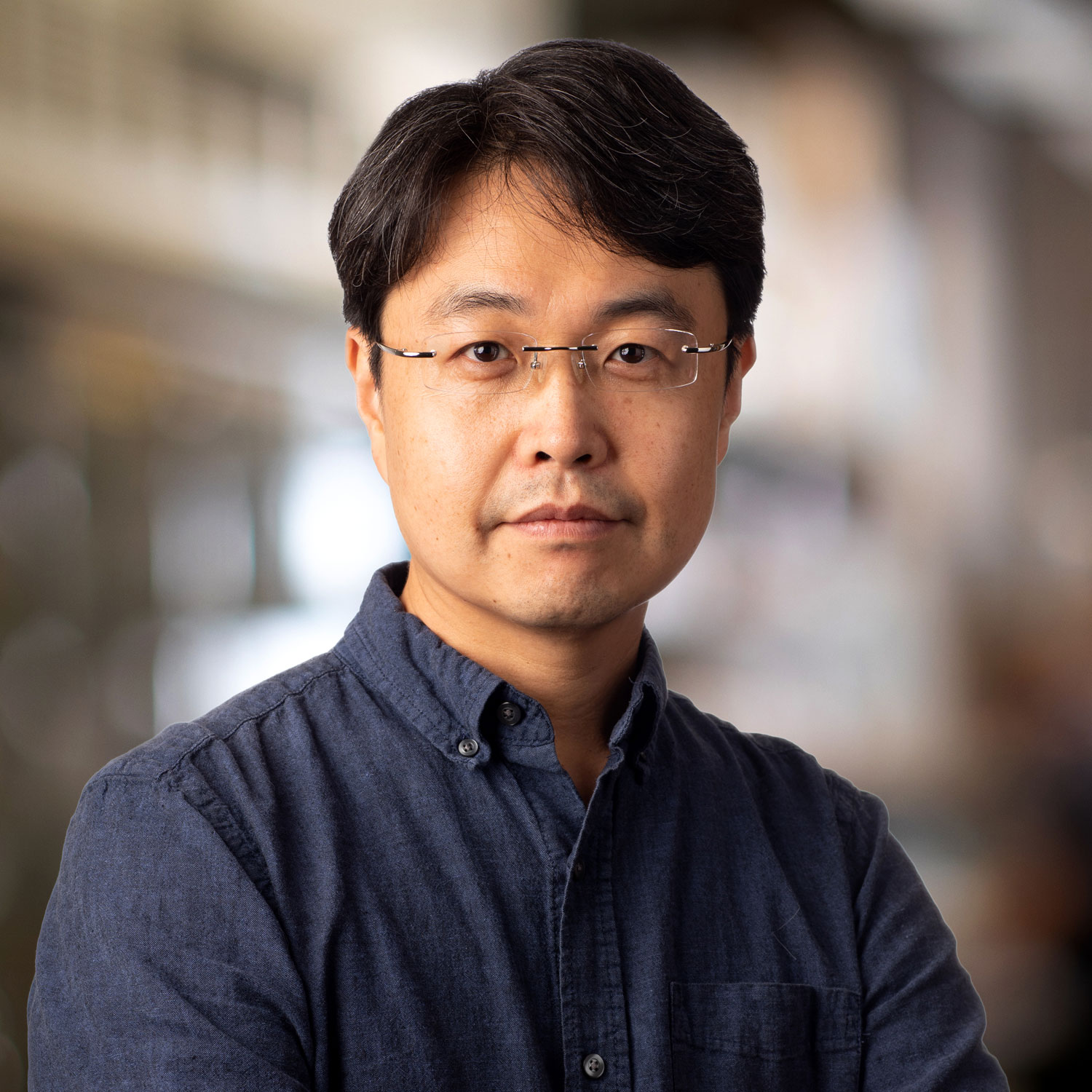
Sung Han is an associate professor at Salk who researches how the brain’s communication molecules, called neuropeptides, encode emotion and physiology. His companion graduate student, Rachel Felix, is currently earning her PhD at UC San Diego and joined Han’s lab to study the brain circuits that mediate pain, anxiety, and feeding behaviors.
The Keck Scholar-Fellow team is setting out to investigate a previously unrecognized coding principle in neural communication. Neurons often use at least two types of neurotransmitters: fast transmitters and slow transmitters. Differences between these two classes of neurotransmitters have not been thoroughly explored, so the Keck-funded project will allow the team to model and visualize them. After developing the tools to do so, they will test whether firing frequency determines transmitter identity and thereby behavioral outcome. The findings will illuminate how different transmitters can lead to different outcomes, like pain versus pleasure, in addiction.
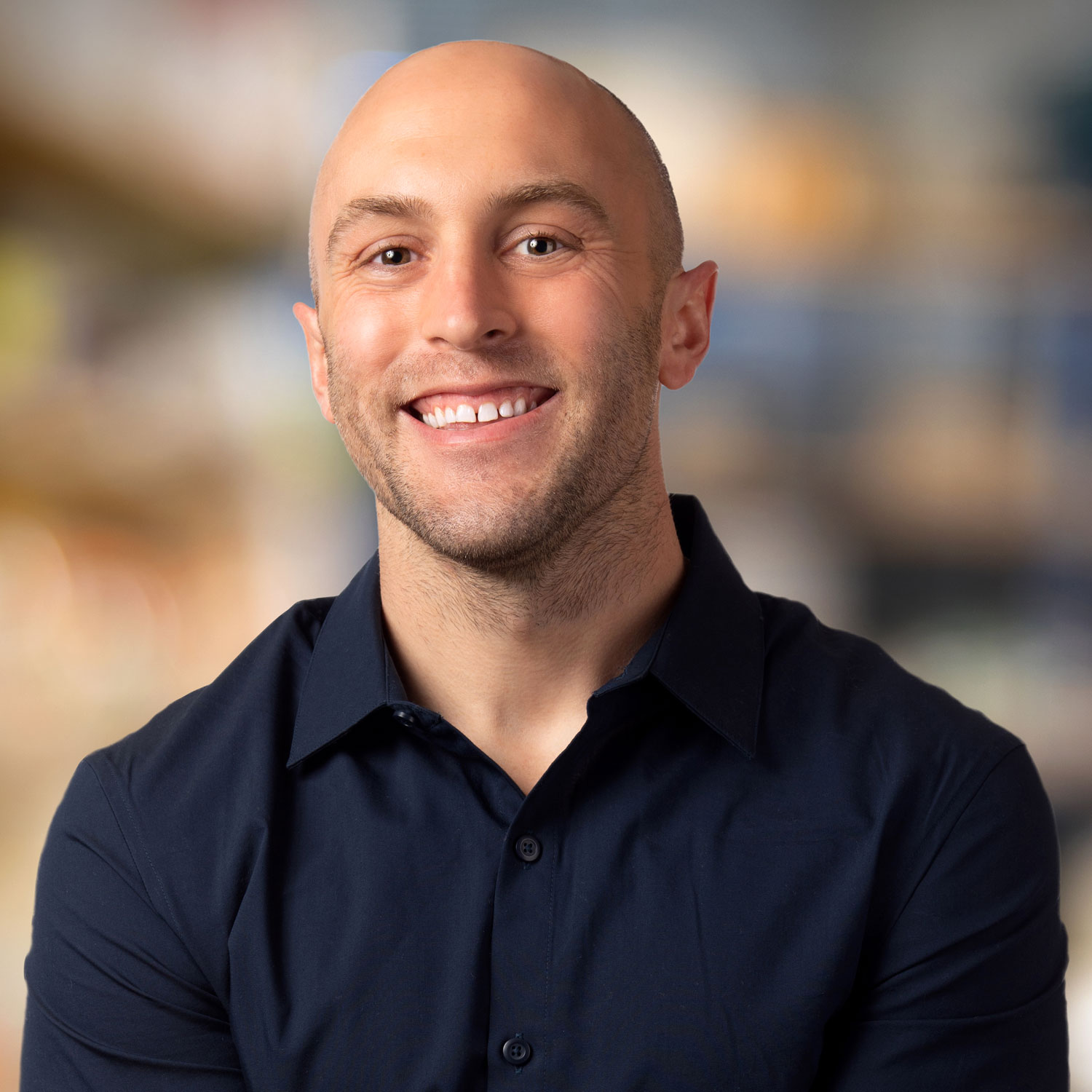
Daniel Hollern is an assistant professor at Salk whose expertise spans cancer biology, tumor immunology, computational biology, functional immunology, and disease modeling. His companion graduate student, Monika Quackenbush, is currently earning her PhD at UC San Diego and joined Hollern’s lab to study immune tolerance to metastatic cancer cells.
As a Keck Scholar-Fellow team, the two will address the urgent question of whether controlling immune tolerance programs using B cells can help the body fight cancer. They aim to determine whether and how malignancies exploit B cell-regulated tolerance to allow cancer cells to metastasize, take over vital organs, and cause lethality. The findings have the potential to shift the narrative of cancer care toward disengaging B cell tolerance mechanisms for entirely new and more effective therapeutic strategies.
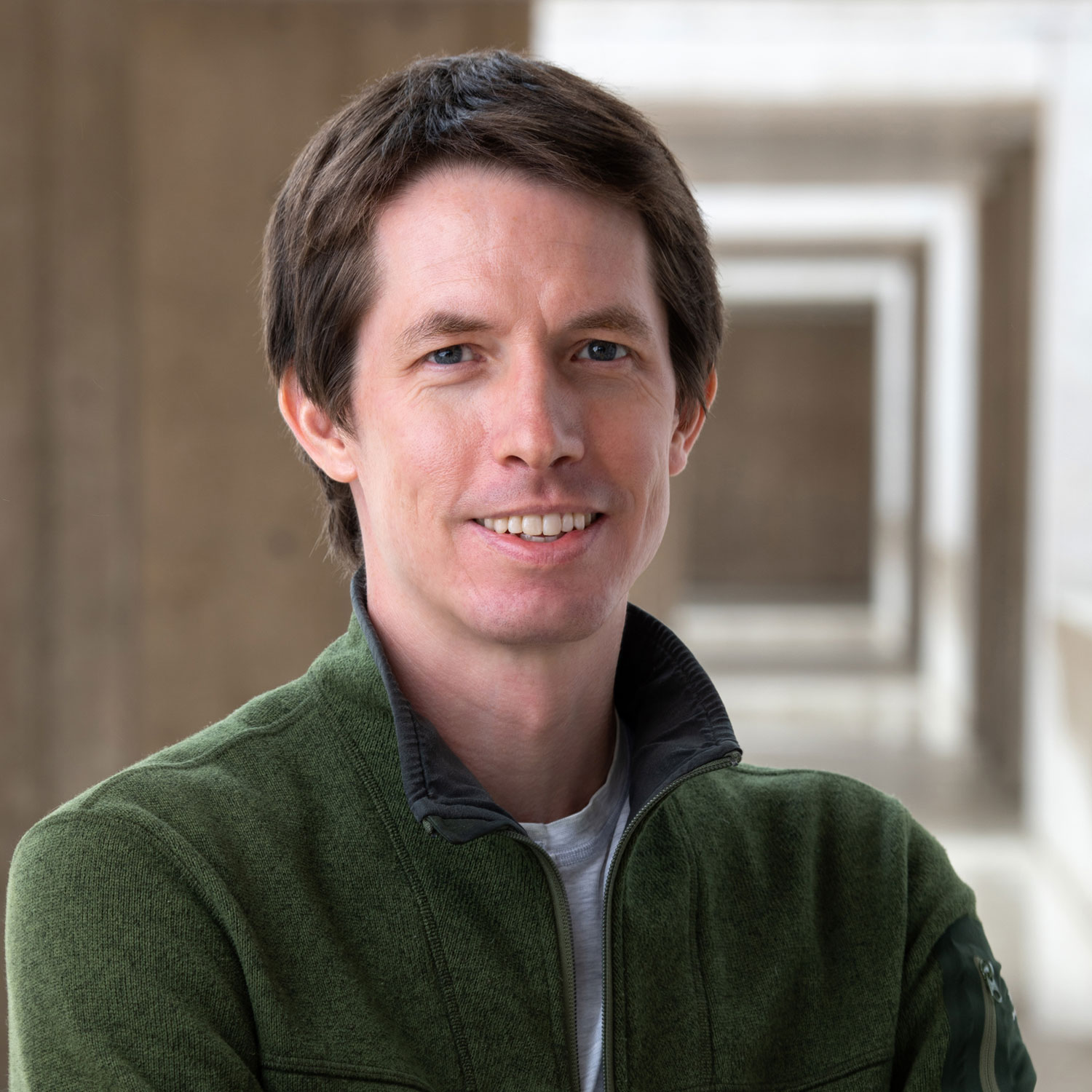
Graham McVicker is an associate professor at Salk who studies the impact of human genetic diversity on gene expression, while also developing new technologies needed to conduct those studies. His companion graduate student, Han Chen, is currently earning his PhD at UC San Diego studying bioengineering and joined McVicker’s lab to study the regulation of gene expression using advanced computational analysis.
The two will combine their savvy for building new genome research technologies in their Keck Scholar-Fellow project. They will develop machine learning models to predict how gene perturbations affect genome-wide regulation and, in turn, cellular behavior that impacts health and disease. To build their models, they will utilize tumor cells, which have many genetic alterations that can serve as naturally occurring gene perturbations. The models will use these perturbations to learn how altering a single gene causes genome-wide changes in expression. Once trained, the models will be validated and refined using Superb-seq—a cutting-edge method for measuring how CRISPR-directed gene perturbations change gene expression. The final models will be used to predict how gene perturbations alter cellular state and will be instrumental in the future development of targeted gene therapies.
About the W. M. Keck Foundation
The W. M. Keck Foundation was established in 1954 in Los Angeles by William Myron Keck, founder of The Superior Oil Company. One of the nation’s largest philanthropic organizations, the W. M. Keck Foundation supports outstanding science, engineering, and medical research. The Foundation also supports undergraduate education and maintains a program within Southern California to support arts and culture, education, health, and community service projects.
Büro für Kommunikation
Telefon: (858) 453-4100
press@salk.edu
Das Salk Institute ist ein unabhängiges, gemeinnütziges Forschungsinstitut, das 1960 von Jonas Salk, dem Entwickler des ersten sicheren und wirksamen Polio-Impfstoffs, gegründet wurde. Die Aufgabe des Instituts besteht darin, grundlegende, kooperative und risikofreudige Forschung voranzutreiben, die sich mit den dringendsten Herausforderungen der Gesellschaft befasst, darunter Krebs, Alzheimer und die Gefährdung der Landwirtschaft. Diese Grundlagenforschung bildet die Basis für alle translationalen Bemühungen und führt zu Erkenntnissen, die neue Medikamente und Innovationen weltweit ermöglichen.