April 15, 2026
Salk Institute researchers discover that, contrary to dogma, naked mole rats are capable of peaceful queen succession, demonstrating unappreciated flexibility in their social order
Salk Institute researchers discover that, contrary to dogma, naked mole rats are capable of peaceful queen succession, demonstrating unappreciated flexibility in their social order
LA JOLLA—Naked mole rats keep kingdoms underground. One queen bears all the children, while others maintain complex subterranean tunnels, forage for food, take care of newborns, and perform other necessary upkeep. This society hinges on the central pillar of a singular queen. What happens when her fertility declines or is impaired?
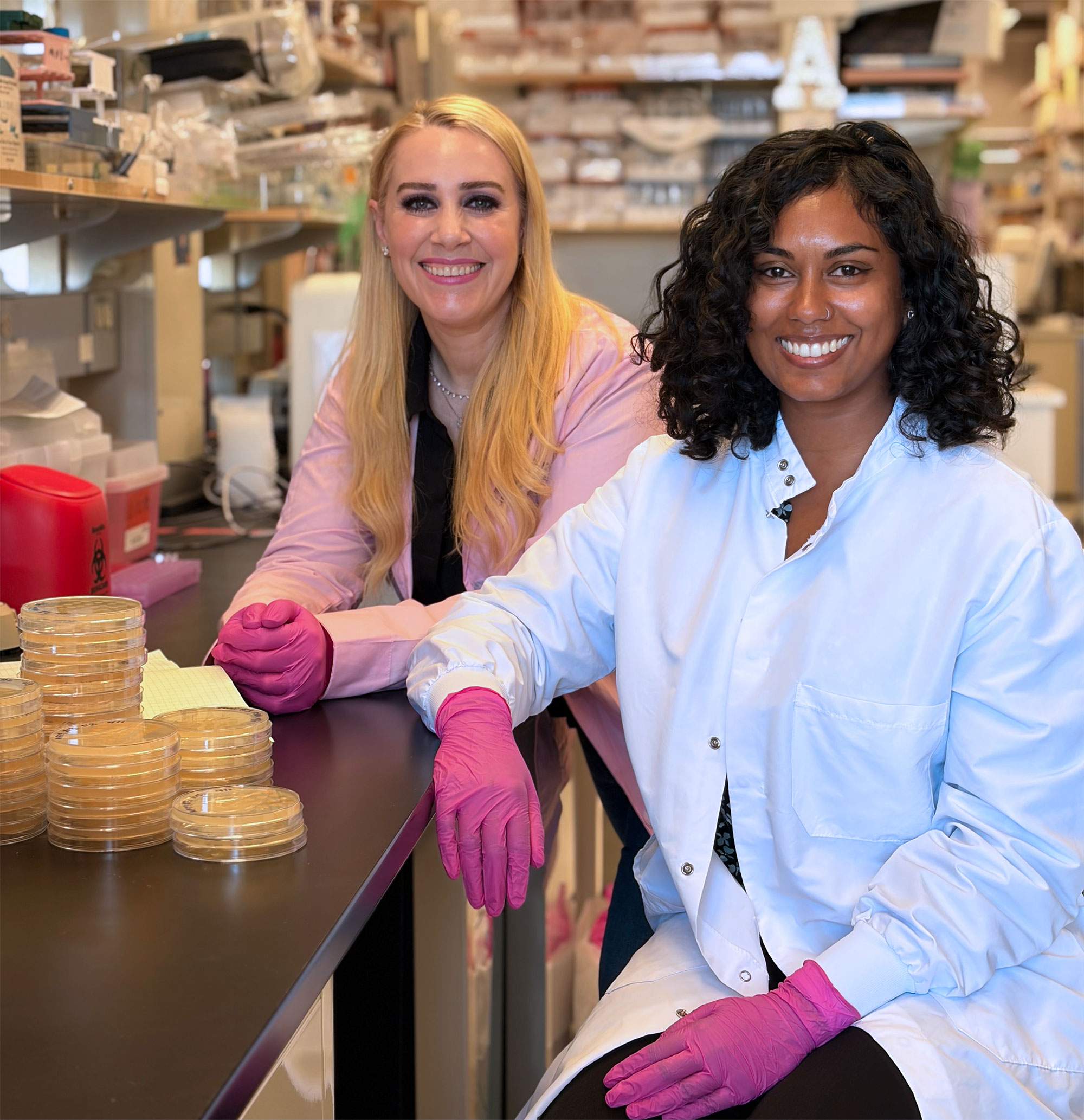
For years, the understanding has been that succession in naked mole rat colonies is violent and chaotic. New research from Salk Institute scientists suggests it does not have to be that way. They found that when reproduction is impaired in an established naked mole rat queen, peaceful succession is possible within her colony.
Die Studie, veröffentlicht in Science Advances on April 15, 2026, demonstrates underappreciated flexibility in naked mole rat social order and cooperation between reigning queens and subordinate females during times of stress.
“Resilience is the ability of biological systems to recover or return to their normal state after stress and is central for our understanding of health and disease,” says study senior author Janelle Ayres, PhD, professor and holder of the Salk Institute Legacy Chair at Salk, as well as a Howard Hughes Medical Institute Investigator. “While much research focuses on conflict, my lab studies cooperation as a fundamental organizing principle. We’ve studied this primarily in host-pathogen systems, and have expanded to complex social systems like the naked mole rat. By investigating how cooperation drives resilience, we can uncover mechanisms that allow biological systems to recover and function effectively after challenges.”
It may come as a surprise that naked mole rats have been especially fascinating little critters to scientists for decades. The nearly hairless rodents were first brought into the lab in the 1960s owing to their unusual adaptations to life underground. A decade later, they became the first mammals identified by researchers as to join the ranks of ants and bees as eusocial—living in a colony with strict hierarchies and a single child-rearing queen.
Naked mole rats also have other scientifically curious characteristics, such as living a relatively long time (more than 30 years), thriving in dark and dank underground tunnels, lacking the sensation of inflammatory pain, and being resistant to age-related diseases like cancer. However, for the current study, it is their unique eusocial structure that piqued the interest of the Salk team.
“For years we’ve known that only one female, the queen, reproduces, and that queen succession occurs through violent queen wars,” says co-first author Shanes Abeywardena, DVM, a postdoctoral researcher in Ayres’ lab. “We wanted to see if multiple queens could peacefully exist.”
In the wild, naked mole rats live in a relatively stable environment in sub-Saharan Africa. This stability is proposed to afford them the luxury of their typical aggressive and rigid reproductive strategy, which is believed to minimize reproductive conflict, reduce infanticide, and help keep resources pooled toward one litter at a time. But this strategy comes with pitfalls, like risk of injury, disruptions to social cohesion, and hinging the colony’s growth on the ability of a single queen to conceive and give birth.
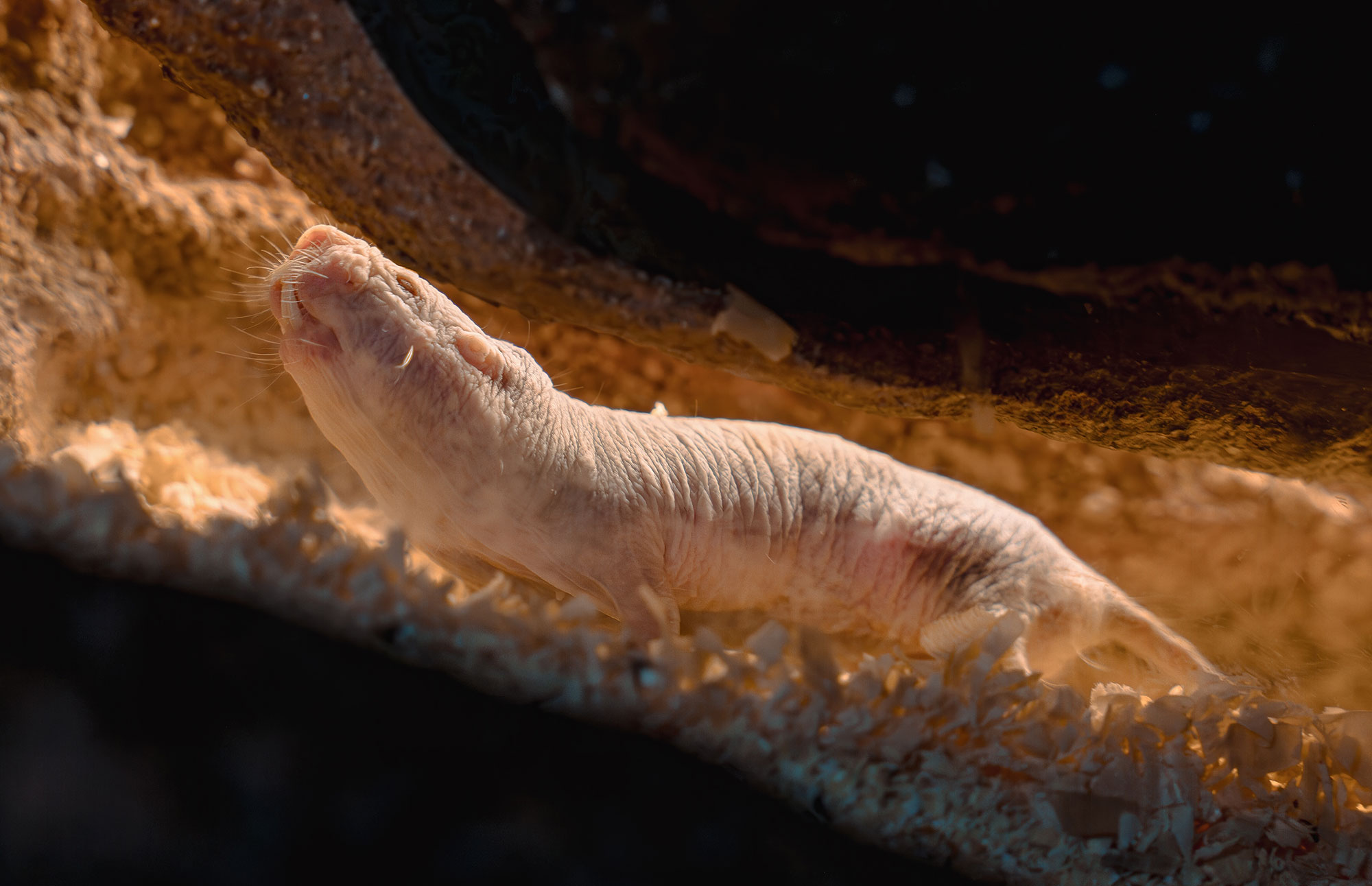
Given these costs, the Salk team wondered whether naked mole rats had developed a peaceful succession mechanism. To find their answer, they observed a naked mole rat colony for six years.
The researchers spent the first year meticulously establishing a healthy, reproducing colony with a single queen in their lab. Then, they introduced two environmental stressors, one after the other, that have been shown to destabilize reproduction in other rodents: increased colony density and colony relocation.
After increasing colony density, the queen was still able to conceive and give birth, but pups had poor survival outcomes. Regardless, the queen remained the sole reproductive naked mole rat. When the colony was then relocated to a new facility, the queen’s reproductive success was completely compromised—she was no longer able to produce litters. This is when the peaceful succession began.
Over the next year, the researchers watched as a subordinate female slowly inched toward the crown. The queen and this subordinate female cooperated, maintaining partially overlapping pregnancies to help the colony thrive in the face of environmental stress. Eventually, a second subordinate emerged and took the queen’s place, and the queen slipped peacefully into a nonreproductive role in the colony—a gradual, nonviolent succession.
“The models for naked mole rat colony reproductive dynamics that we had before were not fully capturing the complexity and flexibility of these colonies,” says co-first author Alexandria Schraibman, PhD, a former graduate student in Ayres’ lab. “Our study reveals a ‘hidden’ side of reproductive organization in naked mole rat colonies, which opens an entirely new line of inquiry when studying naked mole rats.”
Observing this new mechanism of peaceful queen succession in naked mole rat colonies is a significant step toward understanding how the rodents adapt and thrive as one of the only eusocial mammals. And beyond the explicit findings about naked mole rats, the study also tells a story of biological resilience.
“Resilience is the core principle for health and disease,” says Ayres. “By studying resilience in various biological systems, the principles can be applied to other systems to better understand health and disease.”
Victor Delgado Cuevas of Salk also co-authored this study.
The work was supported by the NOMIS Foundation and Howard Hughes Medical Institute.
DOI: 10.1126/sciadv.aef4157
JOURNAL
Science Advances
AUTOREN
Shanes C. Abeywardena, Alexandria M. Schraibman, Victor Delgado Cuevas, and Janelle S. Ayres
Büro für Kommunikation
Telefon: (858) 453-4100
press@salk.edu
Das Salk Institute ist ein unabhängiges, gemeinnütziges Forschungsinstitut, das 1960 von Jonas Salk, dem Entwickler des ersten sicheren und wirksamen Polio-Impfstoffs, gegründet wurde. Die Aufgabe des Instituts besteht darin, grundlegende, kooperative und risikofreudige Forschung voranzutreiben, die sich mit den dringendsten Herausforderungen der Gesellschaft befasst, darunter Krebs, Alzheimer und die Gefährdung der Landwirtschaft. Diese Grundlagenforschung bildet die Basis für alle translationalen Bemühungen und führt zu Erkenntnissen, die neue Medikamente und Innovationen weltweit ermöglichen.