16 de febrero de 2024
LA JOLLA—Salk Institute Professor Janelle Ayres has been elected to the American Academy of Microbiology’s Fellowship Class of 2024. Fellows of the Academy, an honorific leadership group within the American Society for Microbiology, are elected annually through a highly selective, peer-review process based on their records of scientific achievement and original contributions that have advanced microbiology. The Academy received 156 nominations this year, electing 65 into the 2024 Fellowship Class.
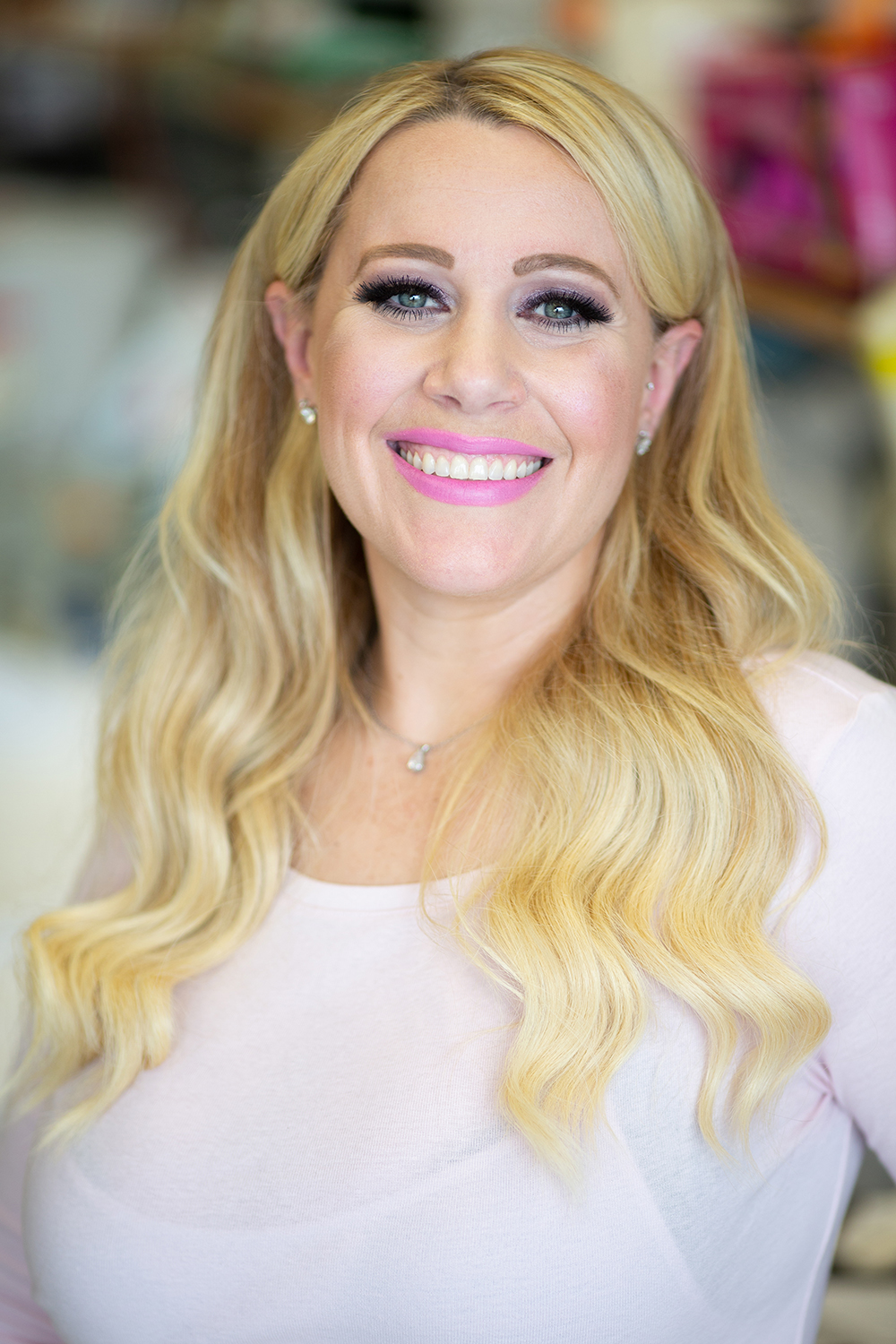
“On behalf of all our colleagues here at Salk, I want to extend our warm congratulations to Janelle for her exceptional scientific achievements and for this prestigious recognition,” says Salk President Gerald Joyce. “Her passion, creativity, and relentless pursuit of knowledge exemplify the spirit of excellence we strive for at Salk. We are grateful for the impact she continues to make in advancing high-impact science."
Ayres is head of the Molecular and Systems Physiology Laboratory, a member of both the Gene Expression Laboratory and the NOMIS Center for Immunobiology and Microbial Pathogenesis, and holder of the Salk Institute Legacy Chair. Her track record of achievements also includes an NIH Director’s Pioneer Award and the Blavatnik National Award for Young Scientists.
Ayres’ research upends our understanding of how to survive disease. The longstanding assumption for biomedical researchers is that health is the absence of disease and that to be healthy, one must simply remove the primary source of the disease. In contrast, through her pioneering work on host-pathogen interactions, Ayres has demonstrated that health is an active process involving evolved physiological defense mechanisms, creating a new paradigm and field that she calls “the biology of health.” At its core is Ayres’ discovery of the “Cooperative Defense System,” which has challenged the notion that, in order to survive infections, the host needs to kill the pathogen. The Cooperative Defense System encodes disease-tolerance mechanisms that promote health and survival by providing a physiological defense, without killing the pathogen. The discoveries made by Ayres and her research team have obvious therapeutic implications for infectious diseases, with the potential to extend to non-infectious diseases.
“Academy Fellowship signifies a distinguished accolade, and I am delighted to extend my congratulations and warm welcome to Dr. Ayres as a member of the 2024 Cohort,” says Vanessa Sperandio, chair of the Academy Governors. “Fellows are an outstanding assembly of scientists whose contributions have propelled discipline and whose knowledge benefits both the scientific community and broader society.”
The American Society for Microbiology is one of the largest professional societies dedicated to the life sciences and is composed of 36,000 scientists and health practitioners. Their mission is to promote and advance the microbial sciences. The society advances the microbial sciences through conferences, publications, certifications, educational opportunities, and advocacy efforts. It enhances laboratory capacity around the globe through training and resources. It provides a network for scientists in academia, industry, and clinical settings. Additionally, the American Society for Microbiology promotes a deeper understanding of the microbial sciences to diverse audiences.
Oficina de Comunicaciones
Tel.: (858) 453-4100
press@salk.edu
El Instituto Salk es un centro de investigación independiente y sin fines de lucro fundado en 1960 por Jonas Salk, creador de la primera vacuna segura y eficaz contra la poliomielitis. La misión del Instituto es impulsar una investigación fundamental, colaborativa y audaz que aborde los retos más acuciantes de la sociedad, entre ellos el cáncer, la enfermedad de Alzheimer y la vulnerabilidad agrícola. Esta ciencia fundamental sustenta todos los esfuerzos traslacionales, generando conocimientos que permiten el desarrollo de nuevos medicamentos e innovaciones en todo el mundo.