
March 13, 2025
LA JOLLA—Richard A. Heyman, a member of the Salk Institute’s Board of Trustees, and his wife, Anne Daigle, have donated $4.5 million to establish the new Richard A. Heyman Collaborative Innovation Fund to support Institute faculty on collaborative, early-stage studies aimed at big, bold questions.
The fund will support research that is often deemed too early, risky, or unconventional for traditional grant funding. Instead, the Collaborative Innovation Fund will enable Salk’s researchers to pursue pioneering ideas, foster collaboration, and unearth discoveries that address some of the most pressing challenges in biomedicine, including cancer, Alzheimer’s disease, and autoimmune diseases.
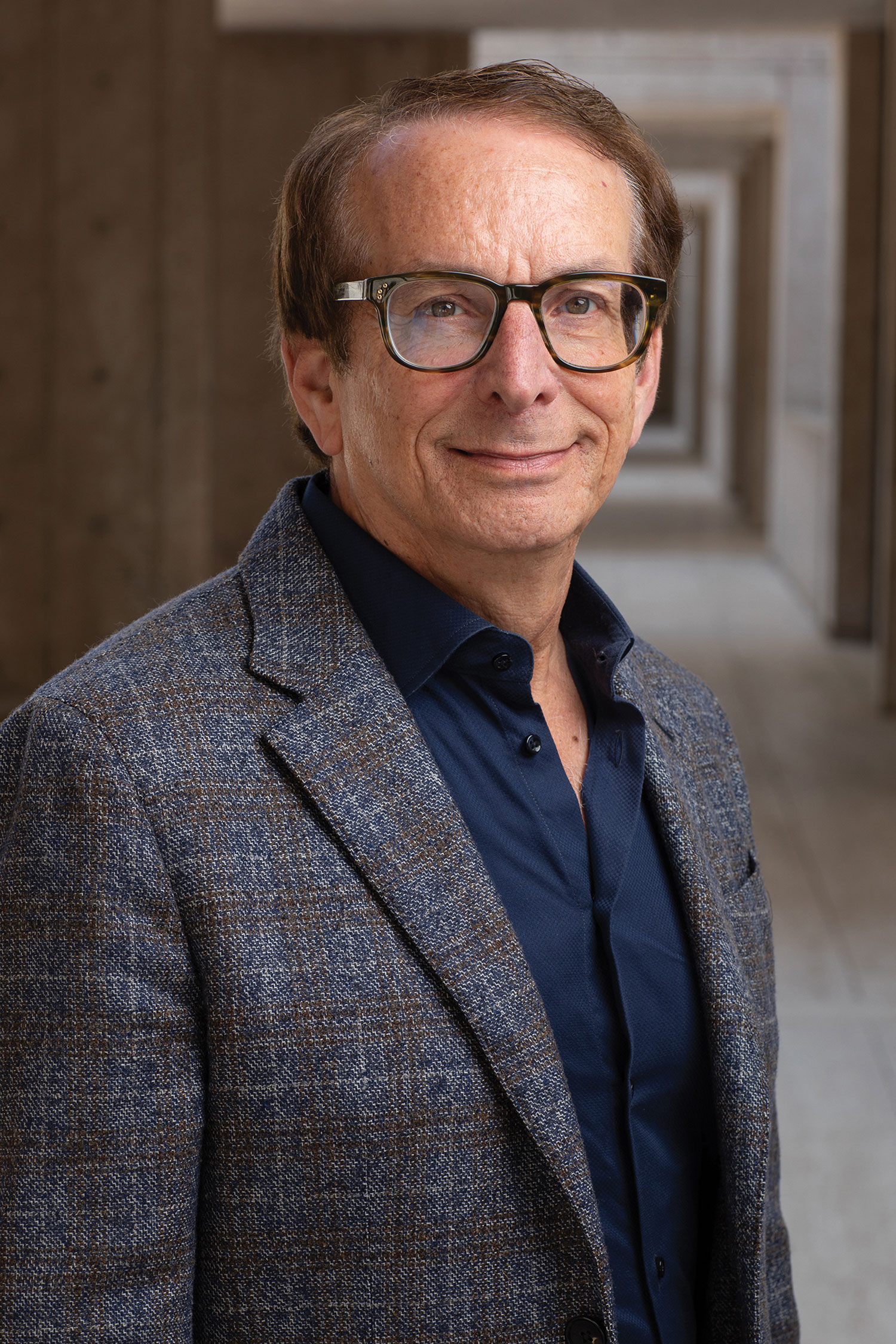
“We are honored to receive this generous donation from the Heyman-Daigle Family Foundation,” says Salk President Gerald Joyce. “Funds for early-stage studies with the potential to address unmet medical needs are vital to the Salk Institute’s mission of advancing transformative science. By supporting innovation at Salk, we can continue to advance scientific discovery for the benefit of all.”
The new Collaborative Innovation Fund will create opportunities for interdisciplinary collaboration by providing resources that encourage scientists from different fields to work together on complex problems. To be eligible, projects must involve at least two labs working together on novel ideas with the potential for high impact. Grants will be awarded through internal competition, overseen by a Scientific Advisory Board.
In addition to serving on Salk’s Board of Trustees, Heyman is a scientist and entrepreneur with more than 25 years of experience in cofounding and building biotech and life science companies. He most recently served as chairman of Vividion Therapeutics, Rayze Pharma, and Amunix Inc., and he was CEO of Aragon and Seragon Pharmaceuticals. He is also the cofounder and chairman of ORIC Pharmaceuticals, which is developing drugs to overcome resistance to cancer.
A Salk alumnus, Heyman trained as a National Institutes of Health postdoctoral researcher in Professor Ronald Evans’ lab, where he studied the molecular machinery that controls signaling pathways linked with cancer and other human diseases.
Salk has a successful history of using this type of innovation seed funding to spur new discoveries. For example, similar early-stage support made it possible for Salk Professor Sreekanth Chalasani to invent sonogenetics, a technique that uses ultrasound to manipulate neurons, paving the way toward noninvasive deep brain stimulation, cardiac pacemakers, and insulin pumps.
“At Salk, I learned that you have to ask big questions if you want big answers,” Heyman says. “This Collaborative Innovation Fund combines essential aspects of discovery: fresh scientific perspectives, bold questions, and collaboration amongst the faculty members. These combinations should allow us to uncover groundbreaking solutions that will improve the world for generations to come.”
Oficina de Comunicaciones
Tel.: (858) 453-4100
press@salk.edu
El Instituto Salk es un centro de investigación independiente y sin fines de lucro fundado en 1960 por Jonas Salk, creador de la primera vacuna segura y eficaz contra la poliomielitis. La misión del Instituto es impulsar una investigación fundamental, colaborativa y audaz que aborde los retos más acuciantes de la sociedad, entre ellos el cáncer, la enfermedad de Alzheimer y la vulnerabilidad agrícola. Esta ciencia fundamental sustenta todos los esfuerzos traslacionales, generando conocimientos que permiten el desarrollo de nuevos medicamentos e innovaciones en todo el mundo.




