Professor
Labor für Systemneurobiologie
Fiona und Sanjay Jha Lehrstuhl für Neurowissenschaften
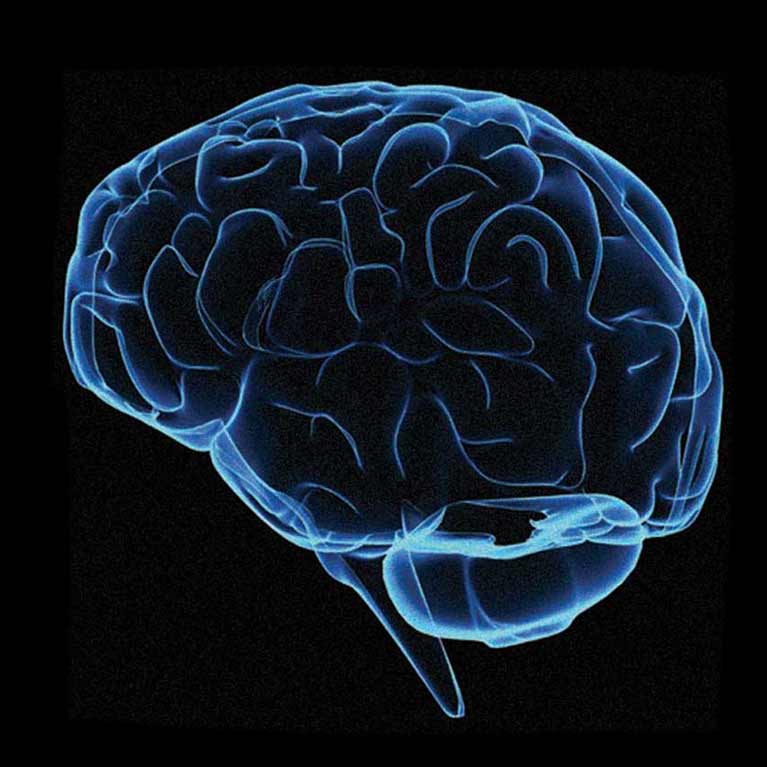
Perception is a constructive process in which the brain integrates sensory information to build an internal representation of the external world. This occurs so quickly and effortlessly that we are unaware it has happened at all. The idea that the brain endlessly creates an internal model of the external world is key to our modern understanding of perception. Reynolds’ lab wants to know how the brain achieves this remarkable feat.
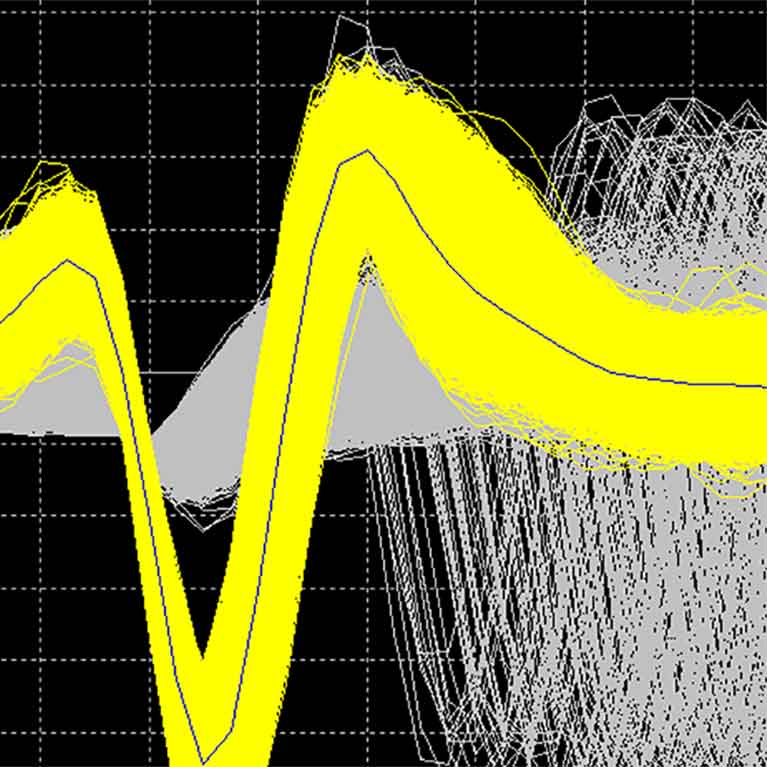
Vision is the most well-developed sensory system in humans, and arguably the most well-studied system in the brain. Since the neurons that make up its circuitry are found throughout the brain, vision acts as an exemplar for understanding the rest of the brain.
Reynolds develops models of the neural mechanisms underlying vision, perception, and consciousness to gain insight into the brain. Reynolds then leverages those models to derive specific hypotheses that can be tested using a variety of experimental techniques, such as quantitative studies of perception, neurophysiology, and neuroanatomy. His lab is also one of the world leaders in the application of optogenetics, a research tool that uses light to activate specific brain cells and networks to study their roles in neural computation.
Reynolds developed the leading computational model of attention, providing a unified, quantitative framework for understanding attentional selection in healthy brains, and how this selection fails in some brain diseases.
Reynolds discovered that brain activity fluctuations are reduced when attention is directed to a stimulus, resulting in improved perception of that stimulus.
Reynolds found that patterns of neural signals, called traveling brain waves, exist in the visual system of the awake brain, and are organized to allow the brain to perceive objects that are faint or otherwise difficult to see.
BS, Wirtschaftswissenschaften, University of Pennsylvania
Promotion, Kognitive und Neuronale Systeme, Boston University
Intramural Research Fellow, Labor für Neuropsychologie, National Institute of Mental Health




