May 6, 2026
LA JOLLA—Sarah Wolf Hallac has been appointed to the Salk Institute’s Kuratorium. She brings broad experience spanning technology, finance, and philanthropy and will help guide the Institute as it advances foundational science that fuels future breakthroughs.
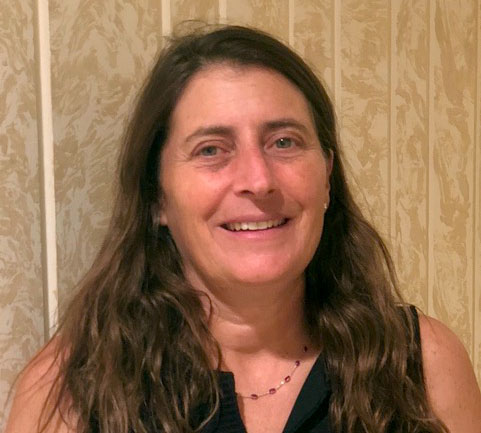
Hallac is an advisor to VectoIQ and a director of VectoIQ acquisition corporation, a company that partners with startups and early-stage companies to develop next-generation smart transportation products and services, including autonomous vehicles, wireless vehicle charging, and fleet management solutions. She is also a consultant to BlackRock on significant philanthropic projects. Earlier in her career, Hallac was an investment banker at Bear, Stearns and Company, where she spent her tenure in the Financial Analytics and Structured Transaction Group.
“Sarah will bring thoughtful leadership to our Board at an important moment for science,” says Salk President Gerald Joyce, MD, PhD. “She understands that enduring discovery depends on strong institutions, and that makes her an exceptional addition to Salk.”
Hallac is a member of the Board of Advisors for Georgia Tech and the School of Engineering at the University of Pennsylvania. She also serves on the Board of Directors of Centro Primo Levi, a New York-based organization inspired by the humanistic legacy of writer and chemist Primo Levi.
Hallac earned a BSE in electrical engineering and a BS in economics from the University of Pennsylvania.
Büro für Kommunikation
Telefon: (858) 453-4100
press@salk.edu
Das Salk Institute ist ein unabhängiges, gemeinnütziges Forschungsinstitut, das 1960 von Jonas Salk, dem Entwickler des ersten sicheren und wirksamen Polio-Impfstoffs, gegründet wurde. Die Aufgabe des Instituts besteht darin, grundlegende, kooperative und risikofreudige Forschung voranzutreiben, die sich mit den dringendsten Herausforderungen der Gesellschaft befasst, darunter Krebs, Alzheimer und die Gefährdung der Landwirtschaft. Diese Grundlagenforschung bildet die Basis für alle translationalen Bemühungen und führt zu Erkenntnissen, die neue Medikamente und Innovationen weltweit ermöglichen.