
August 14, 2025
LA JOLLA—The Salk Institute will welcome immunologist Jamie Blum as a NOMIS Assistant Professor in September 2025. Blum investigates how the immune system interprets what we eat—specifically, why some foods trigger harmful allergic responses while others are accepted as safe.
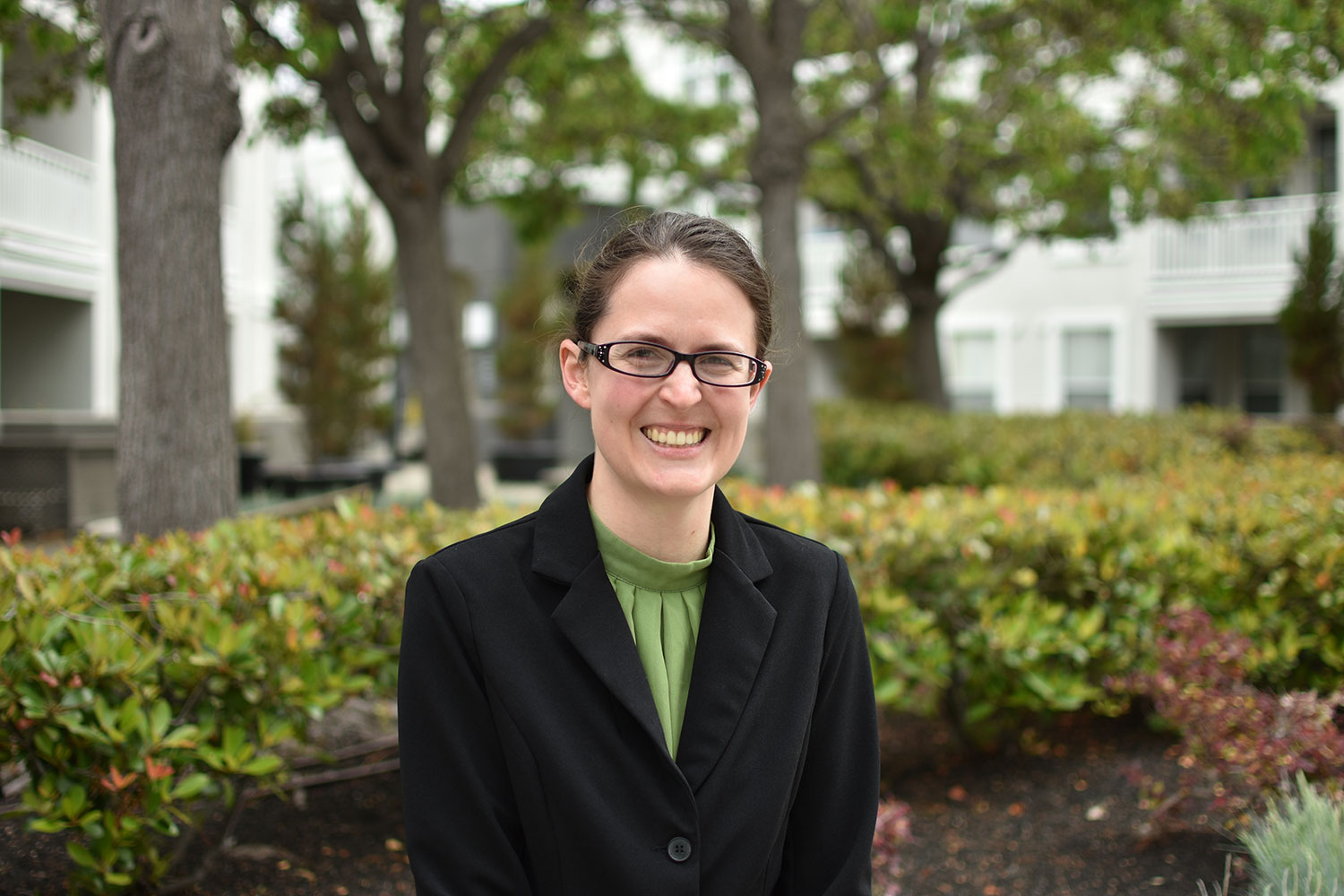
With support from the NOMIS Foundation, Blum’s lab at Salk will continue to explore how immune cells identify and respond to food compounds. While traditional food allergy research focuses on the molecules involved in allergic reactions, Blum’s lab is taking a new approach by exploring the mechanisms of oral tolerance, the immune system’s default, non-inflammatory reaction to most foods. By understanding the signals that help our bodies tolerate most foods, Blum’s work could enable entirely new immunotherapy strategies for preventing or treating food allergies.
“Jamie is an innovative thinker whose work is redefining what we know about food allergies and the relationship between diet and the immune system,” says Salk President Gerald Joyce. “Her discoveries are opening a new frontier in immunotherapy and nutrition science. She will be a great addition to the immunology, plant biology, and molecular science communities here at Salk.”
Food allergies are on the rise globally, yet much remains unknown about how and why they develop. Most of what scientists currently understand about food tolerance comes from a limited number of studies on a single protein in eggs. Blum is working to change that. She has already discovered new compounds in staple crops, including corn, wheat, and soy, that help the immune system learn to tolerate these foods. Interestingly, the mechanism for developing tolerance to these foods seems to differ from what’s known about eggs, highlighting the need for more research on this topic. Blum’s ultimate goal is to map the molecular signals that determine whether the body accepts or rejects a food and use that knowledge to inform future therapies for allergy and autoimmune conditions.
“The fact that most of us can eat without adverse immune reactions is something we take for granted,” says Blum. “But tolerance isn’t passive. It’s a highly orchestrated response. We’re trying to understand the cues that shape that response—what molecules are involved, and what context the immune system needs to ‘see’ food as safe.”
Blum earned her PhD in molecular nutrition from Cornell University and completed her postdoctoral training at Stanford University, where she combined immunology, plant biology, and chemical engineering to study the immune system’s interaction with food at the single-cell level. Her research uses cutting-edge tools, including high-throughput T cell receptor screening, antigen mapping, and in vivo tracking of immune responses in mouse models.
Blum’s work has earned her a Life Sciences Research Foundation Fellowship and support from the National Science Foundation. As a NOMIS Assistant Professor, she will continue pushing boundaries in fundamental immunology while laying the groundwork for new therapeutic and plant-based strategies to address food allergies.
Büro für Kommunikation
Telefon: (858) 453-4100
press@salk.edu
Das Salk Institute ist ein unabhängiges, gemeinnütziges Forschungsinstitut, das 1960 von Jonas Salk, dem Entwickler des ersten sicheren und wirksamen Polio-Impfstoffs, gegründet wurde. Die Aufgabe des Instituts besteht darin, grundlegende, kooperative und risikofreudige Forschung voranzutreiben, die sich mit den dringendsten Herausforderungen der Gesellschaft befasst, darunter Krebs, Alzheimer und die Gefährdung der Landwirtschaft. Diese Grundlagenforschung bildet die Basis für alle translationalen Bemühungen und führt zu Erkenntnissen, die neue Medikamente und Innovationen weltweit ermöglichen.




