May 26, 2026
Small clinical trial led by Dana-Farber Cancer Institute builds on Salk’s foundational research on vitamin D receptor and tumor microenvironment
Small clinical trial led by Dana-Farber Cancer Institute builds on Salk’s foundational research on vitamin D receptor and tumor microenvironment
LA JOLLA—A small clinical trial led by Dana-Farber Cancer Institute researchers put a Salk Institute idea to the test in patients: that activating the vitamin D receptor can help reshape the protective environment surrounding pancreatic tumors in ways that could make the notoriously difficult-to-treat cancer more vulnerable to therapeutic treatments.
In the study, published May 25, 2026, in Nature Cancer, patients with previously untreated metastatic pancreatic cancer received standard chemotherapy with or without paricalcitol, a vitamin D analog that is already FDA-approved for other uses. In patients who received paricalcitol orally or intravenously, the combination was found to be safe and to reduce activation of fibroblasts in the tumor microenvironment, validating Salk’s preclinical findings.
The trial was not intended to measure how well the approach works in treating pancreatic cancer, yet the researchers noted improved chemotherapy responses and increased progression-free survival at one year among patients who received paricalcitol plus chemotherapy. In addition, they found that patients with high vitamin D receptor expression and who received paricalcitol had the longest overall survival.
“This study really takes a novel approach for cracking therapeutic resistance in pancreatic cancer,” says study co-author Ronald Evans, PhD, professor and the March of Dimes Chair in Molecular and Developmental Biology at Salk. “By using vitamin D analogs to engage the body’s own natural system for dampening fibrotic and inflammatory responses, we can enable other therapies to do their job.”
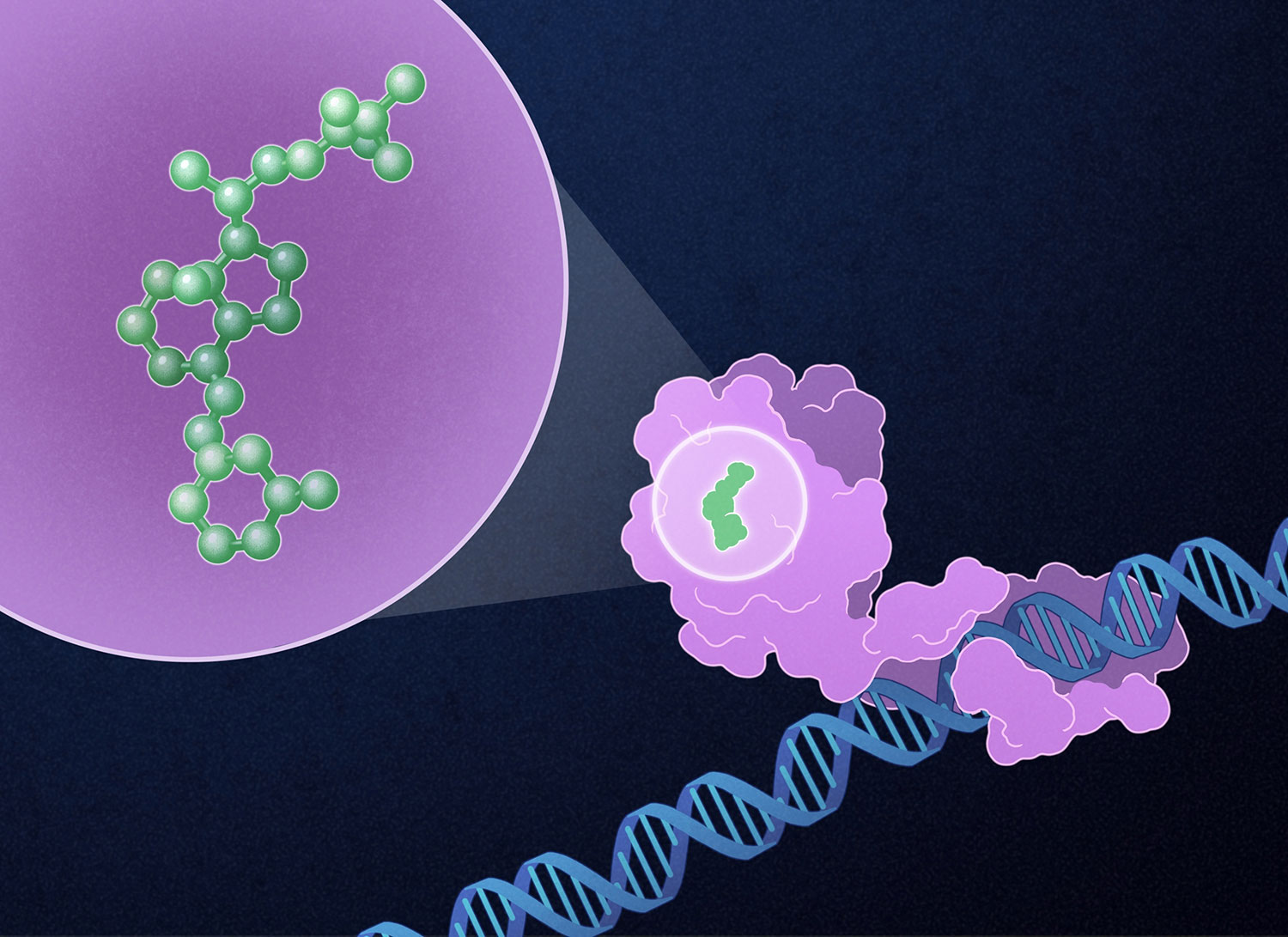
Evans discovered the nuclear receptor superfamily, an important group of molecules that includes the vitamin D receptor. When triggered by certain hormones, vitamins, or lipids, nuclear receptors turn genes “on” and “off” to govern cell behavior. Today, approximately 13% of all FDA-approved drugs work by targeting nuclear receptors.
Evans and team also uncovered that the vitamin D receptor regulates fibroblasts in the liver und pancreas in pre-clinical models. Fibroblasts, cells that make up connective tissue, form the protective shield that often surrounds pancreatic and other tumors.
These landmark studies showed that the vitamin D receptor is highly expressed in rare populations of tissue-resident fibroblasts and is critical for maintaining tissue health and stability. The Evans team also demonstrated that they could block liver fibrosis and pancreatitis with synthetic analogs of vitamin D, such as paricalcitol, which have been designed to resist the natural mechanism that degrades vitamin D.
Since an intense, fibrotic response is a hallmark of pancreatic tumors, Evans’ team then tested how these therapies impact the pancreatic cancer microenvironment—the tumor’s surroundings. They were surprised to find that, in pancreatic cancer models, vitamin D analogs could reverse the activation of cancer-associated fibroblasts and, in turn, promote chemotherapy responses.
These earlier findings provided one of the first examples of a new therapeutic approach for pancreatic cancer: reprogramming the supportive microenvironment that surrounds and protects pancreatic cancer cells.
Drawing on these foundational findings from Salk and in collaboration with the Evans team, Brian Wolpin, MD, MPH, and Kimberley Perez, MD, at the Dana-Farber Cancer Institute, led a randomized, safety-focused clinical study on the impact of vitamin D analogs in pancreatic cancer.
For this trial, 36 participants with previously untreated metastatic pancreatic cancer were assigned to standard chemotherapy (gemcitabine plus nab-paclitaxel) plus either placebo, intravenous paricalcitol, or oral paricalcitol. Paricalcitol is an FDA-approved medication used to prevent and treat secondary hyperparathyroidism in patients with chronic kidney disease.
The primary goal of the trial was to assess the safety of adding paricalcitol to chemotherapy treatment. Paricalcitol was safely administered with chemotherapy overall, although five of 12 participants receiving oral paricalcitol experienced elevated blood calcium, which was manageable through standard dosing reductions.
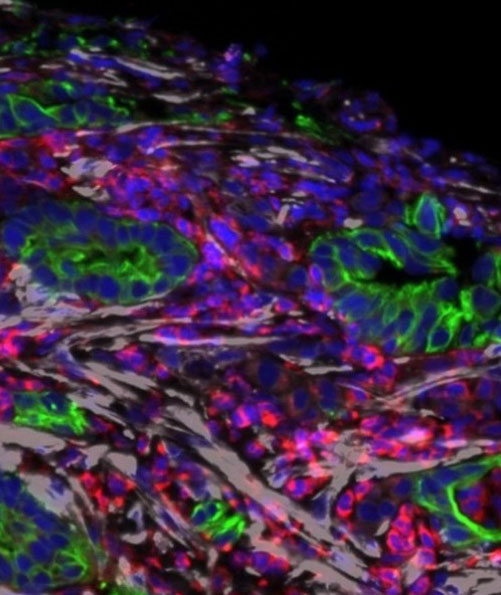
A critical secondary goal of this trial was to determine if any molecular or cellular changes occurred in patients receiving paricalcitol. To achieve this, researchers collected paired patient biopsies at screening and again after four to six weeks of treatment. The team analyzed the samples with state-of-the-art multiplex immunofluorescence and spatial transcriptomic methods to study changes in tumor and microenvironment cell populations. They found that paricalcitol reduced the activation of fibroblasts within tumors (but not their overall numbers) and increased infiltration of T cells, a type of immune cell that is typically excluded from tumors. These findings validated paricalcitol’s potential as a tumor microenvironment-remodeling therapy.
Although the study was not designed to compare treatment efficacy or patient outcomes, the researchers saw a difference. Partial responses to treatment were more common among patients who received paricalcitol (10 out of 24, or 42%) than among those who received placebo (one out of 12, or 9%). In addition, more patients who received paricalcitol were progression-free at one year (five patients) than in the placebo group (none).
The researchers also found that the patients differed in the levels of vitamin D receptor in their tumors. What’s more, they discovered that vitamin D receptor levels correlated with outcomes—patients with high vitamin D receptor levels who received paricalcitol had better responses to chemotherapy and the longest overall survival time following treatment.
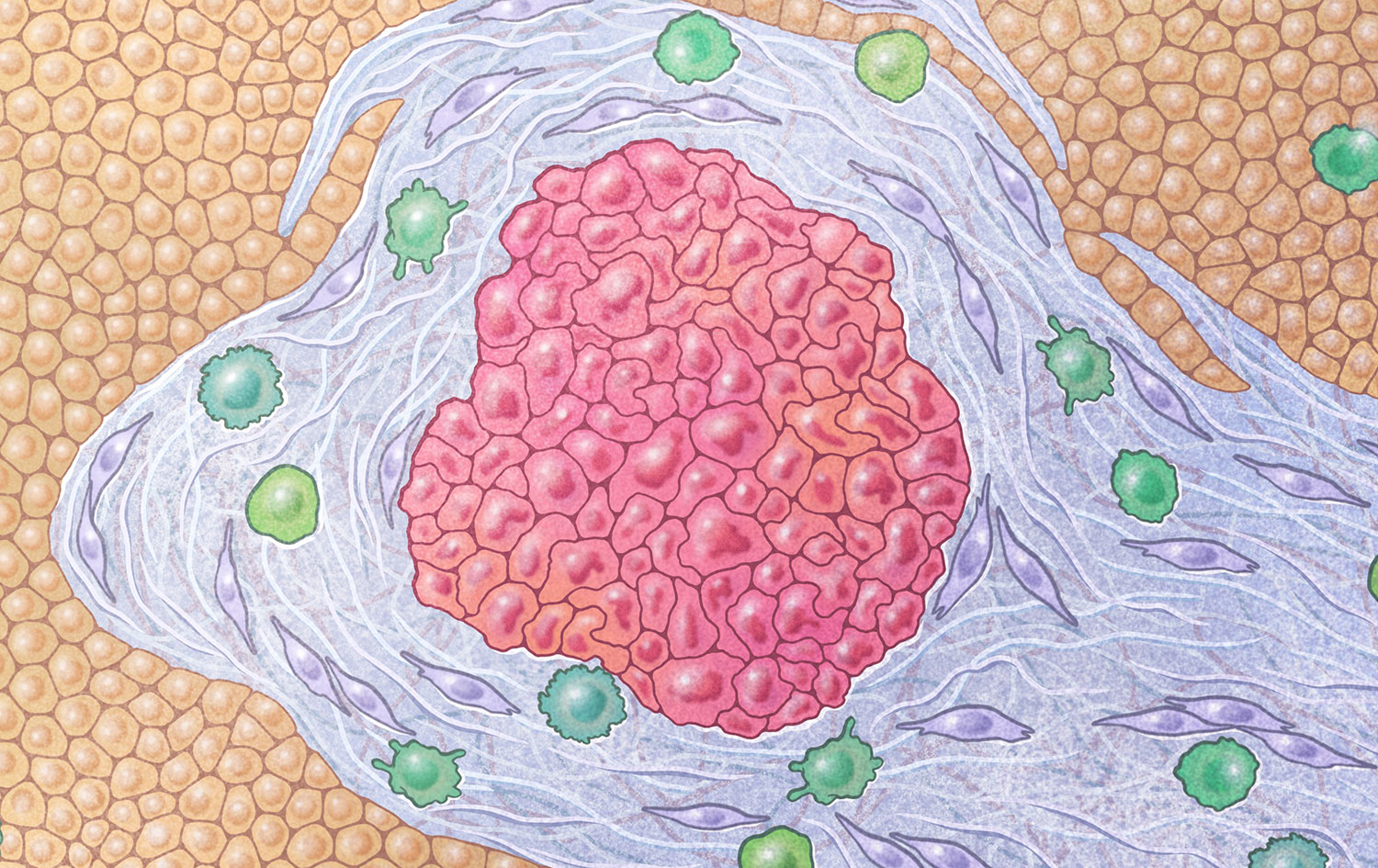
Pancreatic cancer remains one of the most difficult cancers to treat. Standard chemotherapy can slow the disease for some patients, but outcomes remain poor, and the tumor microenvironment is widely believed to contribute to therapy resistance. Pancreatic tumors are often surrounded by dense, fibroblast-rich connective tissue, creating a barrier that hinders the delivery of therapeutic drugs and creates an immunosuppressive microenvironment.
The findings from this trial set the stage for larger clinical studies designed to evaluate how combining vitamin D analogs with chemotherapy or other cancer therapies impacts survival outcomes. In addition, future work is needed to test whether baseline vitamin D receptor expression can serve as a reliable biomarker of patient responses to combination therapies, including vitamin D analogs.
“This study is an important step forward for the use of a vitamin D analog as a stromal remodeling therapy that can overcome therapeutic resistance in pancreatic,” says Perez. “It was built upon foundational basic research at the Salk Institute, validates those preclinical findings in patients, and provides a road map for future studies that could someday establish a new treatment standard.”
Ronald Evans, PhD, is a professor and the March of Dimes Chair in Molecular and Developmental Biology at the Salk Institute. Medical oncologists Brian Wolpin, MD, MPH, and Kimberley Perez, MD, led the clinical trial. Wolpin is director of the Hale Family Center for Pancreatic Cancer Research and Robert T. and Judith B. Hale Chair in Pancreatic Cancer at Dana-Farber Cancer Institute and a professor at Harvard Medical School. Perez is a senior physician and co-director of the Dana-Farber Gastrointestinal Clinical Trials Program at Dana-Farber Cancer Institute, an associate physician at Brigham and Women’s Hospital, and an assistant professor at Harvard Medical School.
Additional co-authors include Andressa Dias Costa, Dalia Elganainy, Suryun Kim, Chen Yuan, Sung Chul Hong, Xi Wang, Emma Coleman, C. Sloane Furniss, Lauren Brais, Alexandra Bird, Josh Remland, Vasilena Gocheva, and Jennifer S. Thalappillil of Dana-Farber Cancer Institute and Harvard Medical School; Alexander Jordan, Dan Y. Gui, Mark Anderson, James M. Cleary, Andrea Enzinger, Marios Giannakis, Kimmie Ng, Douglas A. Rubinson, Benjamin Schlechter, Rishi Surana, Harshabad Singh, Thomas Abrams, Eliezer Van Allen, Brian M. Wolpin, and Jonathan A. Nowak of Dana-Farber Cancer Institute, Harvard Medical School, and Brigham and Women’s Hospital; Thomas B. Karasic, Ursina Teitelbaum, Natallia Izgur, and Peter O’Dwyer of University of Pennsylvania; Runzi Tan of Dana-Farber Cancer Institute; Simona Cristea of Dana-Farber Cancer Institute and Harvard T.H. Chan School of Public Health; Morgan Truitt, Tae Gyu Oh, and Michael Downes of the Salk Institute; Hui Zheng of Massachusetts General Hospital; Peter S. Winter of Broad Institute of Massachusetts Institute of Technology and Harvard; Srivatsan Raghavan and Andrew Aguirre of Dana-Farber Cancer Institute, Harvard Medical School, Brigham and Women’s Hospital, and Broad Institute of Massachusetts Institute of Technology and Harvard; Jen Jen Yeh of University of North Carolina School of Medicine, Chapel Hill; Daniel Von Hoff of the Translational Genomics Research Institute; and Christopher Liddle of the Storr Liver Centre, Westmead Institute for Medical Research, and University of Sydney School of Medicine.
While many clinical trials rely on industry funding, this study tested an approach that repurposes FDA-approved medications already in routine clinical use, with limited opportunity for commercial returns. This work was made possible by federal granting agencies and private philanthropists: the U.S. National Institutes of Health (grants K08 CA260442, P30 014195, P01 CA265762, U01 CA210171, P50 CA127003), Stand Up to Cancer-Cancer Research United Kingdom-Lustgarten Foundation Superenhancer Dream Team Award, Stand Up to Cancer-American Association for Cancer Research-Lustgarten Foundation VDR Agonist Team Award, Dana-Farber Cancer Institute, Hale Family Center for Pancreatic Cancer Research, Claudia Adams Barr Program in Innovative Basic Cancer Research, Lustgarten Foundation for Pancreatic Cancer Research (122215393), Don and Lorraine Freeberg Foundation, David C. Copley Foundation, Wasily Family Foundation, Paul M. Angell Family Foundation, Pancreatic Cancer Action Network, Noble Effort Fund, Wexler Family Fund, Promises for Purple, and Bob Parsons Fund.
ClinicalTrials.gov identifier: NCT03520790. To search for a clinical trial near you, please visit clinicaltrials.gov.
DOI: 10.1038/s43018-026-01165-8
JOURNAL
Nature Cancer
AUTOREN
Kimberly J. Perez, Andressa Dias Costa, Alexander Jordan, Thomas B. Karasic, Dalia Elganainy, Suryun Kim, Chen Yuan, Dan Y. Gui, Runzi Tan, Sung Chul Hong, Xi Wang, Simona Cristea, Emma Coleman, Morgan Truitt, Tae Gyu Oh, Hui Zheng, C. Sloane Furniss, Lauren Brais, Alexandra Bird, Josh Remland, Vasilena Gocheva, Jennifer S. Thalappillil, Mark Anderson, James M. Cleary, Andrea Enzinger, Marios Giannakis, Kimmie Ng, Douglas A. Rubinson, Benjamin Schlechter, Rishi Surana, Harshabad Singh, Thomas Abrams, Ursina Teitelbaum, Natallia Izgur, Eliezer Van Allen, Peter S. Winter, Srivatsan Raghavan, Jen Jen Yeh, Daniel Von Hoff, Christopher Liddle, Michael Downes, Ronald M. Evans, Peter O’Dwyer, Andrew Aguirre, Jonathan A. Nowak, Brian M. Wolpin.
Büro für Kommunikation
Telefon: (858) 453-4100
press@salk.edu
Das Salk Institute ist ein unabhängiges, gemeinnütziges Forschungsinstitut, das 1960 von Jonas Salk, dem Entwickler des ersten sicheren und wirksamen Polio-Impfstoffs, gegründet wurde. Die Aufgabe des Instituts besteht darin, grundlegende, kooperative und risikofreudige Forschung voranzutreiben, die sich mit den dringendsten Herausforderungen der Gesellschaft befasst, darunter Krebs, Alzheimer und die Gefährdung der Landwirtschaft. Diese Grundlagenforschung bildet die Basis für alle translationalen Bemühungen und führt zu Erkenntnissen, die neue Medikamente und Innovationen weltweit ermöglichen.