
August 5, 2025
LA JOLLA—The Salk Institute has appointed Brenda Schulman as a Nonresident Fellow, joining a group of eminent scientific advisors who provide strategic advice to the Institute’s leadership. Schulman is a professor and the director of the Molecular Machines and Signaling Department at the Max Planck Institute of Biochemistry in Germany.
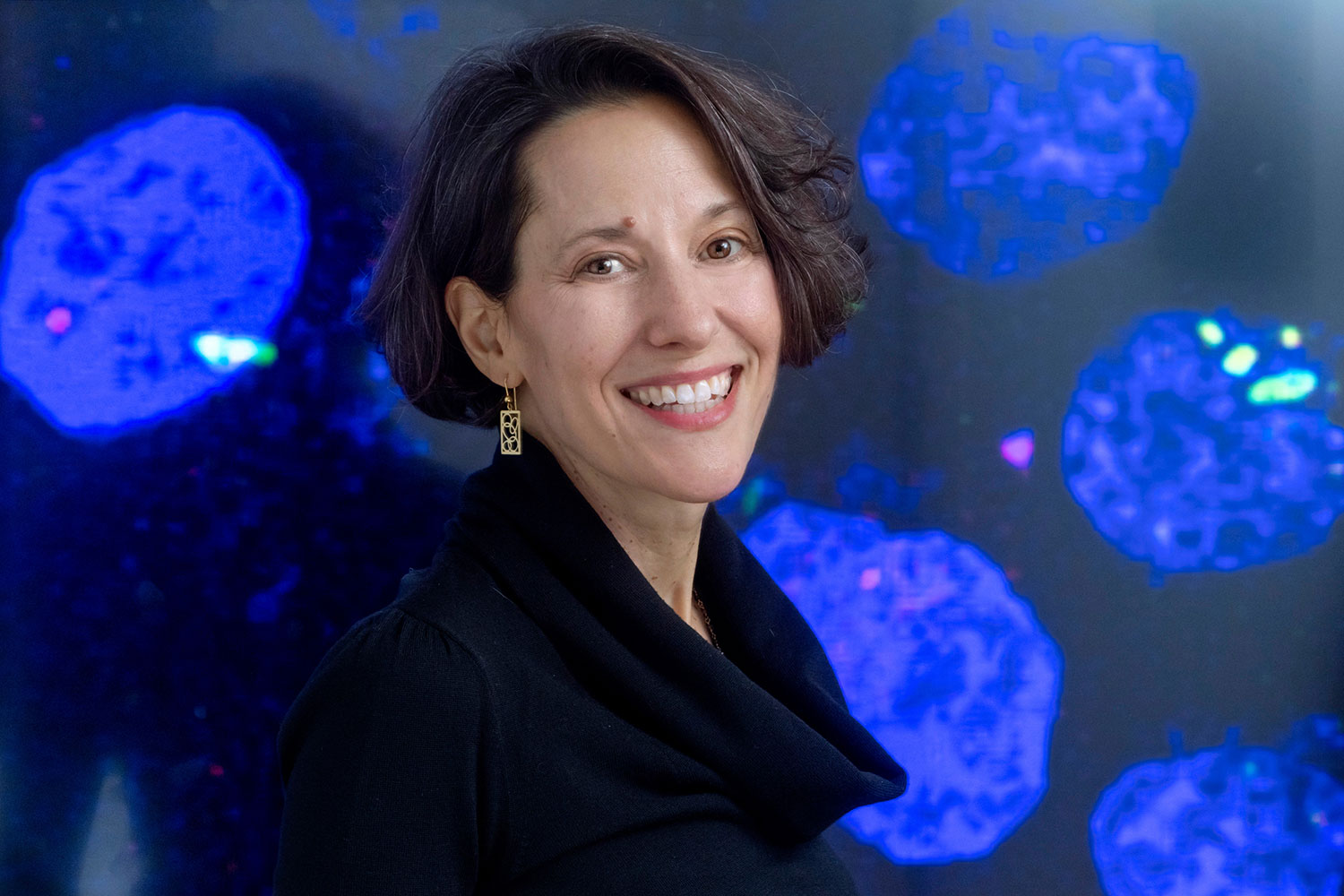
Schulman is internationally recognized for her research on the ubiquitin system, a molecular process that plays a critical role in regulating virtually all aspects of cell biology. Together with her team in Germany, she is investigating how the addition or removal of small ubiquitin proteins (or their relatives, ubiquitin-like proteins) controls the timing, location, composition, conformation, and activity of thousands of different proteins in a cell. Her work has provided deep insight into how these modifications control cellular function, with implications for numerous diseases that can result from ubiquitin defects, such as cancer, neurodegenerative disorders, and viral infections.
“Brenda is an outstanding scientist whose insights into the regulation of proteins within cells have reshaped our understanding of fundamental biological processes,” says Salk President Gerald Joyce. “Her innovative approaches and commitment to excellence in research make her a good fit for Salk, and we welcome her as a Nonresident Fellow.”
Schulman earned a bachelor’s degree in biology at Johns Hopkins University and a PhD in biology from Massachusetts Institute of Technology. She completed postdoctoral training at both Massachusetts General Hospital Cancer Center and Memorial Sloan Kettering Cancer Center. Before joining the Max Planck Institute, she was a Howard Hughes Medical Institute Investigator and faculty member at St. Jude Children’s Research Hospital. She is an elected member of the US National Academy of Sciences and the American Academy of Arts and Sciences, and a recipient of numerous honors, including the Gottfried Wilhelm Leibniz Prize and the Ernst Jung Prize for Medicine.
Salk Nonresident Fellows serve as members of the faculty for renewable six-year terms. These individuals come from world-renowned academic organizations where they have achieved high levels of success in research areas that are represented at the Salk Institute. They visit Salk each year to help benchmark the Institute by advising on the scientific progress of its faculty and on the effectiveness of its existing and proposed scientific programs. The Nonresident Fellows also play a key decision-making role in the appointment and promotion of Salk faculty members.
Büro für Kommunikation
Telefon: (858) 453-4100
press@salk.edu
Das Salk Institute ist ein unabhängiges, gemeinnütziges Forschungsinstitut, das 1960 von Jonas Salk, dem Entwickler des ersten sicheren und wirksamen Polio-Impfstoffs, gegründet wurde. Die Aufgabe des Instituts besteht darin, grundlegende, kooperative und risikofreudige Forschung voranzutreiben, die sich mit den dringendsten Herausforderungen der Gesellschaft befasst, darunter Krebs, Alzheimer und die Gefährdung der Landwirtschaft. Diese Grundlagenforschung bildet die Basis für alle translationalen Bemühungen und führt zu Erkenntnissen, die neue Medikamente und Innovationen weltweit ermöglichen.




