Salk Institute mourns the loss of Nobel laureate David Baltimore – Salk InstituteSalk Institute mourns the loss of Nobel laureate David Baltimore – Salk Institute
Salk Institute mourns the loss of Nobel laureate David Baltimore
Salk Institute mourns the loss of Nobel laureate David Baltimore
Salk Institute mourns the loss of Nobel laureate David Baltimore
LA JOLLA—The Salk Institute mourns the loss of molecular biologist and Nobel laureate David Baltimore, a former research associate and longtime nonresident fellow at the Institute. Baltimore died on September 6, 2025, in Woods Hole, Massachusetts, at the age of 87.
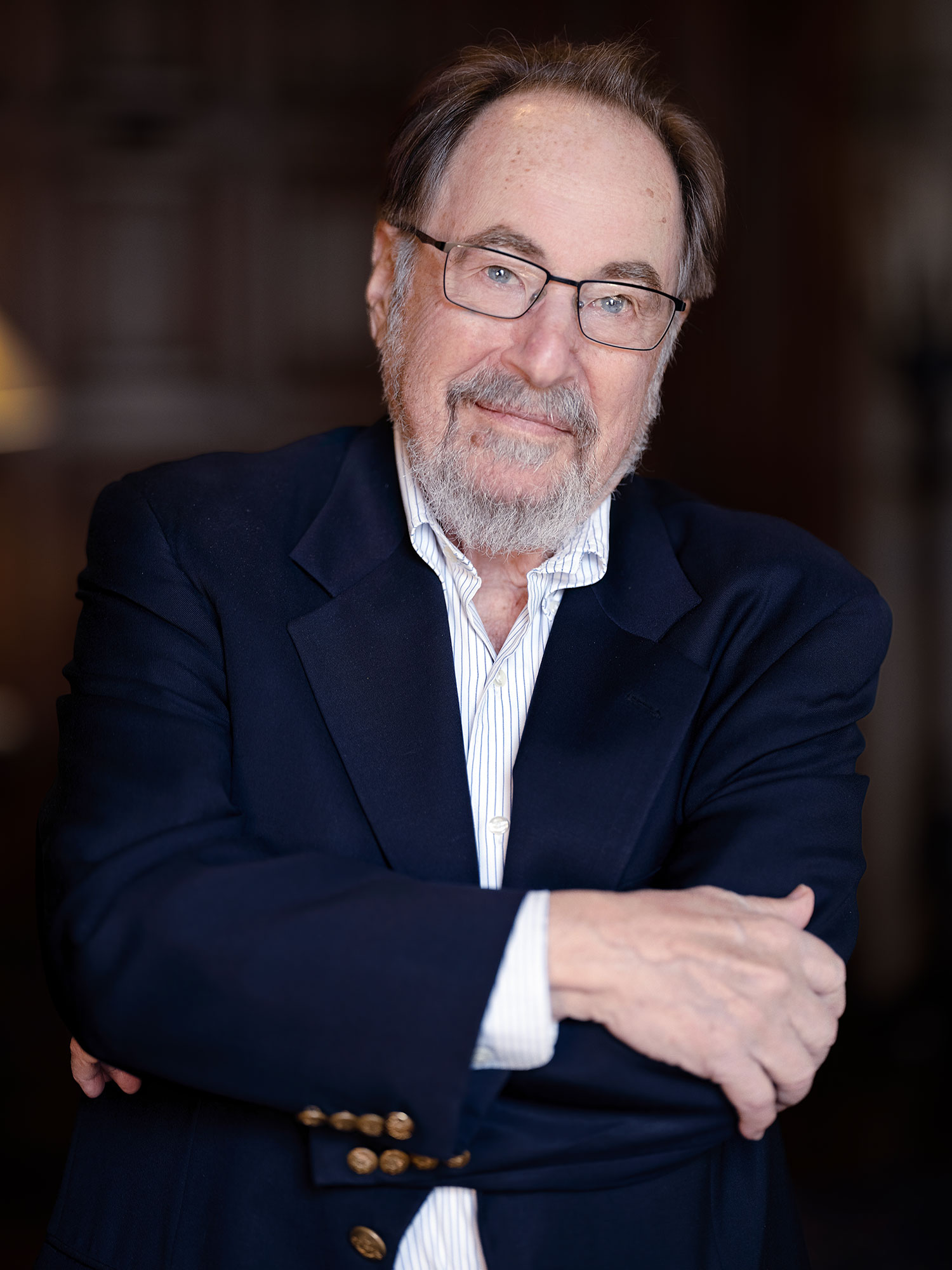
David Baltimore Click here for a high-resolution image. Credit: Christopher Michel
Recruited by Salk Founding Fellow Renato Dulbecco, Baltimore launched his independent research career at Salk in 1965. Over the next three years, he made key discoveries on viral RNA replication and met his future wife and collaborator, biologist Alice Huang.
In 1975, Baltimore, Dulbecco, and Howard Temin shared the Nobel Prize in Physiology and Medicine for their discovery of reverse transcriptase and its role in cancer and viral disease. This work was hugely impactful in challenging the central dogma of biology, showing that information can flow not only from DNA to RNA but also in the reverse direction. The findings transformed our understanding and treatment of many viruses and retroviruses, including HIV.
Baltimore returned to the Salk Institute in 1998 as a nonresident fellow and served in this capacity for 20 years. During this time, he provided valuable guidance on faculty appointments and promotions and mentored both junior and senior faculty.
“David was a major force in uniting the disciplines of virology and molecular biology, always working at the cutting-edge and leading both fields in new and important directions,” says Salk President Gerald Joyce. “His insights have deeply informed modern immunology and cancer biology, and we are grateful for his lasting impact on the Salk Institute and broader scientific community.”
For More Information
Office of Communications
Tel: (858) 453-4100 press@salk.edu
The Salk Institute For Biological Studies:
The Salk Institute is an independent, nonprofit research institute founded in 1960 by Jonas Salk, developer of the first safe and effective polio vaccine. The Institute’s mission is to drive foundational, collaborative, risk-taking research that addresses society’s most pressing challenges, including cancer, Alzheimer's disease, and agricultural vulnerability. This foundational science underpins all translational efforts, generating insights that enable new medicines and innovations worldwide.
Our website uses cookies to enhance your experience on the site. By clicking "continue" or by continuing to use our website, you are agreeing to our use of cookies as detailed in our Privacy Policy.